Best Branding Agency in Dubai: How to Find One That Actually Delivers

best branding agency in dubai

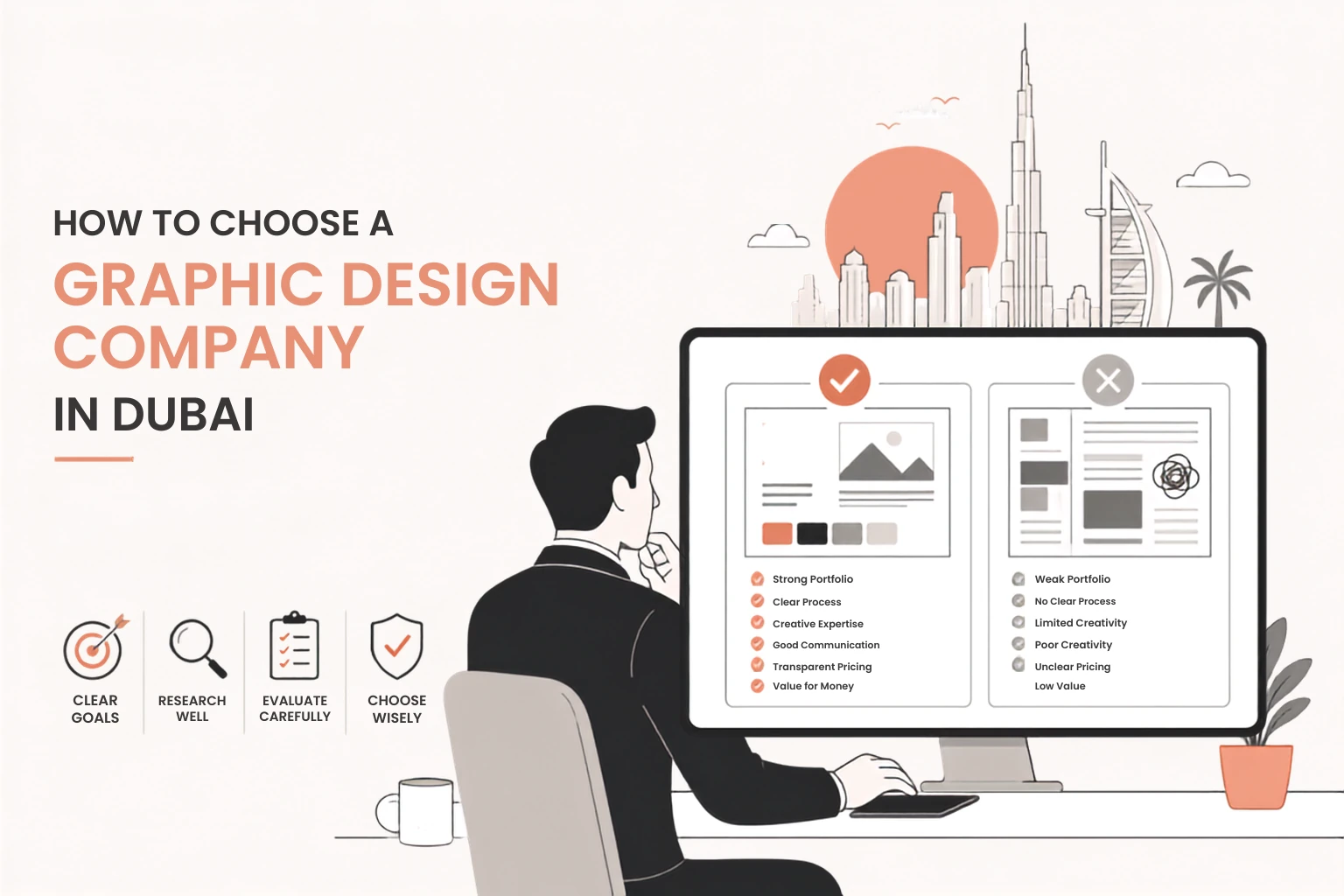
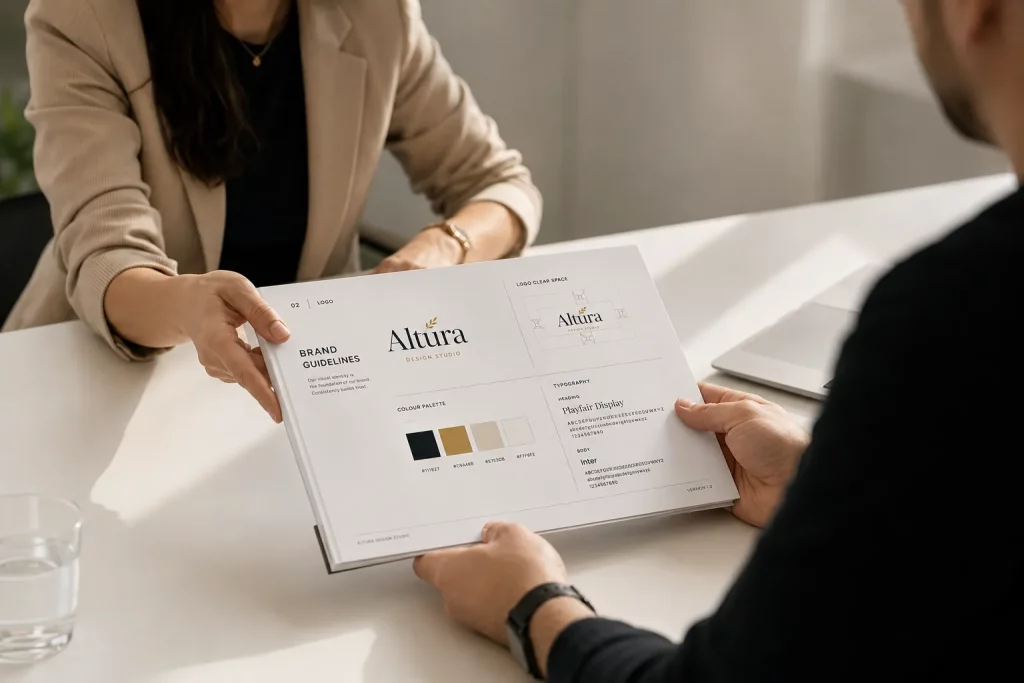
Searching for the best branding agency in Dubai will give you dozens of options. Every agency has a polished website, impressive case studies, and a confident pitch. The problem is not finding agencies, it is knowing which one will actually deliver what your business needs.

This guide gives you a clear, practical framework for evaluating branding agencies in Dubai. Not based on aesthetics or website impressiveness, but on the factors that determine whether a branding engagement produces a brand that works commercially or one that looks good in a PDF and gets shelved three months later.


What “Best” Actually Means for Your Business

The best branding agency in Dubai is not the most famous one, the largest one, or the one with the most Instagram followers. It is the one that is the right fit for your specific stage, sector, and goals.

A multinational FMCG brand and a Dubai tech startup need fundamentally different things from a branding engagement. The multinational needs brand governance systems, multi-market consistency frameworks, and enterprise-level asset management. The startup needs clear positioning, a distinctive identity, and materials that will survive the next three years of business evolution without needing a rebrand.

Before you evaluate any branding agency in Dubai, be clear on three things: what stage your business is at, what the primary output you need is (logo only, full identity, rebrand, or brand strategy), and what your timeline and budget actually are. These three factors will narrow your shortlist from dozens to three or four genuinely appropriate options.


6 Things That Separate Good Branding Agencies from Great Ones

1. They lead with strategy, not design

The clearest signal of a quality branding agency is whether they start with questions or with sketches. A branding company in Dubai that opens the conversation by showing you previous logos and colour palettes before understanding your business has inverted the process. Brand strategy : your positioning, your audience, your differentiators, what you stand for and what you do not, must precede visual design. Design without strategy produces decoration. Strategy before design produces a brand that works.

Ask any agency you are considering: what does your discovery process look like, and what does it produce? If they cannot articulate a structured discovery phase with a clear output (a strategy document, a positioning statement, a brand brief), the design work that follows will not have a foundation.

2. Their portfolio includes your sector or adjacent ones

You do not need an agency that has worked exclusively in your industry. But you should see evidence that they understand the visual language of premium businesses, know how to balance brand distinctiveness with market legibility, and can execute at the quality level your market demands.

In Dubai specifically, the visual benchmark is high. Clients, investors, and partners in the UAE have been exposed to world-class brand design from international businesses since the city’s inception. An identity that would read as premium in a smaller market may not carry the same weight here.

3. You will work with the people who actually do the work

This is one of the most overlooked differences between agencies. Large agencies often use senior creative directors in the pitch and junior teams in the delivery. The person who impressed you in the briefing may not touch your project after the contract is signed.

Ask directly: who will be working on our project day-to-day? Will the creative director who pitched be involved in the actual design? What does the team structure look like?

The best branding agencies in Dubai, particularly boutique and mid-size studios : keep senior talent involved throughout. This is often why smaller agencies outperform larger ones on quality: the people with the most experience are doing the work.

4. They have a clear and documented process

Professional branding is a structured process, not an intuitive creative exercise. Discovery, strategy, concept development, design, refinement, delivery, and guidelines — each stage should have a clear output and a defined client review point.

An agency that cannot walk you through their process step by step, or that treats process as an obstacle to creativity, is an agency that will struggle to manage your project reliably. Process is what makes quality consistent. It is what ensures that the excellent concept direction you approved in week two translates cleanly into the final deliverables in week six.

Ask for a project timeline with clear milestones and review points before you sign anything. Fixed-price proposals with defined deliverables protect both sides, you know what you are getting, and the agency knows what they are committing to.

5. They can show you outcomes, not just aesthetics

A portfolio of beautiful work is necessary but not sufficient. The best branding companies in Dubai can tell you what happened after the rebrand was delivered. Did the client attract better clients? Enter new markets? Raise investment at a better valuation? Increase prices because the brand could support it?

This level of outcome tracking is not always available, some clients are private about commercial results — but agencies that have been doing this work seriously will have at least some evidence of commercial impact. If an agency talks exclusively about how good something looks and not about what it achieved, approach with caution.

6. Their pricing is transparent and their proposal is fixed

Vague proposals with “starting from” pricing and scope creep built into the fine print are a warning sign. A professional branding agency should be able to give you a clear breakdown of what is included, what is not, how many concept directions are presented, how many revision rounds are included, and what happens if the project scope changes.

Fixed-price proposals protect you from invoice surprises mid-project. They also signal that the agency has done this enough times to scope accurately, which is itself a sign of experience.

See how Pixtar structures branding projects →


What to Ask During an Agency Briefing

When you sit down with a shortlisted branding agency in Dubai, these five questions will tell you more than any portfolio presentation.

“Walk me through a recent project from brief to delivery.” This reveals how they actually work — not just what they say their process is, but how they describe it in practice.

“Where did the concept direction come from?” The answer should trace back to the brand strategy and client brief, not to design trends or what the creative director finds interesting.

“Who will be working on our project?” Ask to meet the people, not just the partner or director.

“What do you not do?” An agency that claims to do everything: branding, digital marketing, social media, PR, media buying, content — is almost certainly not doing all of it at the same quality level. Knowing their constraints tells you where their genuine expertise lives.

“Can we speak to a recent client?” A confident agency will have no hesitation offering a reference. Hesitation or deflection is a signal.


Why Dubai Specifically Raises the Bar

Dubai is not a forgiving market for mediocre branding. The concentration of international businesses, the sophistication of local consumers, and the density of competition across every sector means that visual credibility is a commercial prerequisite, not a nice-to-have.

A brand that would be considered professional in a smaller regional market may read as underdeveloped against the competition you face in Dubai. The luxury retail environment, the density of premium hospitality brands, and the standard set by the international brands that operate here have calibrated the expectation of anyone doing business in the city.

This is also why the cheapest branding option is rarely the most economical one. A brand identity built on a tight budget that needs to be redone in eighteen months because it cannot support the business’s growth costs significantly more than investing correctly the first time.

The best branding agency in Dubai for your business is the one that challenges your thinking, asks hard questions about your positioning, and produces work that is genuinely differentiating rather than generically competent. That combination is what moves the commercial needle.

Explore Pixtar’s branding services →


Frequently Asked Questions — Branding Agencies in Dubai

How do I know if a branding agency in Dubai is right for my business? Start by looking at their portfolio for quality consistency across different clients and sectors. Then look at their process — is there structured discovery before design? And then look at their team: will the people who pitched actually do the work? Fit is about quality, process, and team transparency, not just visual aesthetics.

What is the difference between a branding agency and a graphic design agency? A branding agency builds the full system : strategy, positioning, identity, and guidelines. A graphic design agency executes visual deliverables within an existing brand framework. The best branding companies in Dubai offer both: they can define the brand and then produce everything it requires. Pixtar handles the complete scope, from brand strategy through to ongoing graphic design output.

How much should I budget for a branding agency in Dubai? A professional brand identity engagement with a mid-tier Dubai agency starts from AED 10,000 to AED 15,000 for a focused scope (strategy, logo, visual identity, and guidelines). Full-service engagements including applied collateral, digital templates, and brand activation materials range from AED 25,000 to AED 80,000+. Enterprise rebrands are scoped individually. The right budget depends on the scope of your deliverables, your timeline, and the commercial weight your brand needs to carry.

Is it worth hiring a local Dubai branding agency versus an international one? For most UAE businesses, a local agency offers meaningful advantages: understanding of the UAE market, Arabic language capability, knowledge of the local production environment, and easier communication across time zones. An international agency may bring a stronger global reputation but will typically charge more and may lack the UAE market context that determines whether your brand actually resonates locally.

How long does branding take with a top agency in Dubai? A focused brand identity engagement (strategy, logo, visual identity, brand guidelines) takes four to eight weeks with a structured agency. Logo-only projects can be completed in two to three weeks. Larger rebrands with extensive collateral application take eight to twelve weeks. Timelines are driven by client feedback responsiveness as much as by production speed — the fastest projects are the ones where the client is engaged and decisive at each review point.

Contact Pixtar — branding agency in Dubai →

Ecommerce Web Design Dubai: What to Know Before You Build (2026)

ecommerce web design in dubai

Building an ecommerce website in Dubai is not the same as building one anywhere else. The UAE market has specific requirements, including payment infrastructure, language expectations, mobile behaviour, and consumer trust signals, that a generic ecommerce build simply does not account for. This guide about ecommerce web design Dubai, covers everything you need to know before you brief an ecommerce web design agency in Dubai: which platform to choose, what features matter for UAE consumers, how much it costs, and the mistakes that cause most UAE ecommerce projects to underperform.


Why UAE Ecommerce Is Different From Everywhere Else

The UAE has one of the highest smartphone penetration rates in the world and one of the most digitally active populations in any market. Consumers here shop on mobile, pay with methods that do not exist in Western markets, and increasingly expect to interact with brands in Arabic as well as English.
The ecommerce sites winning in the UAE are not the prettiest ones. They are the fastest, the most trusted, and the most frictionless to buy from. Here is what that means in practice.

Mobile traffic dominates. Over 70% of UAE ecommerce transactions happen on mobile devices. An ecommerce website that looks good on desktop but is slow or awkward on a phone will lose the majority of its potential customers before they reach checkout. Mobile-first design is not a nice-to-have, it is the primary design constraint.

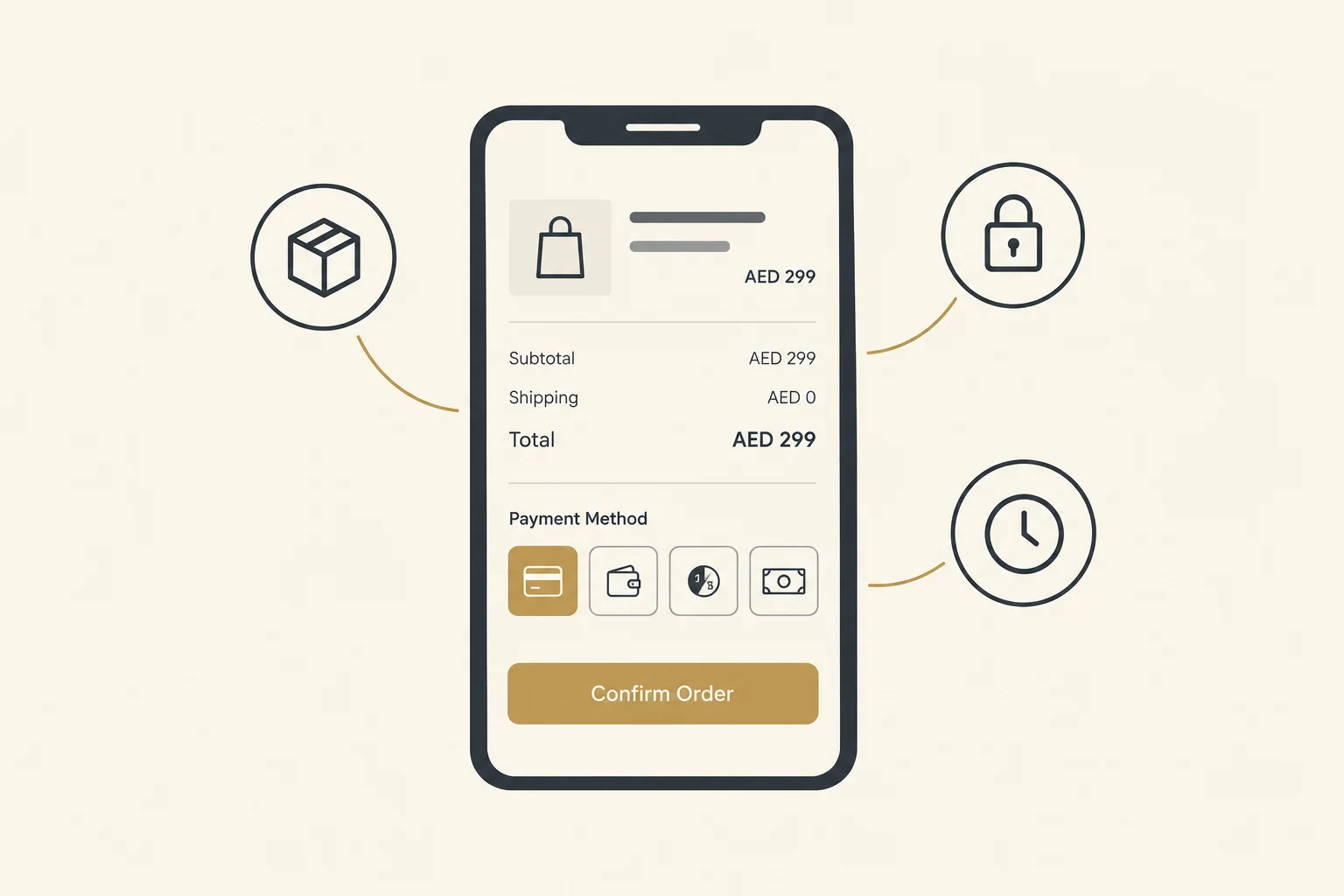
UAE payment expectations are specific. Consumers in the UAE expect to pay via credit card, but also via local gateway solutions. The rapid adoption of buy-now-pay-later options, Tabby and Tamara specifically, has been significant. Studies consistently show that stores offering BNPL in the UAE see meaningful increases in average order value and conversion rate, particularly for products in the AED 200 to AED 2,000 range.

Bilingual is increasingly the standard. The UAE has a large, affluent Arabic-speaking population who prefer to browse and buy in their native language. An Arabic-English ecommerce store, properly designed for right-to-left layout and not simply a translated English store, captures a significantly larger addressable market.


Choosing the Right Ecommerce Platform for UAE

This is the decision most UAE businesses get wrong. The right platform depends on your catalogue size, your technical resources, your timeline, and your specific functionality requirements.

Shopify for most UAE businesses. Shopify is the right starting point for the majority of UAE ecommerce businesses. It is fast to launch, easy to manage without technical expertise, has excellent app ecosystem support for UAE payment gateways, and handles the operational complexity of inventory, orders, and shipping integrations cleanly. Shopify’s mobile storefront performance is industry-leading. For most consumer product businesses in the UAE, Shopify is the answer.

The caveat: Shopify’s customisation ceiling is real. If you have complex pricing rules, tiered B2B pricing, very large catalogues (10,000+ SKUs), or custom checkout logic, you will hit Shopify’s limits and need to work around them expensively.

Magento for enterprise and complex requirements. Magento is the appropriate choice when you need genuine flexibility at scale, including multi-store setups, custom pricing engines, complex inventory hierarchies, or deep ERP integration. It requires more technical investment to build and maintain, but it provides capabilities that Shopify cannot match. If you are a retailer with a large physical operation moving online, or a B2B business with complex ordering requirements, Magento is worth the additional build cost.

WooCommerce when you are already on WordPress. If your business already runs on WordPress and your team knows how to manage it, WooCommerce is a natural extension. The caveat here is performance, WooCommerce requires careful configuration to achieve the page speed scores that UAE mobile users expect. A WooCommerce store built without performance optimisation will be slower than a Shopify equivalent.

Custom platforms when nothing else fits. For businesses with genuinely unique requirements, such as subscription models, marketplace functionality, or complex auction or bidding systems, a custom-built ecommerce platform using Node.js and React gives complete control over performance and logic. This is the highest-cost option and requires an ongoing technical relationship with your development team, but it is the right answer when the requirements genuinely cannot be met by an existing platform.


UAE Payment Gateways: What You Must Integrate

Payment gateway integration is where most UAE ecommerce stores lose customers they have already convinced. A consumer who reaches your checkout and cannot find a payment method they trust will abandon. This is not a hypothetical, UAE cart abandonment rates are high, and payment friction is one of the leading causes.

Network International is the largest payment processor in the UAE and the one most UAE consumers implicitly trust. It is the backbone of most UAE bank card processing.

PayTabs is widely used across the GCC and provides clean integration options for Shopify and Magento. Competitive pricing and good support for UAE business accounts.

Telr and Checkout.com are both solid alternatives used by many UAE ecommerce businesses, particularly those with international ambitions.

Tabby and Tamara, the buy-now-pay-later platforms, are in a category of their own. Tabby in particular has reached significant penetration among UAE consumers. If your products sit in the AED 200 to AED 2,000 range, integrating Tabby will measurably increase your conversion rate. The integration is straightforward on Shopify and Magento.


Arabic RTL: The Detail Most Agencies Get Wrong

Building a bilingual Arabic-English ecommerce store is not a translation project. It is a design project with specific technical requirements that many agencies underestimate.

Arabic reads right-to-left. A proper RTL implementation means the entire page layout mirrors, including navigation on the right, content flowing right to left, and buttons and form fields repositioned. Text alignment changes. Icon direction changes. Number and price formats follow Arabic conventions.

An English store with translated copy bolted on, where the layout remains left-to-right, is immediately obvious to Arabic-speaking users and signals that the brand does not genuinely serve them. In a competitive market where local and regional brands are building genuinely bilingual experiences, this matters commercially.

A properly implemented Arabic RTL design requires the development team to build two distinct layout systems, not one. The best implementations use CSS logical properties and a direction-aware design system that allows both language versions to be maintained from a single codebase. This is the approach Pixtar takes on bilingual ecommerce projects.


How Much Does Ecommerce Web Design in Dubai Cost?

Ecommerce web design in Dubai varies significantly by scope. Here is an honest breakdown.

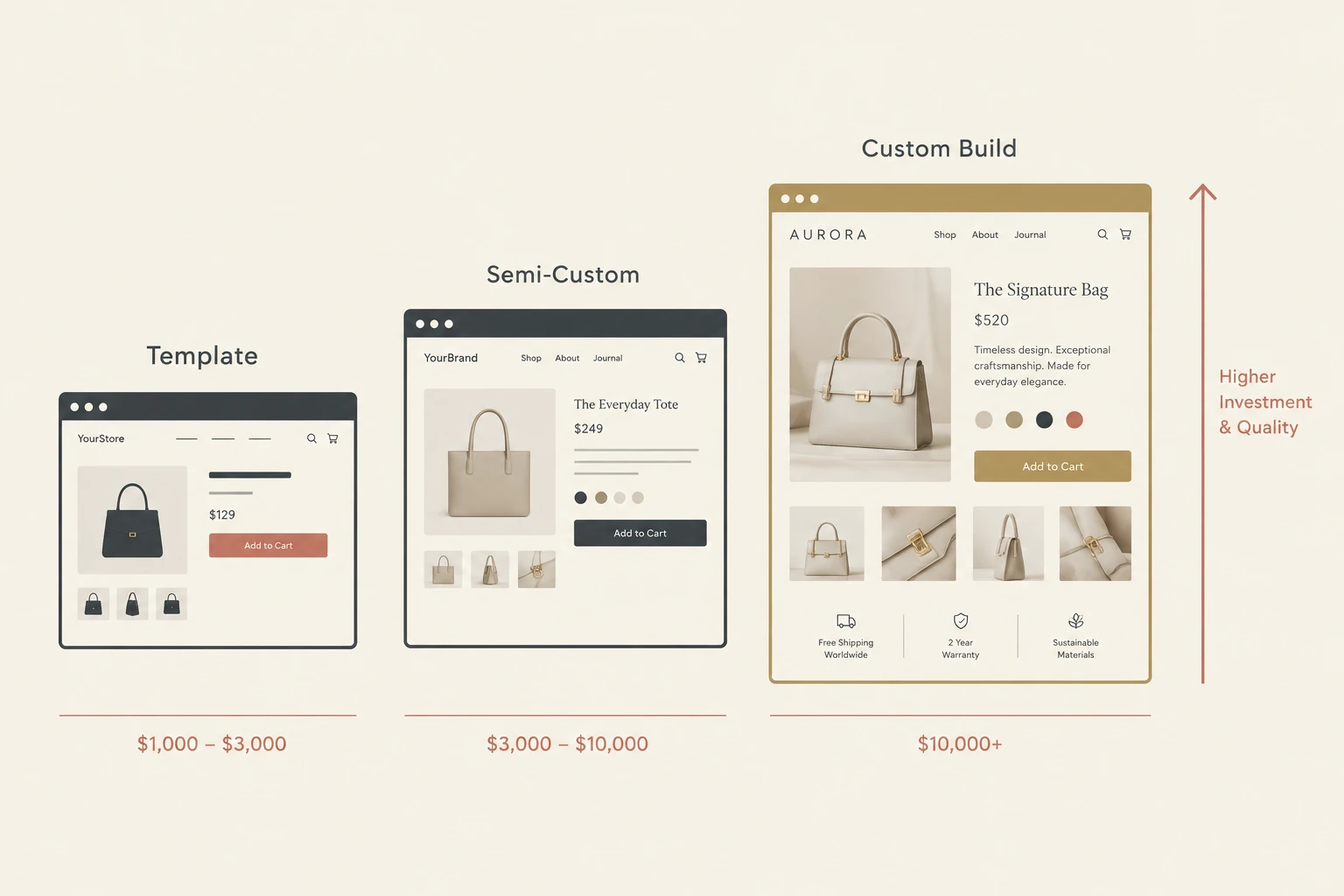
AED 8,000 to AED 15,000: A Shopify store using a premium theme, configured and customised rather than fully custom-built. Includes payment gateway integration, basic product catalogue setup, and standard mobile optimisation. Appropriate for businesses launching a first ecommerce store quickly with a manageable catalogue.

AED 15,000 to AED 40,000: A custom-built Shopify store or entry-level Magento build. Custom theme development, full UAE payment gateway integration including BNPL, Arabic RTL support, and third-party integrations such as logistics, ERP, and email. This is the appropriate range for serious consumer ecommerce in the UAE.

AED 40,000 to AED 100,000+: Complex Magento builds, multi-store setups, B2B ecommerce portals, or fully custom platforms. Enterprise-level requirements with custom pricing logic, deep integrations, and high-volume traffic architecture.

The most common mistake UAE businesses make is choosing a build at the lowest cost tier and then spending a similar amount again six months later to rebuild for performance or additional functionality. Scoping the project correctly from the start, including the payment gateways, the language requirements, and the third-party integrations you will need, is what prevents this.


What to Look for in an Ecommerce Web Design Agency in Dubai

Before you brief an agency, ask these five questions.

Have they built specifically for the UAE market? UAE-specific requirements, including payment gateway integrations, Arabic RTL, and mobile performance for UAE networks, are not generic web development skills. Ask for UAE ecommerce projects in their portfolio.

Do they handle both design and development in-house? Agencies that separate design and development across different teams or outsource one to a third party introduce communication failures that show up as alignment errors, delayed launches, and post-launch performance issues.

What is their process after launch? An ecommerce store does not end at launch. Ask about post-launch support, conversion rate optimisation, and how they handle technical issues once the site is live.

Do they understand ecommerce performance metrics? A good ecommerce agency should talk to you about conversion rate, average order value, cart abandonment rate, and page speed, not just design aesthetics.

Can they show you results, not just portfolios? Ask for specific outcomes from ecommerce projects, not just screenshots of stores, but what happened to the client’s revenue or conversion rate after launch.


Frequently Asked Questions — Ecommerce Web Design Dubai

How long does ecommerce website development in Dubai take?
A standard custom Shopify build takes four to eight weeks. A complex Magento or custom platform takes ten to sixteen weeks. Timeline depends on catalogue size, integration requirements, and content readiness from the client side.

Is Shopify available in the UAE?
Yes. Shopify operates fully in the UAE and supports all major UAE payment gateways including PayTabs, Network International, Tabby, and Tamara. Shopify stores can be set up with a UAE business account and configured for AED pricing.

Do I need an Arabic version of my ecommerce store?
Not necessarily from day one, but it is worth planning for it. The UAE has a large Arabic-speaking population, and Arabic-language ecommerce is growing. If your target customers include UAE nationals and residents who prefer Arabic, a bilingual store will meaningfully expand your addressable market.

What is the difference between ecommerce web design and ecommerce web development?
Ecommerce web design covers the visual layer, including layout, product page experience, checkout UX, and brand presentation. Ecommerce web development is the technical build, including the code, integrations, performance, and platform configuration. The best outcomes come from agencies that handle both under one roof.

Can Pixtar rebuild an underperforming ecommerce store?
Yes. We handle full ecommerce rebuilds, improving design, performance, and conversion rate while migrating existing products, customer data, and order history. We preserve your URL structure to protect existing search rankings.


Get an ecommerce web design quote from Pixtar

How Much Does Branding Cost in Dubai? (2026 Complete Pricing Guide)

branding cost in dubai

Every business owner in Dubai eventually asks this question. You know you need professional branding. You have seen what a polished identity does for a competitor or a brand you admire. But before you pick up the phone or fill in a contact form, you want to know what you are getting into financially. This guide gives you the honest numbers, what actually branding costs in Dubai in 2026, what drives the price up or down, what you should expect at each budget level, and where the most common mistakes happen.


What Affects the Cost of Branding in Dubai?

Before quoting a range, it helps to understand why prices vary so much. A logo quoted at AED 500 and one quoted at AED 15,000 are not the same product. Here is what drives the difference.

Scope of work. A logo-only project is a fraction of the cost of a full brand identity system that includes strategy, logo, colour palette, typography, brand guidelines, and applied collateral. The scope is the single biggest cost driver.

Experience and seniority. A senior branding agency that has worked with regional and international clients charges more than a freelancer who graduated six months ago. In branding, you are paying for judgment as much as execution.

Research and strategy. Some agencies skip strategy entirely and go straight to design. This produces cheaper work that usually needs to be redone within two years. Strategy- competitor research, positioning workshops, and messaging frameworks take time and add cost, but they are what make the design work long-term.

Revisions and turnaround. Rush projects and unlimited revision rounds add cost. A structured process with clear feedback rounds keeps costs predictable.

Deliverable count. A brand that needs to be applied to twenty different materials (stationery, packaging, signage, digital templates) costs more to deliver than one applied to five.


Branding Cost Breakdown by Scope

Here is a realistic breakdown of what different levels of branding cost in Dubai in 2026.

Logo Design Only: AED 2,000 – AED 8,000

A professional logo designed from scratch (not from a template generator) typically costs between AED 2,000 and AED 8,000 in Dubai depending on the agency or designer. This includes a few concept directions, revision rounds, and final files in all standard formats.

What you get: a logo file. What you do not get: a colour system, typography, usage rules, or anything that tells you how to apply it consistently.

Logo-only projects are appropriate for very early-stage businesses that need to move quickly and plan to do a proper brand identity later.

Brand Identity Package: AED 10,000 – AED 35,000

A full brand identity package is what most established businesses need. This includes brand strategy work, logo design, a defined colour palette, typography system, brand guidelines document, and basic collateral (business cards, email signature, social media templates).

At the lower end of this range (AED 10,000 to AED 18,000) you will find solid execution with a focused scope. At the higher end (AED 20,000 to AED 35,000) you get deeper strategic work, more concept exploration, and more applied deliverables.

This is the most common branding engagement for UAE businesses: startups that are past the first year, SMEs ready to professionalise, and companies entering a new market.

Full Brand System + Collateral: AED 35,000 – AED 80,000

A comprehensive brand engagement that includes everything in the identity package plus extensive application across physical and digital materials — packaging, signage guidelines, advertising templates, presentation systems, website visual design guidelines, and brand activation materials.

This level is appropriate for businesses launching a consumer product at scale, regional brands expanding into new Emirates, or companies preparing for significant investment or acquisition.

Enterprise Rebrand: AED 80,000+

Large organisations with complex stakeholder structures, multi-language requirements, extensive touchpoint libraries, and internal brand rollout needs. These projects are scoped individually and often run over three to six months.


What Does Branding Actually Cost from a Dubai Agency?

To give you a real-world frame of reference, here is how Pixtar structures branding engagements:

A logo-only project with us starts from AED 3,500. A full brand identity system including discovery workshop, brand strategy document, logo design, visual identity, and brand guidelines document starts from AED 12,000. More complex projects with full collateral application, packaging, or Arabic-English bilingual identity systems are scoped individually.

Every project comes with a fixed-price proposal before work begins — no surprises.

Get a branding proposal from Pixtar →


The Hidden Cost of Cheap Branding

The real cost of cheap branding is not the fee you pay; it is what happens afterwards. Businesses that invest AED 500 in a logo generator or AED 1,000 in a freelancer with no strategic process almost universally face one of two outcomes: they rebrand within two years at full cost, or they live with a brand that actively undermines the quality of the product or service they are selling.

In Dubai specifically, the perception gap between a premium brand and an amateur one is brutal. Investors, partners, and high-value clients make rapid judgments based on visual quality. A weak brand signals operational immaturity, regardless of how strong the actual business is.

Professional branding is not an expense. It is the foundation that every other marketing investment builds on. Your advertising, your website, your social media- all of it performs better when the brand underneath it is strong.


Is Branding Worth It for a Dubai Startup?

Yes, with the right scope. You do not need an AED 50,000 brand identity on day one. But you do need more than a Canva logo. A focused AED 10,000 to AED 15,000 brand identity gives a startup the professional foundation to compete credibly in the Dubai market, attract the right customers, and avoid a costly rebrand in two years.

The most common regret we hear from founders is not that they spent too much on branding early, it is that they spent too little and had to redo it.

Explore Pixtar’s graphic design services →


Frequently Asked Questions- Branding Costs Dubai

Can I get branding done for under AED 5,000 in Dubai? Yes, but the scope will be limited to a logo only, with limited concept rounds. For a basic logo from a professional designer, not a template, AED 3,000 to AED 5,000 is realistic. Anything below that threshold is likely template-based or offshore work.

How do I compare branding quotes in Dubai? Compare what is included, not just the price. Ask for a scope breakdown: what deliverables, how many concepts, how many revision rounds, what file formats, and whether strategy work is included. A quote that looks cheaper often excludes half the deliverables.

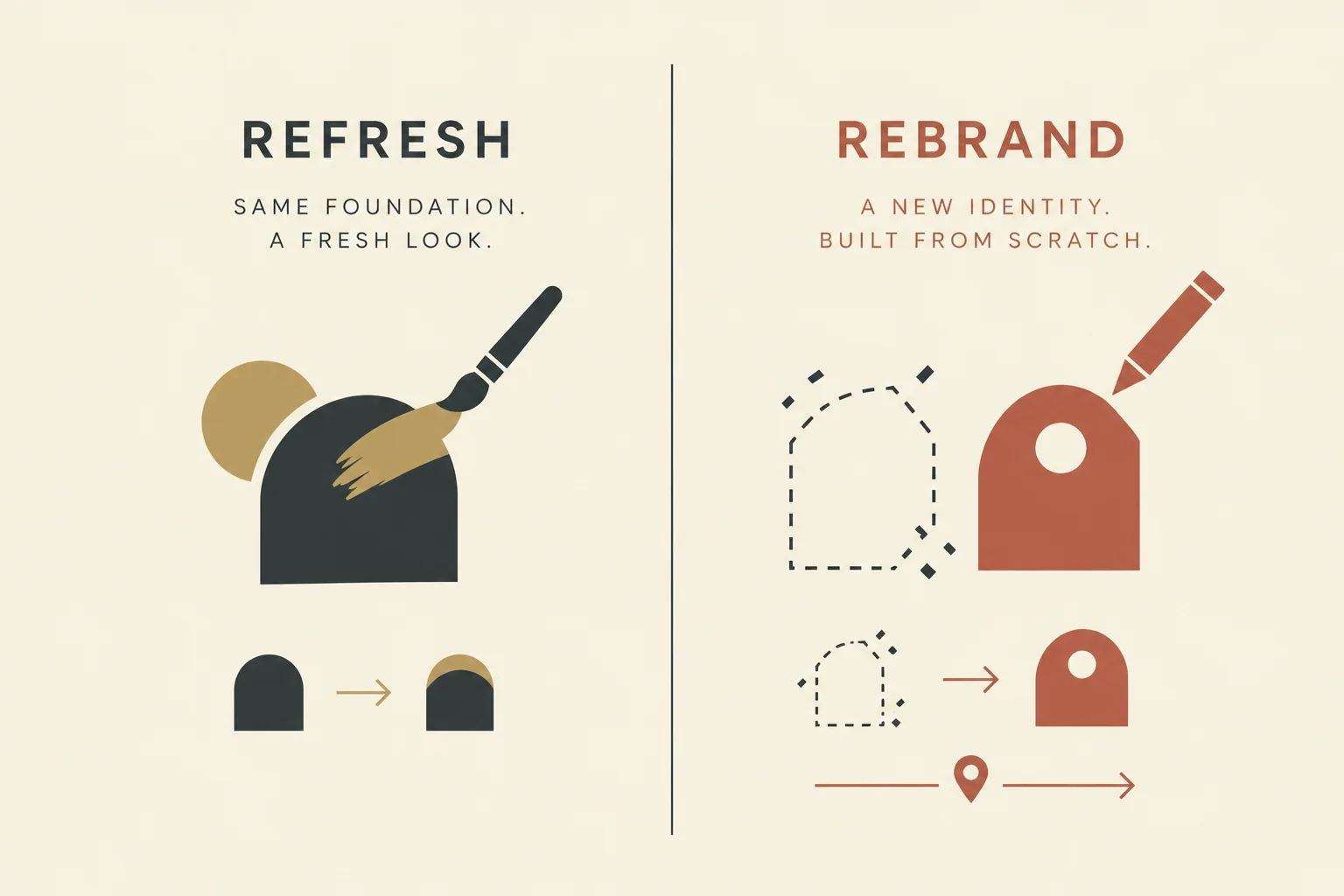
Does a rebrand cost more than a new brand? Not necessarily. A rebrand starts with more context- existing brand elements, established audience, and clear problems to solve. This can make strategy more efficient. However, if there are many existing touchpoints to update (signage, packaging, website), the application cost will be higher.

How long does branding take in Dubai? A logo-only project takes two to three weeks. A full brand identity system takes four to eight weeks. Rush projects can be accommodated at a premium.

Does Pixtar do payment plans? Contact us to discuss payment structure for larger projects.

Contact Pixtar to discuss your branding budget →

How people judge your brand in less than 5 seconds!

How people Judge your brand

Before anyone reads your tagline or scans your services, they have already formed an opinion about your brand. It happens in seconds. A glance at your website, your social media, your packaging. In that brief moment, people are running a visual audit. And they’re deciding whether you’re worth their time.

This isn’t about being judgmental. It’s about efficiency. Understanding how people judge your brand through visual cues is critical for any premium business. Discerning buyers process visual information faster than text. They’re looking for signals. Signals of quality, attention to detail and whether your brand matches their expectations. Get the visuals wrong, and your carefully crafted messaging never gets a chance.

Your brand first impression happens through visual brand identity elements that communicate before words ever do. Because in those first five seconds, buyers aren’t reading. They’re feeling.

What Creates Instant Brand Perception

Load speed sets the tone immediately. If your site takes more than three seconds to load, you’ve already communicated something about your brand. That you don’t prioritize user experience. That your site might be outdated or poorly maintained. It gives an impression that your brand is not as premium as you claim.

Speed isn’t just technical. It’s perceptual. Fast sites feel modern, professional, and confident. Slow sites feel neglected. This is one of the first ways how people judge your brand without conscious thought.

Typography speaks before words do. The fonts you choose are crucial elements of visual brand identity. Serif fonts suggest tradition, authority, and craft. Sans-serif fonts feel modern, clean, and approachable. Script fonts can signal elegance or feel overwrought depending on execution.

But beyond style, typography quality matters for brand credibility. Are your font pairings harmonious? Is the hierarchy clear? Can people read your text easily across devices? Premium brands get typography right because they know it’s not decoration. It’s communication.

White space signals confidence. Brands that crowd every pixel with content look desperate. Premium brands use space generously. They let elements breathe. They trust that less is more.

White space isn’t empty. It’s intentional. It creates focus. It guides the eye. It makes everything else on the page feel more valuable. When buyers see generous spacing, they subconsciously register quality and thoughtfulness. This directly impacts brand perception and brand trust.

Color choices reveal positioning. Muted, sophisticated palettes suggest luxury and restraint in luxury brand design. Bright, saturated colors can feel energetic or cheap depending on context. Color contrast affects readability and accessibility, but it also shapes brand perception.

Premium buyers notice when colors clash or when palettes feel generic. They notice when brands use too many colors or when everything feels monotone. Color is emotional. And in five seconds, emotion drives how people judge your brand more than logic.

At Pixtar, we approach visual brand identity knowing that these elements work together to create instant brand credibility. Every choice either builds brand trust or raises doubt.

The Details That Shape Website First Impression

Image quality matters. Blurry photos, poorly cropped images, or obvious stock photography all signal lack of investment. Premium buyers expect sharp, well-composed visuals that feel authentic to your brand first impression.

Consistency across touchpoints. If your website feels polished but your social media looks thrown together, buyers notice the disconnect. Visual consistency suggests operational excellence. Inconsistency suggests lack of attention.

Mobile experience counts. More buyers browse on phones first. If your mobile site feels like an afterthought with tiny text, difficult navigation, or broken layouts, you’ve failed the visual audit before they reach your content.

Animation and transitions. Subtle, smooth animations feel premium. Jerky, excessive movement feels amateur. The way elements appear, transition, and respond to interaction all contribute to perceived quality.

Why Brand Perception Forms So Quickly

Our brains process images 60,000 times faster than text. We’re wired to make quick judgments based on visual patterns. This evolutionary trait helped our ancestors assess threats and opportunities instantly. Today, it helps buyers sort through endless options quickly.

Premium buyers have trained eyes. They’ve seen enough luxury brands to recognize the patterns. They know what quality looks like. They can spot the difference between thoughtful design and templates. Between custom and generic. Between craft and convenience.

You can’t fake this. You can’t trick discerning buyers with one polished element while the rest falls short. They’ll notice. And they’ll move on.

How to Improve Your Brand First Impression

Invest in speed. Optimize images. Choose quality hosting. Make load time a priority, not an afterthought. Every second counts in how people judge your brand.

Get typography right. Choose fonts that match your brand positioning. Ensure proper hierarchy. Test readability across devices. If in doubt, simpler is safer than experimental.

Embrace white space. Don’t cram. Give elements room. Create breathing space. Let your content feel uncrowded and intentional.

Choose colors strategically. Develop a cohesive palette. Test contrast for readability. Ensure colors feel appropriate for your positioning and strengthen brand perception.

Use authentic visuals. Invest in custom photography or illustration. If you must use stock, choose carefully and edit to match your visual brand identity.

Maintain consistency. Every touchpoint should feel like it belongs to the same brand. Website, social media, email, packaging. Visual coherence builds brand trust.

At Pixtar, we design brands knowing that visual first impressions determine whether buyers engage with your message at all. We optimize every visual element to pass that critical five-second audit and build lasting brand credibility.

The Bottom Line

How people judge your brand happens visually before they read a single word. Load speed, typography, white space, color, image quality. All of it registers in seconds. All of it shapes brand perception.

Your messaging matters. But if your brand first impression fails, your message never gets heard. Pass the visual audit first through strong visual brand identity. Then your words will land with the audience you’ve earned the right to speak to.

The Rise of “Quiet Luxury” Websites: Why Less Navigation Means More Conversions

Quite Luxury: Mininmalist website navigation

Quiet luxury has taken over fashion. The era of mega-menus with endless options is ending. At least for luxury brands that understand their audience. These brands are adopting minimalist website navigation. Fewer choices. Clearer paths. Interfaces that guide rather than overwhelm.

It turns out that simplicity doesn’t limit conversions. When done right, less navigation actually increases them.

Why Too Many Options Backfire

There’s psychological research behind this. It’s called choice paralysis. When faced with too many options, people struggle to decide. And when decisions feel difficult, people often don’t make them at all.

This applies directly to website navigation. A menu with 20 categories and subcategories might seem comprehensive. But to visitors, it feels overwhelming. Where do they start? What’s actually relevant to them? The cognitive load is high before they’ve even clicked anything.

Premium buyers especially dislike this. They expect curation. They expect brands to know what matters and show them exactly that. Not everything. Just what’s important.

Minimalist website navigation says: we know our brand, we know what you need, and we’ll get you there efficiently.

What Quiet Luxury Websites Look Like

Primary navigation is minimal. Three to five main categories maximum. Not fifteen. These aren’t lazy oversimplifications. They’re strategic decisions about what truly matters.

A luxury hotel website might have: Rooms, Dining, Experiences, Location, Book. That’s it. Everything else lives within those sections, accessed when relevant. The top-level navigation stays clean.

Secondary information is progressively disclosed. You don’t see everything at once. As you engage, more reveals itself. This creates a sense of discovery rather than bombardment. It respects attention and rewards exploration.

Navigation doesn’t compete for attention. In quiet luxury web design, navigation is present but subtle. It doesn’t shout. It doesn’t use bright colors or large type. It’s there when you need it and invisible when you don’t.

Some premium sites use navigation that appears on hover or scroll. Others use minimal text links rather than buttons. The goal is to guide without intruding.

Footer navigation does the heavy lifting. The footer becomes the place for comprehensive links. Policies, detailed information, additional resources. This keeps the main navigation focused while ensuring nothing important is inaccessible.

At Pixtar, when we design for premium brands, we cautiously edit navigation. Every link has to earn its place. If it doesn’t serve the primary user journey, it moves to secondary navigation or the footer.

How This Increases Conversions

Reduced cognitive load speeds decisions. When visitors face fewer choices, they move faster. They don’t get stuck analyzing options. They pick the obvious path and progress.

Clearer hierarchy improves understanding. When navigation is simple, people immediately understand your offerings. They grasp your structure without effort. This clarity builds confidence. Confident users convert more readily.

Focus increases relevance. When you show less, what you do show becomes more significant. A menu with three options makes each one feel important. A menu with twenty options makes all of them feel like background noise.

Premium perception strengthens. Minimalist website navigation signals confidence and refinement. It suggests you’re not trying to be everything to everyone. You know exactly who you are and what you offer. That confidence is attractive to premium buyers.

What to Remove

Look at your current navigation honestly. What can be consolidated or removed?

Combine similar categories. If you have separate menu items for “Our Story,” “Our Team,” and “Our Values,” combine them into one “About” section with clear subpages.

Remove vanity pages. Pages that exist because you think they should, not because users need them. If analytics show almost no one visits a section, consider whether it deserves top-level navigation.

Eliminate redundant paths. If users can reach the same destination three different ways from your main menu, you have too many options. Pick the clearest path and remove others.

Hide technical or legal links. Privacy policies, terms of service, and similar pages don’t need prime navigation real estate. Footer placement is appropriate.

When Simplicity Goes Too Far

There’s a balance. Minimalist website navigation shouldn’t become deliberately obtuse. Users shouldn’t have to hunt for basic information or guess where to find core features.

The goal is intuitive simplicity, not fashionable obscurity. Every removed navigation item should be replaced with a clearer path to that information, not just deleted because minimalism looks cool.

Test your navigation with real users. If they can’t find what they need quickly, you’ve oversimplified. The right balance feels effortless, not confusing.

Mobile Makes This Even More Critical

On mobile screens, navigation space is precious. You physically can’t display as many options. This constraint forces prioritization. And that forced prioritization often improves the desktop experience too.

When you design navigation for mobile first, you identify what truly matters. Those priorities then inform your desktop navigation. The result is clearer structure across all devices.

Examples in Action

Look at websites for Brunello Cucinelli, The Row, or Aesop. Their navigation is remarkably simple. Three to five main categories. Clean typography. No clutter. Yet you can find everything you need.

These brands aren’t hiding information. They’re presenting it hierarchically. They’re guiding you through experiences rather than dumping options on you.

That’s the essence of quiet luxury web design. It doesn’t announce itself. It doesn’t try to impress with complexity. It simply works, elegantly and efficiently.

At Pixtar, we help premium brands determine what deserves prominent navigation and what can live elsewhere. This process often feels uncomfortable at first. Clients worry about “hiding” content. But when they see improved user engagement and conversion metrics, the value becomes clear.

The Confident Approach

Minimalist website navigation is an act of confidence. It says: we don’t need to show you everything at once to prove our value. We trust you’ll discover what matters as you engage with us. We trust ourselves enough to prioritize.

Brands uncertain about their positioning tend to over-explain and over-navigate. They worry that if something isn’t immediately visible, users won’t find it. So they put everything in top-level navigation. The result feels anxious.

Quiet luxury does the opposite. It assumes you’re here for a reason. It guides you toward that reason efficiently. It doesn’t second-guess itself with redundant options and excessive links.

The Simple Truth

Less navigation doesn’t mean less information. It means better organization. It means respecting user attention. It means confidence in your brand structure.

For premium brands, minimalist website navigation aligns perfectly with market expectations. Your audience doesn’t want to be overwhelmed. They want to be guided. Give them clear paths, not endless options. Simplicity converts.

Before You Hire a Branding Agency in Dubai, Read This!

Branding Agency in Dubai

Every week, businesses in Dubai make the same expensive mistake.

They find a branding agency. They look at the portfolio. They like what they see. They sign the proposal.

Six weeks later, they have a new logo, a colour palette, and a brand guidelines PDF and nothing has changed in how their business is perceived.

That’s not branding. That’s decoration.

If you’re about to hire a branding agency in Dubai, this is the most important thing you’ll read before you do.


Most Agencies Sell You Deliverables. The Right One Sells You a Transformation.

There’s a difference between an agency that gives you outputs and one that changes your positioning.

Outputs: Logo. Colours. Fonts. Typography guide.

Positioning: How your business is perceived before anyone speaks to you. Whether people see you as premium or average. Whether they trust you immediately or need convincing.

One of those things you can get from a freelancer for AED 500. The other one is what moves the needle on your revenue.

Before you hire anyone, ask yourself: what do I actually need : a new logo or a brand that makes the right people take me seriously?


What to Look for in a Branding Agency in Dubai

Dubai is saturated with agencies. Everyone has a clean portfolio and a confident pitch. So the filter cannot be who looks the best. The filter has to be who thinks the deepest.

Here’s what separates serious agencies from the rest:

They ask uncomfortable questions first. A good branding partner does not start with design. They start with your business. Who are you trying to attract? What do your best clients look like today? What are you charging and what do you want to charge? Where is the gap between how you see yourself and how the market sees you?

If an agency jumps straight to “what do you like in terms of style” that’s a red flag.

They understand Dubai’s market specifically. A brand that works in London doesn’t automatically work in Dubai. The visual language here is different. Expectations around premium are different. Trust signals are different. Your agency should know this not because they read about it, but because they’ve built brands in this market.

They work from a philosophy, not a trend. Trends change every two years. Brands built on trends age fast. The best brand identity work in Dubai is built on timeless principles: structure, proportion and clarity. At Pixtar, for instance, everything we design follows the golden ratio. Not because it’s fashionable. Because it has held up for centuries.

Their past work shows transformation, not just aesthetics. Look at their portfolio and ask: did this brand look more credible after working with them? Did it look like it was built for a higher market? A portfolio full of “pretty work” is not the same as a portfolio full of elevated brands.


The Questions to Ask Before You Sign Anything

Before you commit to any branding agency in Dubai, ask them these directly:

“What makes your approach different from a freelancer?” If they struggle to answer this, there is no real difference.

“How do you measure whether the rebrand worked?” An agency with no answer to this has never thought about your outcomes, only their process.

“Can you show me a before and after, not just visually, but in terms of how the client’s market position changed?” This is where great agencies separate themselves.

“Will the same people who pitched us actually work on our brand?” At many large agencies, the senior team wins the pitch, and juniors do the work.


What Premium Branding in Dubai Actually Costs

The honest answer: it depends on what you’re buying.

If you need a logo and a colour palette, that’s one price. If you need a complete brand identity system, strategy, visual identity, typography, brand voice, applications, that’s a different conversation.

What we know from years of working in this market: businesses that treat branding as an investment attract better clients, face fewer price objections, and build faster. Businesses that treat it as a cost get a logo they use for two years and then change.


The Right Agency Makes Your Business Look Like It Already Won

That’s the standard. Not “looks nice.” Not “reflects our personality.”

When someone lands on your website, sees your packaging, reads your proposal, they should immediately feel like they’re dealing with a business at the top of its market.

That’s what premium branding services in Dubai should deliver.

If you’re ready for that conversation, Pixtar is a branding agency in Dubai built for exactly this.

No templates. No shortcuts. No decoration dressed up as strategy.