
What Branding Services Include: A Clear Guide for Dubai Businesses

WHAT BRANDING SERVICES INCLUDE

Most businesses in Dubai know they need branding. Fewer know exactly what they are buying when they hire a branding agency. The term gets used loosely. Sometimes it means a logo. Sometimes it means a full identity system. Sometimes it refers to a strategy engagement that runs for months before a single design is produced.

This lack of clarity creates a real problem. Businesses either underinvest because they think branding just means a logo, or they overpay for services they did not realise were included, or they hire the wrong type of agency for what they actually need.

This guide breaks down what professional branding services typically include, what each component does and how to figure out which ones your business actually needs right now.


1. Brand Strategy

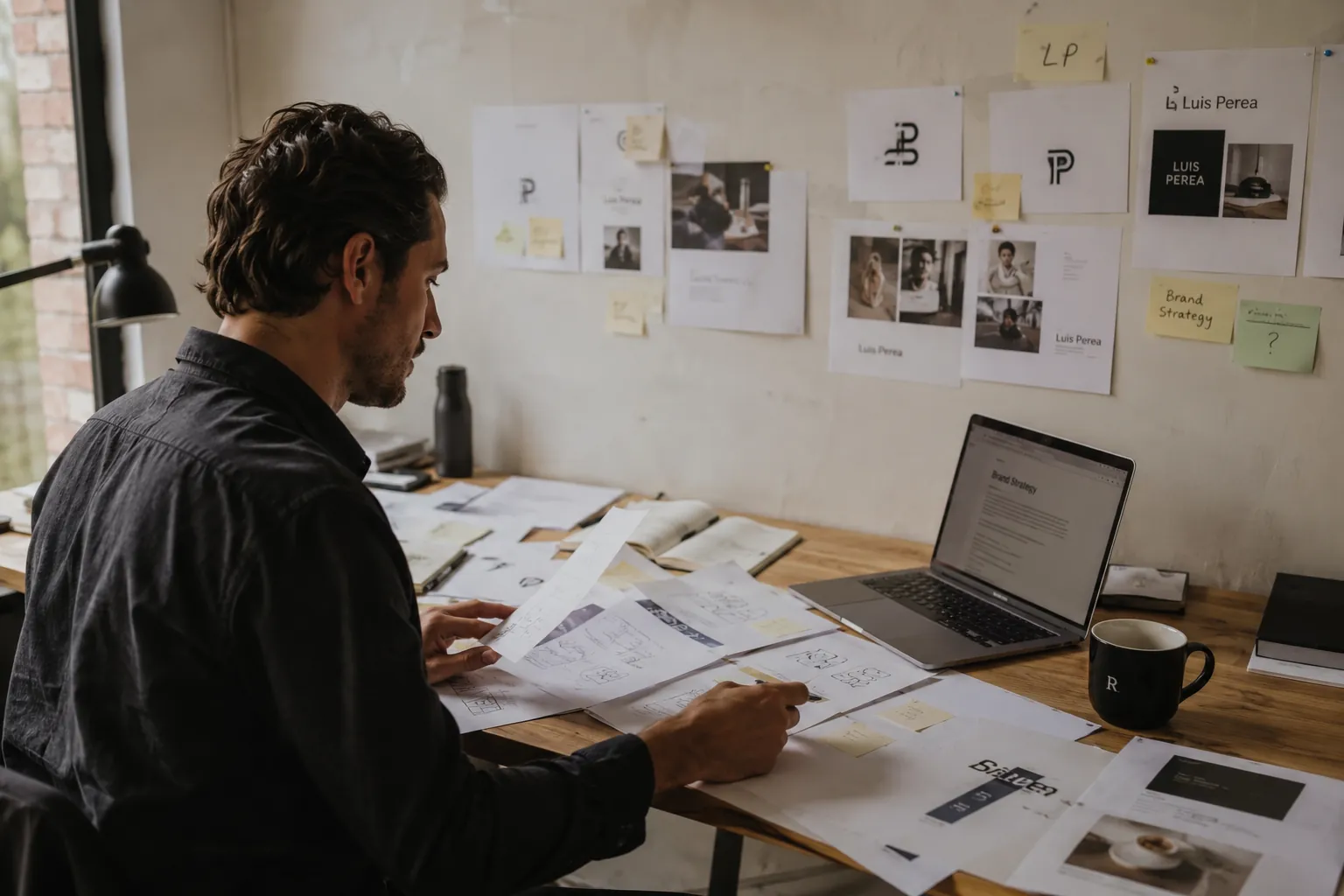
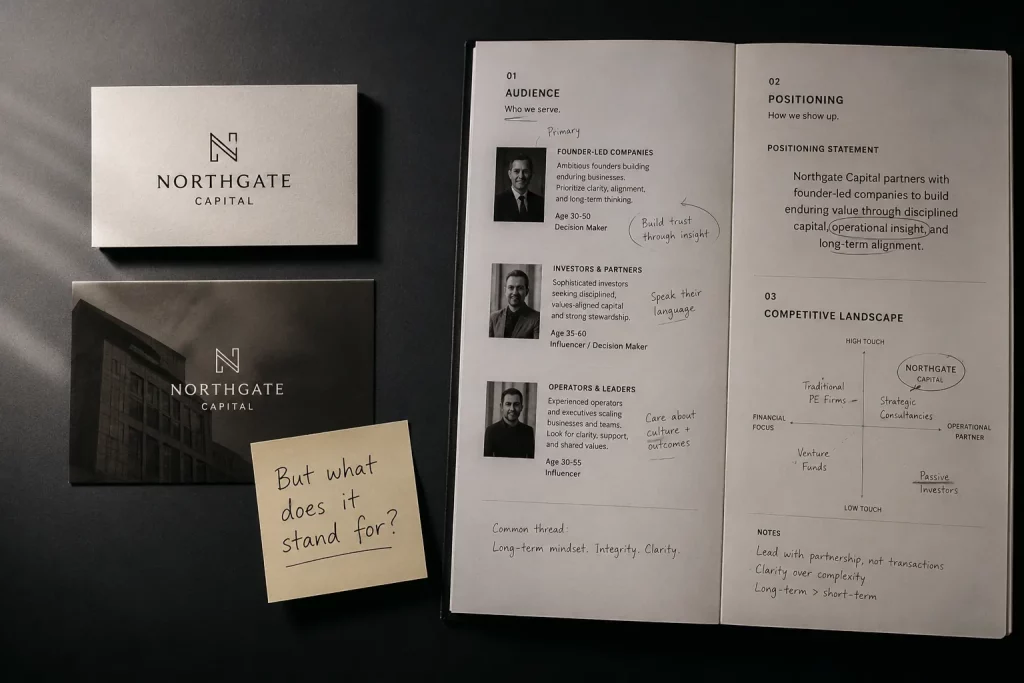
This is where professional branding services begin and where most of the genuinely important decisions get made. Brand strategy is the thinking that determines who your brand is for, what position it occupies in the market and what it needs to communicate to earn the right kind of attention from the right kind of people.

In practical terms, a brand strategy engagement typically covers:

  • Audience definition: not just demographics but how your ideal customer thinks, what they currently use and what would make them choose you instead
  • Competitive positioning: where genuine whitespace exists in your market and what claim your brand can own credibly
  • Brand purpose and values: what the business stands for beyond the product or service it sells
  • Positioning statement: a clear, internal articulation of what you do, who it is for and why it is different

Brand strategy is not always sold as a standalone service. Some agencies fold it into a broader branding engagement. Others offer it separately for businesses that already have a visual identity but need clearer strategic direction. Either way, it is the foundation on which everything else is built. Skipping it tends to produce branding that looks good but fails to connect.

For a deeper look at what this involves, read our guide on what a brand strategy agency in Dubai actually does.


2. Visual Identity Design

This is the component most people think of when they hear “branding.” It is the visual expression of everything the strategy defined, and it goes significantly further than a logo.

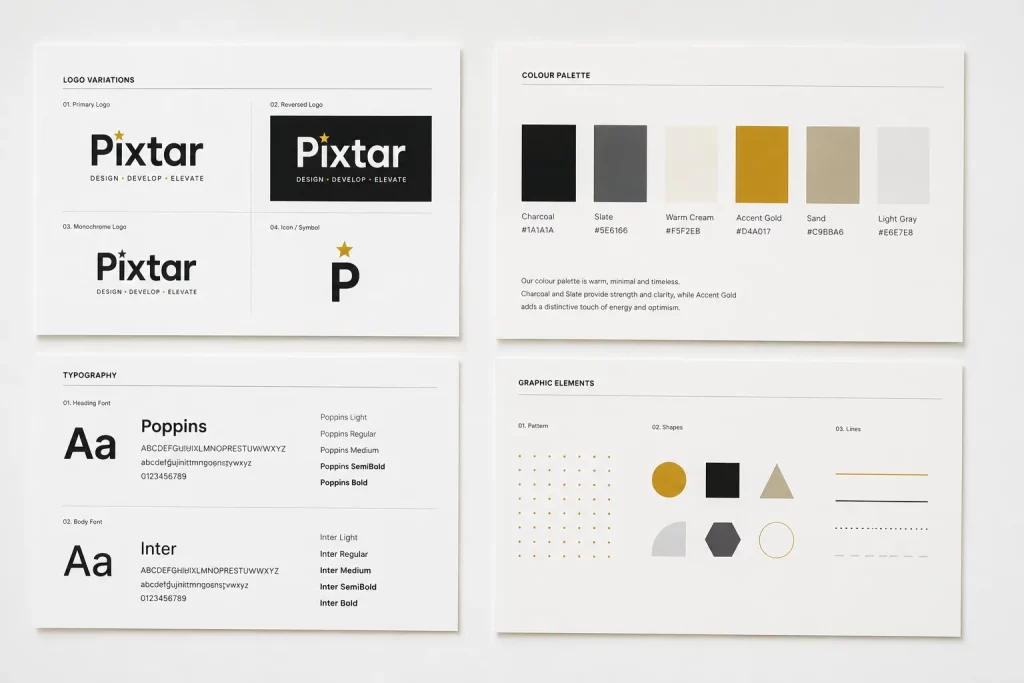
A complete visual identity typically includes:

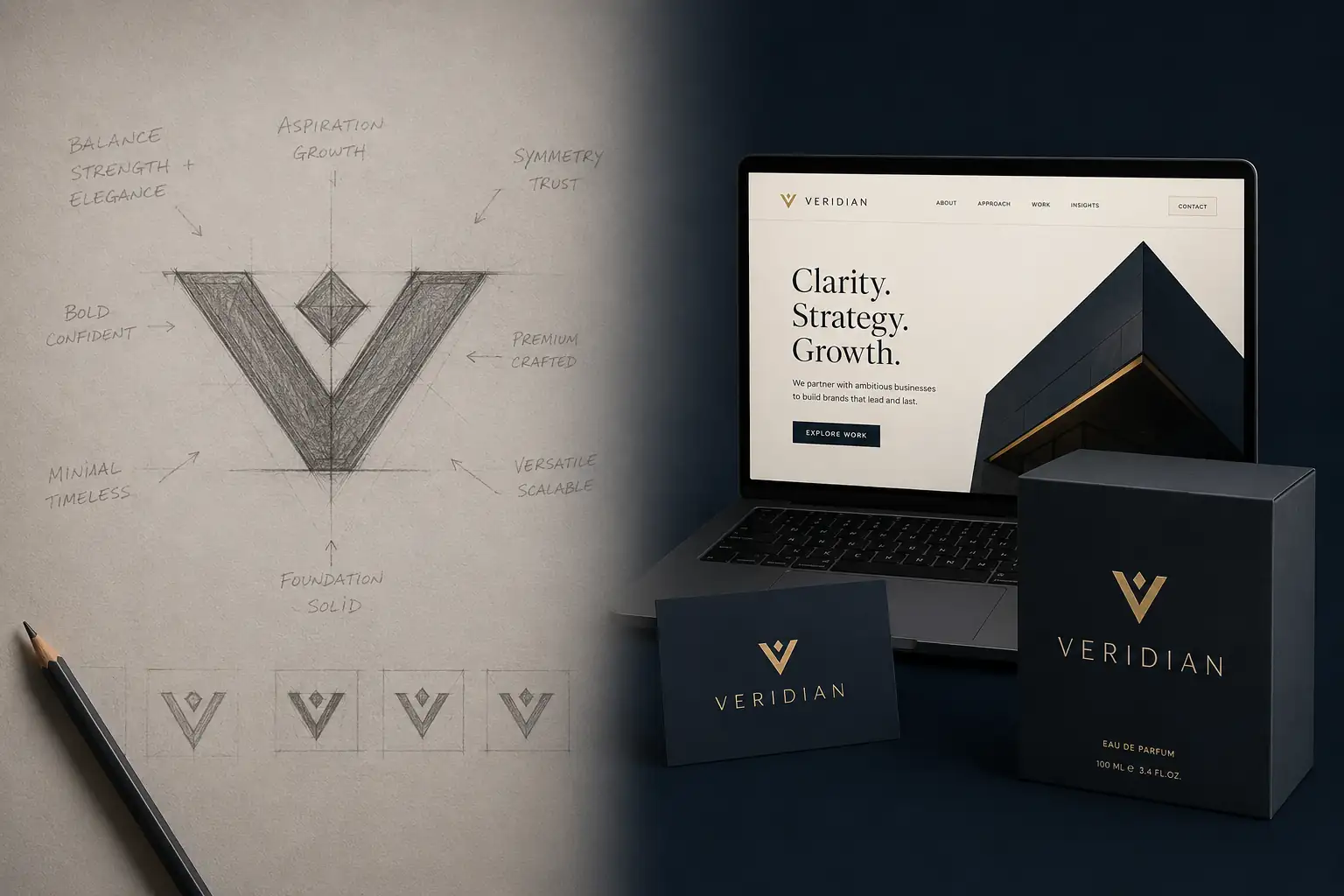
  • Logo design: the primary mark in all required variations (full colour, reversed, monochrome, icon only) and in all formats needed for print and digital use
  • Colour palette: primary and secondary colours with exact values for print (CMYK, Pantone) and digital (HEX, RGB) use
  • Typography system: primary and secondary typefaces, with guidance on how they are used across headings, body text and supporting copy
  • Graphic elements: patterns, icons, illustrations or supporting visual devices that extend the identity beyond the logo itself
  • Photography direction: the style, mood and composition approach for any imagery used by the brand

For businesses operating in the UAE, a bilingual identity is often part of this scope. This means designing the brand to work in both English and Arabic, not just translating one into the other. This requires specific typographic knowledge and is worth confirming with any agency before you brief them.
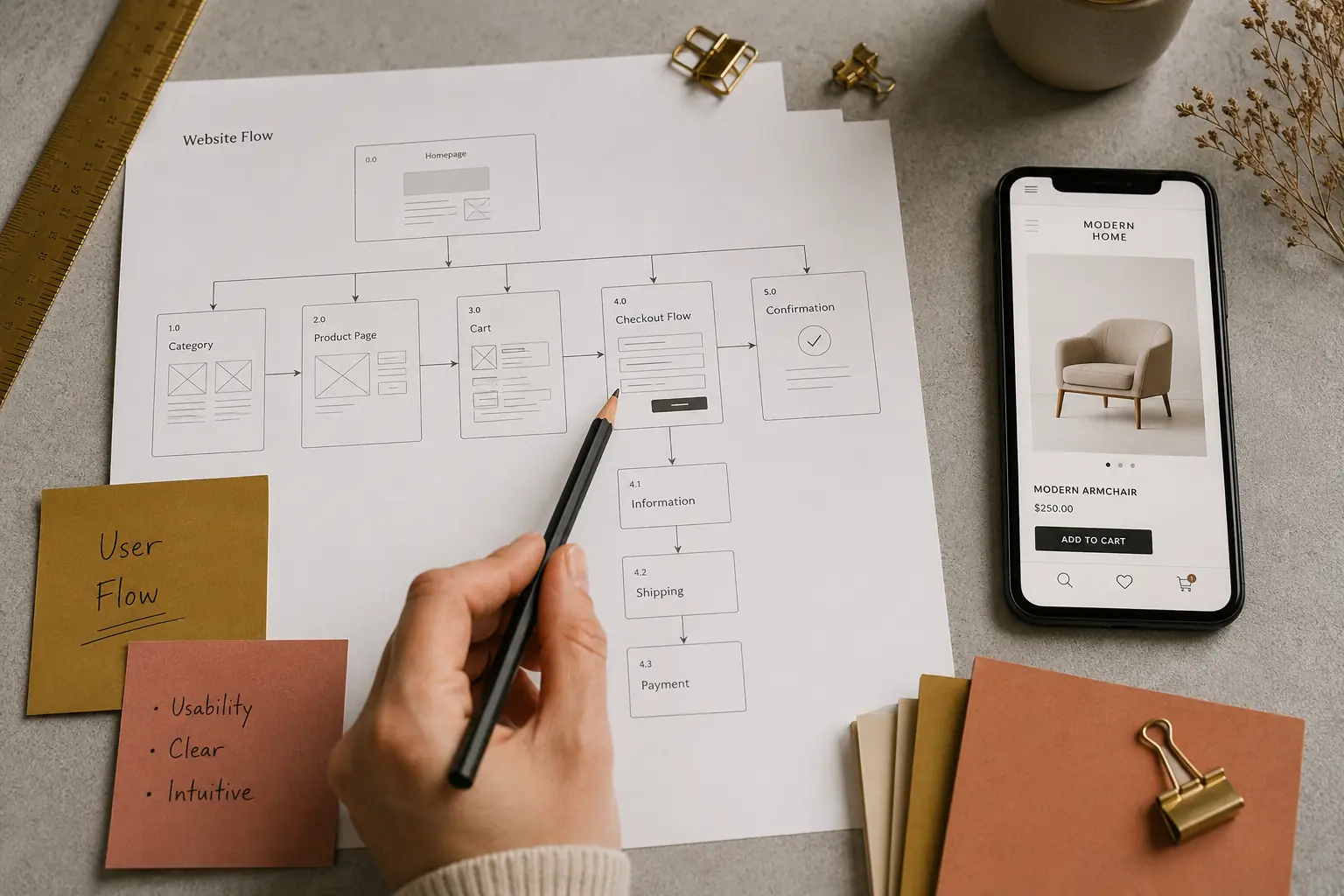
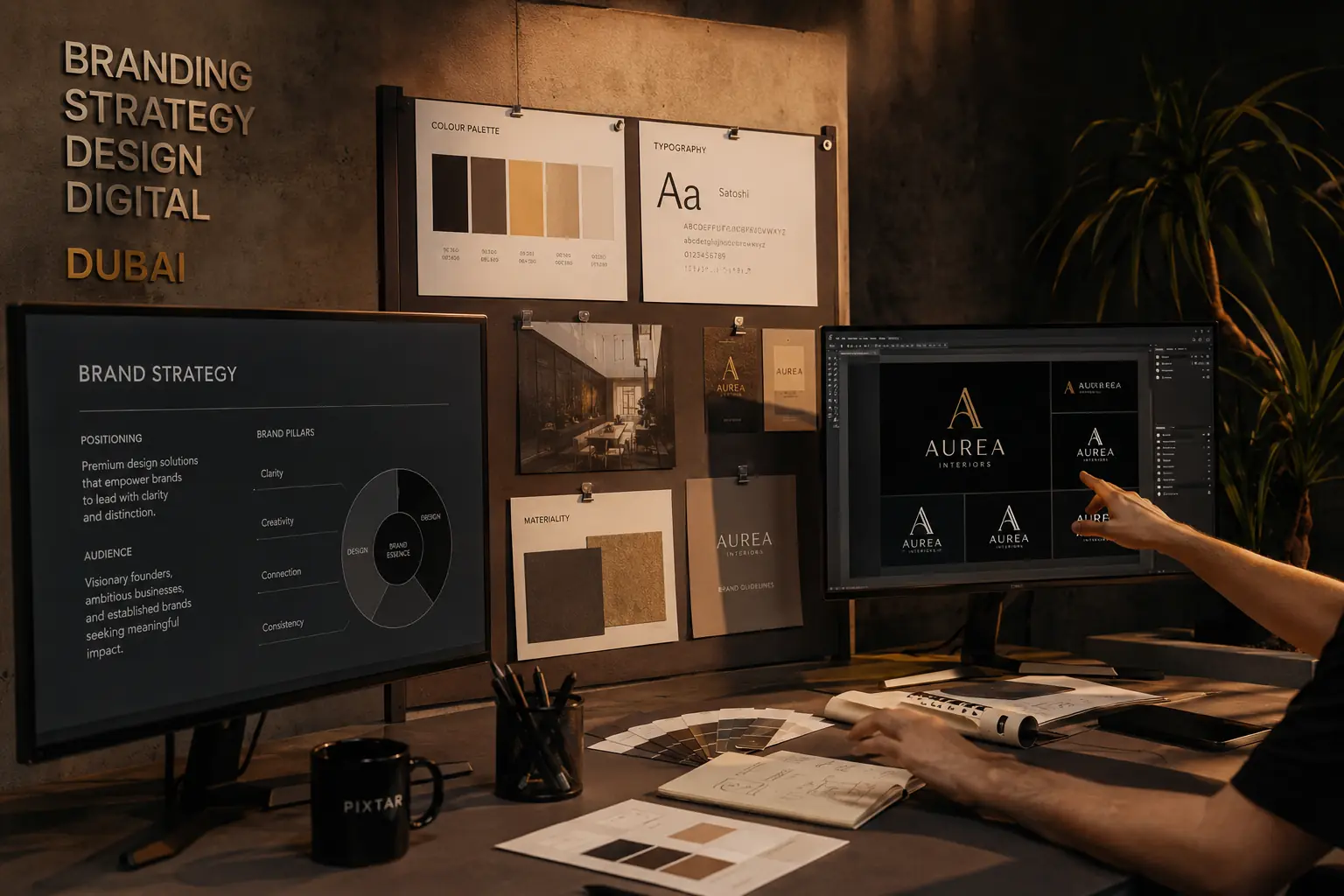
what branding services include

3. Brand Voice and Messaging

How a brand sounds is as important as how it looks. It is also the service that gets cut most often when budgets are tight. That is a mistake, particularly for businesses targeting premium or HNI audiences in Dubai who read everything and notice when something does not sound considered.

Brand voice and messaging services typically include:

  • Tone of voice definition: the character and personality of the brand in written communication, with clear guidance on what this sounds like in practice and what it never sounds like
  • Messaging framework: the core ideas the brand communicates, structured so different teams (marketing, sales, customer service) can draw from the same foundation without sounding inconsistent
  • Tagline or brand line: a short, memorable phrase that captures the brand’s position or promise
  • Key copy assets: the about section, service descriptions or other foundational copy that other content is built around

For Dubai businesses, this service also needs to account for the bilingual context. Brand voice that works in English does not automatically translate into Arabic. It requires a separate creative process to ensure the tone, character and meaning carry across both languages.


4. Brand Guidelines

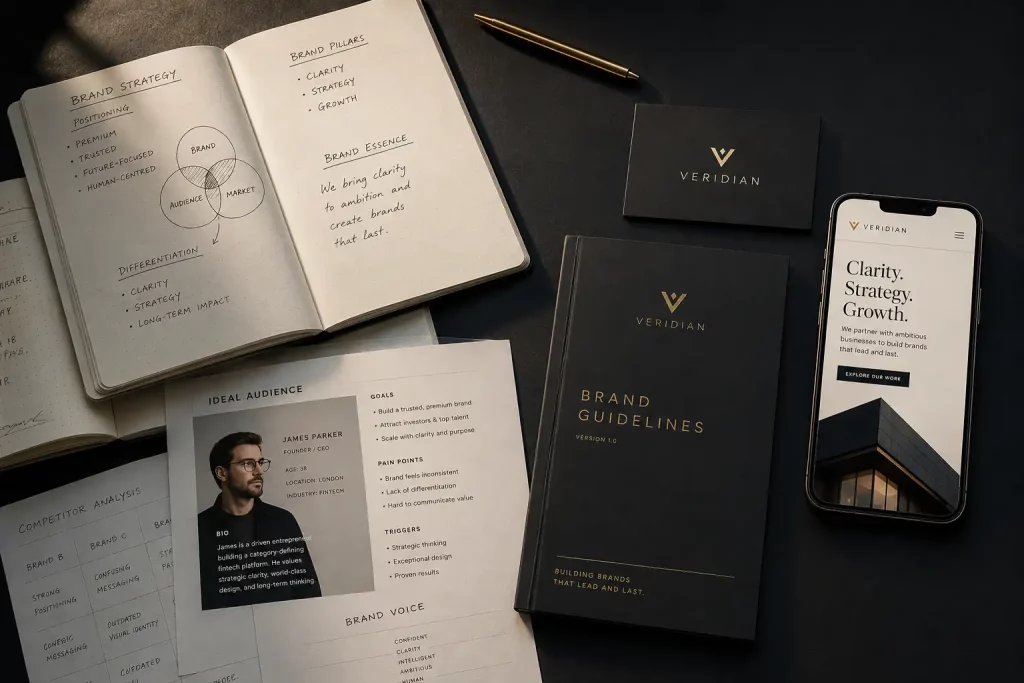
Brand guidelines are the document that governs how the identity is applied. They turn a branding project into a brand system that can be handed to a new designer, a printer, a social media manager or a developer, with confidence that the output will be consistent with everything that came before it.

A thorough set of brand guidelines covers:

  • Logo usage rules: minimum sizes, clear space requirements, what is permitted and what is not
  • Colour usage: which colours are used where, in what proportions and how they combine
  • Typography rules: which typefaces are used for which purposes, in what sizes and weights
  • Photography and imagery direction: what the visual style looks and feels like, with examples
  • Tone of voice guidance: how the brand writes, with before-and-after examples where helpful
  • Application examples: how the identity is applied across key touchpoints such as business cards, social media, signage and digital

Without guidelines, a brand degrades over time. Every new application becomes a creative decision from scratch. The result, across dozens of touchpoints over months, is a brand that looks and sounds different depending on who produced it. Guidelines prevent this. They are not a nice-to-have; they are what makes the investment in branding durable.


5. Branded Collateral and Applications

Once the core identity is established, branding services often extend into the design of materials that apply it. This varies significantly depending on the business. A professional services firm needs different collateral from a luxury product brand or a hospitality group.

Common applications included in branding service packages:

  • Business cards and stationery
  • Brochures and capability documents
  • Presentation templates
  • Packaging design
  • Signage and environmental graphics
  • Social media templates
  • Email signature design
  • Exhibition and event materials

Not all of these will be relevant to every business. A focused engagement might cover only the highest-priority touchpoints. A more comprehensive package covers the full suite. The right scope depends on where your brand shows up and what creates the strongest first impression with the people you are trying to reach.


6. Digital Brand Experience

For most businesses today, the brand lives primarily online. The website is the highest-stakes brand touchpoint, where the visual identity, the messaging and the user experience either work together or contradict each other.

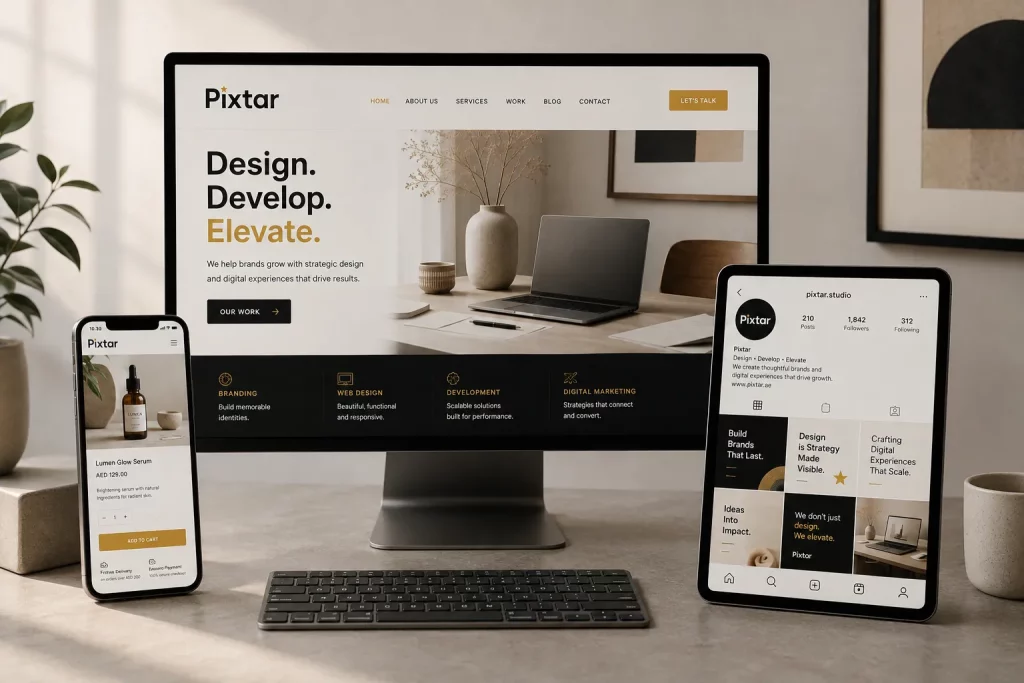
Some branding agencies include digital brand experience in their scope. Others hand off to a separate web design team once the identity is complete. The most efficient approach for businesses that need both is an agency that handles both. When the same team builds the identity and the digital experience, there is no gap in interpretation between the two.

Digital brand experience services can include:

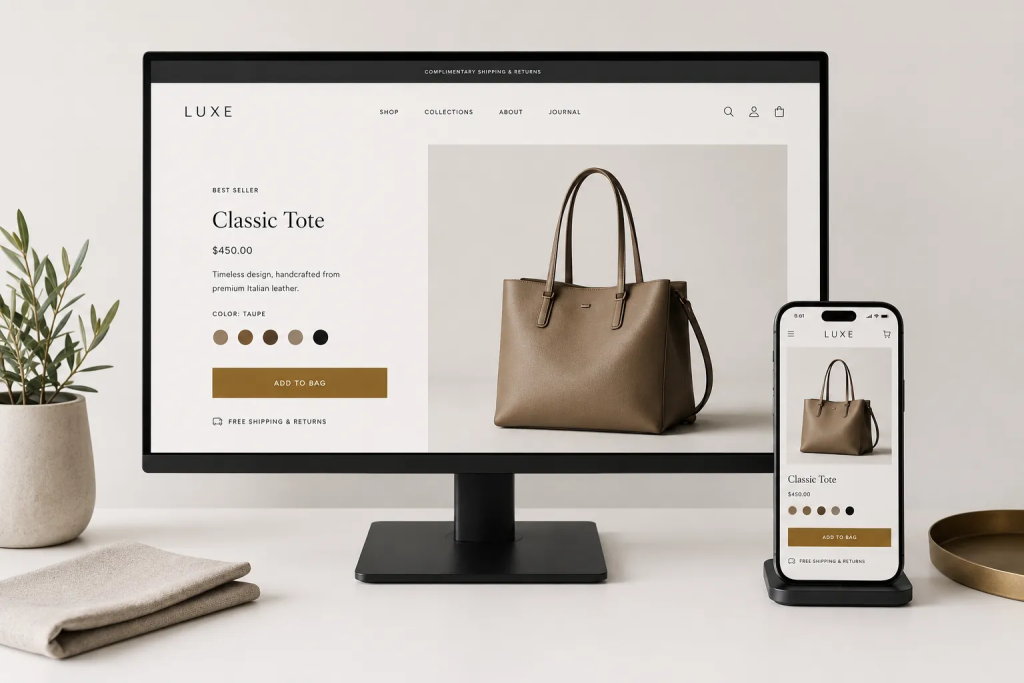
  • Website design: translating the brand identity into a digital experience that performs as well as it looks
  • UI component design: buttons, forms, icons and interface elements that carry the brand system into the product layer
  • Social media visual system: templates and design rules that keep the brand consistent across platforms
  • Digital advertising creative: brand-consistent assets for paid campaigns

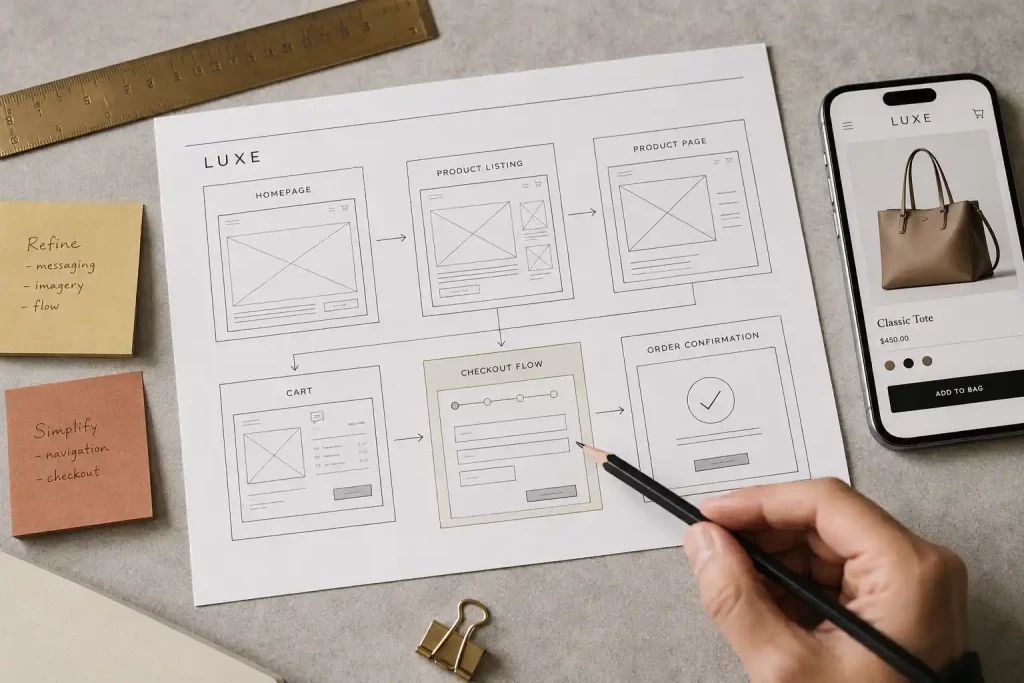
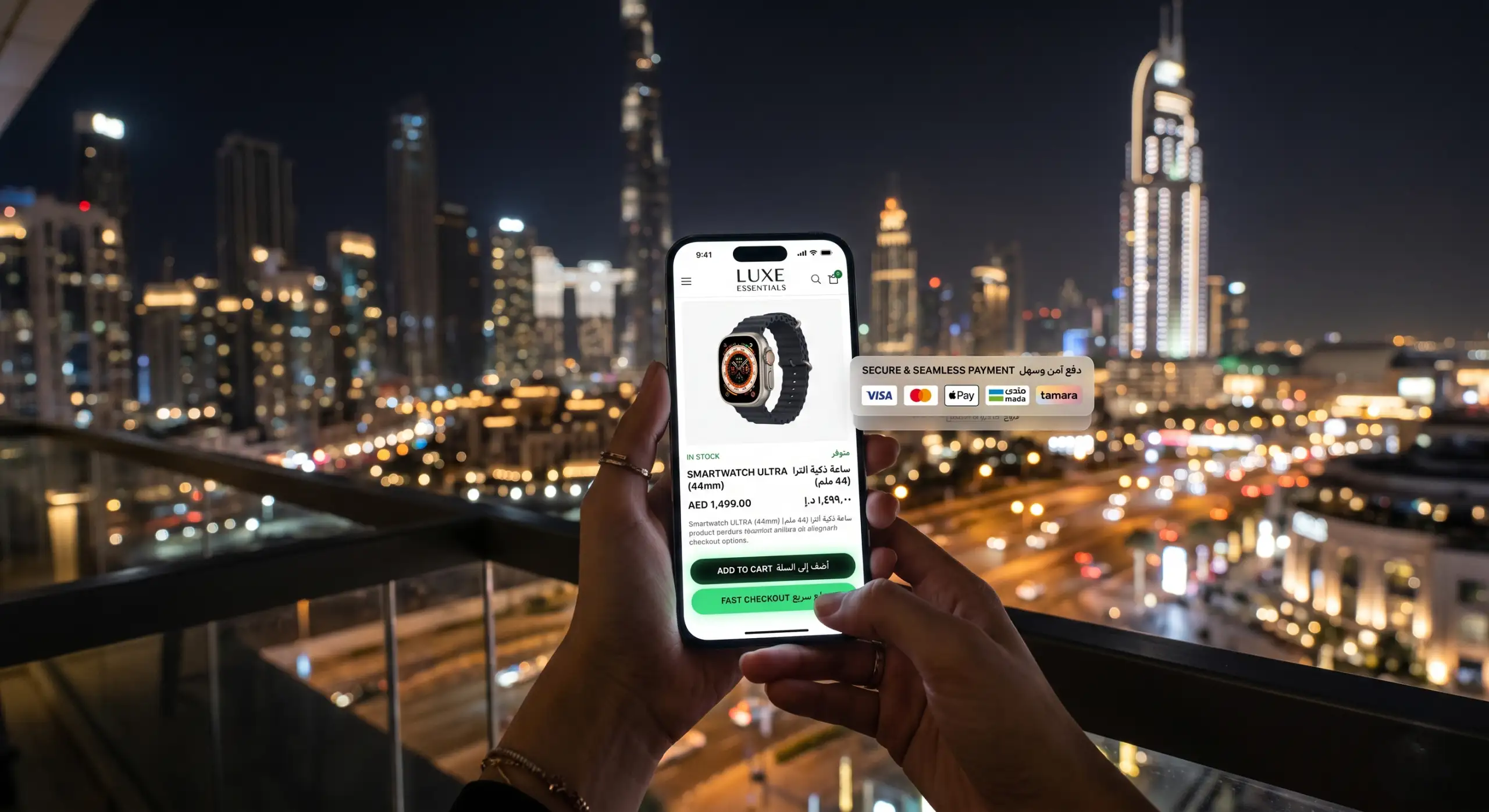
For eCommerce businesses in particular, the digital brand experience is not separate from the branding. It is the primary way customers experience the brand. The quality of the product page, the checkout flow and the post-purchase communication all contribute to brand perception in ways that a logo and colour palette alone cannot. You can read more about this in our guide on when an eCommerce site needs a redesign vs a rebuild.
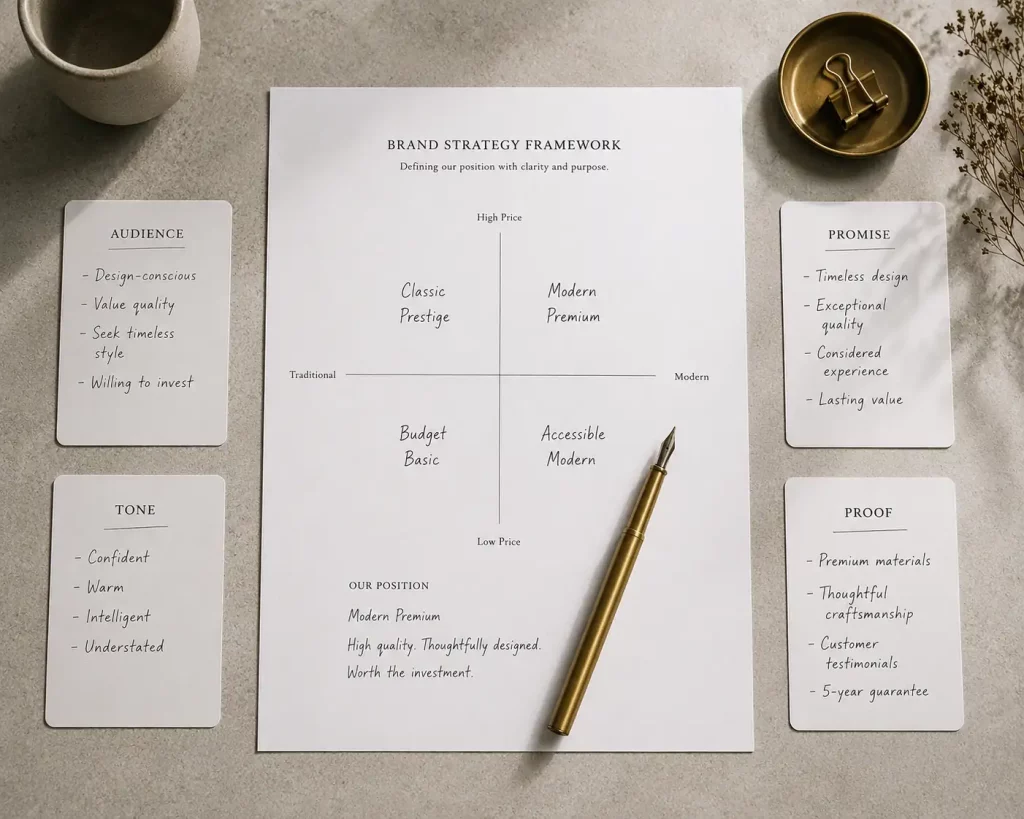
what branding services includes in dubai

7. How to Know What You Actually Need

Not every business needs the full scope of branding services at once. The right starting point depends on where you are and what the most pressing gap is.

If you are launching a new business, start with brand strategy and visual identity as a minimum. Without these, everything else (the website, the marketing, the pitch deck) is built on an unclear foundation. Add brand voice and guidelines before you go public if budget allows.

If you have an existing brand that feels dated or inconsistent, the question is whether you have a strategy problem or a design problem. If your team cannot agree on what makes the business different, that is a strategy problem. If the strategy is sound but the identity no longer reflects it, that is a design problem. The answer determines whether you need a rebrand or a refresh.

If you are scaling or entering a new market, this is the moment to audit whether your existing brand can carry the weight of growth. Brand architecture decisions (how sub-brands or new product lines relate to the parent brand) and bilingual adaptation for new markets are common requirements at this stage. Read our piece on what brand development actually means for more on this.

If you are preparing for investment or acquisition, brand coherence is part of due diligence. A brand that looks and sounds inconsistent, or that cannot clearly articulate its position, raises questions investors should not have to ask. A focused brand strategy and identity review before this process begins is almost always worth the investment.

A useful starting point: Before briefing any agency, write down what you want a new client to think and feel within the first thirty seconds of encountering your brand, whether online, in person or in print. If you cannot answer that clearly, brand strategy is where you need to start. If you can answer it clearly but the brand does not yet express it, the identity work is the priority.


Frequently Asked Questions

What is the difference between branding services and marketing services?

Branding defines who you are: your identity, your position, your values and how you communicate them. Marketing activates that identity to reach and convert an audience. Branding is the foundation; marketing is what is built on top of it. Businesses that invest in marketing without clear branding tend to run campaigns that do not compound. Each one starts from scratch rather than building on a consistent identity that people increasingly recognise and trust.

Do branding services include a website?

Sometimes, but not always. Some branding agencies offer web design and development as part of their service scope. Others focus on the brand identity and hand off to a separate web team. If you need both, working with an agency that handles both is usually more efficient, as the digital experience reflects the brand system rather than approximating it. Pixtar handles both, which you can explore on our branding services page.

How much do branding services cost in Dubai?

It varies considerably depending on scope and the agency’s positioning. A foundational brand identity (logo, colour system, typography, basic guidelines) from a professional agency in Dubai typically starts from AED 12,000–15,000. A full branding engagement including strategy, identity, voice, guidelines and collateral design can range from AED 25,000 to AED 80,000 and above for complex or enterprise-level work. Our branding cost guide for Dubai breaks this down in more detail.

How long do branding services take?

A foundational visual identity project typically takes four to eight weeks. A full branding engagement including strategy, identity and guidelines usually runs eight to fourteen weeks. More complex projects involving brand architecture, packaging systems or digital experience design take longer. The discovery and strategy phase cannot be meaningfully rushed without affecting the quality of what comes after it.

Can I get branding services for a small business in Dubai?

Yes. The scope and investment level should reflect the size and stage of the business, but the need for clear positioning and a consistent identity is not exclusive to large companies. A small business with a sharp, well-considered brand often outperforms a larger competitor with a generic one, particularly in Dubai’s premium market where buyers notice and respond to quality at every level.

What should I look for in a branding agency in Dubai?

Start with the portfolio and look for work that feels distinct across different clients rather than a house style applied to everyone. Then look at the process. A good agency will describe a discovery and strategy phase before any design begins. Ask how they handle Arabic and English brand systems if that is relevant to your audience. And ask what you will receive at the end of the project beyond the logo files. A complete set of brand guidelines is the difference between a one-time design project and a brand system that works consistently over time. For a full guide on this, read our piece on what to look for in a creative branding agency in Dubai.

Is brand strategy a separate service or part of branding?

It depends on the agency. Some include strategy as the first phase of every branding engagement. Others offer it as a standalone service for businesses that need strategic clarity but are not yet ready for a full identity project. Either way, strategy should happen before design, not after. If an agency’s process skips the strategic phase and goes straight to visual concepts, the work is built on assumptions rather than evidence. You can read more about this in our guide on what a brand strategy agency does.


Not Sure Which Branding Services You Need?

Pixtar works with premium brands, growing businesses and ambitious founders across Dubai and the UAE. We will tell you honestly what your brand needs right now and what can wait.

→ Explore Our Branding Services in Dubai

→ See Our Work

→ Book a Discovery Call

Related reading:

What Does Branding Cost in Dubai?
How to Build a Brand Identity

Further reading:
AIGA: What Design and Branding Covers
Harvard Business Review: Branding Insights
What Is a Branding Design Agency and Is That What Your Dubai Business Actually Needs?

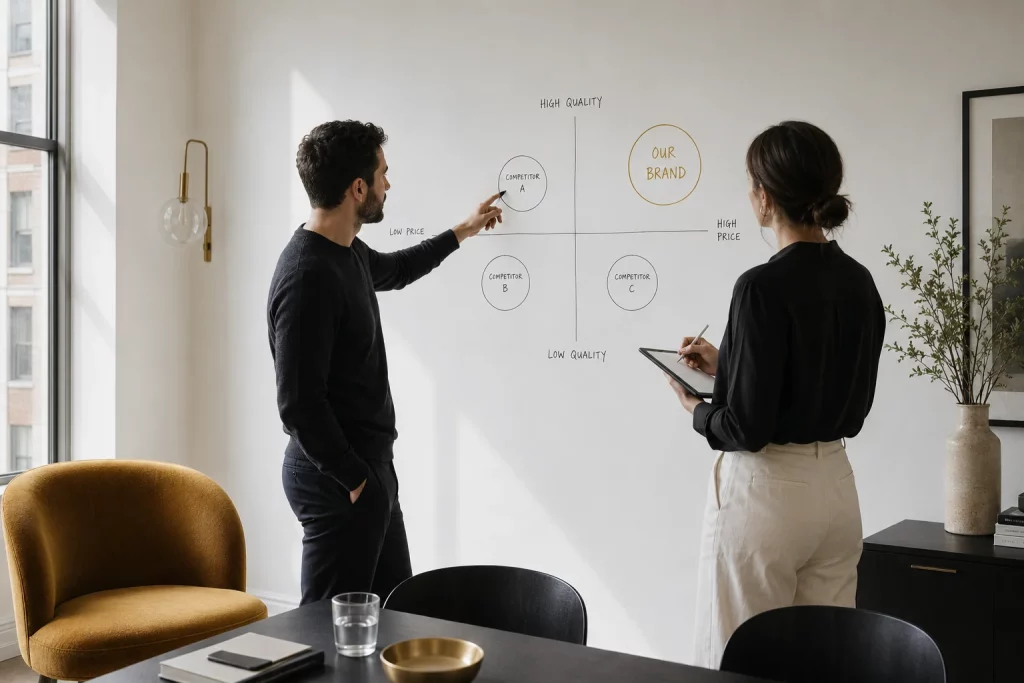
branding design agency

The phrase “branding design agency” appears in a lot of search results and on a lot of agency websites. It sounds specific. In practice, it is used loosely. Sometimes it describes a studio that does logos and visual work. Sometimes it refers to an agency that integrates strategic brand thinking with design execution. Occasionally it is used by general creative studios that do neither particularly well.

If you are looking for this type of agency in Dubai, the first useful thing you can do is understand what the term actually means. That way you can identify the agencies that genuinely offer what it implies, rather than hiring on the strength of a label.


1. What a Branding Design Agency Actually Is

A branding design agency is, at its best, an agency that does two things and connects them: it thinks strategically about what a brand needs to communicate, and it designs how that communication looks and feels across every surface the brand appears on.

The key word is “connects.” Strategy without design execution stays on paper. Design without strategy produces work that looks intentional but is not grounded in anything defensible. The result is an identity that could belong to any company in the same category.

When a branding design agency works well, the strategic thinking becomes the design brief. The positioning drives the visual direction. The audience informs the colour choices and typographic tone. The result is a brand that looks considered because it is considered. Not because someone made aesthetically confident choices, but because those choices were made in response to a clear articulation of what the brand needed to say.

This integration is what distinguishes a genuine branding agency in Dubai from a design studio that has added “branding” to its name, or a brand consultancy that produces strategy decks and hands design off to someone else.


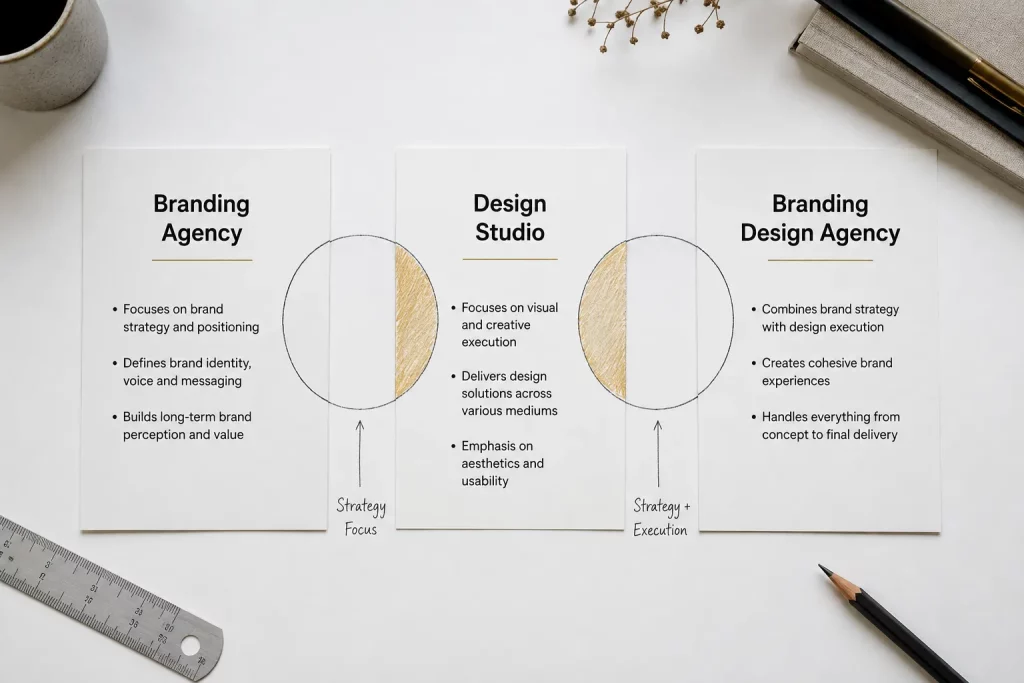
2. How It Differs From a Branding Agency and a Design Studio

These three terms are used interchangeably by some and with precision by others. The distinctions are worth understanding.

A branding agency

Traditionally focused on the strategic side of brand building: positioning, audience definition, messaging frameworks and brand architecture. Some branding agencies produce visual identity work themselves. Others define the strategy and brief a separate design team to execute it. The quality of the design work varies significantly depending on which model the agency uses.

A design studio

Primarily focused on visual execution. A strong design studio produces beautiful, technically accomplished work. The strategic inputs are usually provided by the client rather than developed by the studio. If you arrive with a clear brief and a defined position, a design studio can execute it well. If you need help working out what your brand should say before designing how it looks, a design studio is not the right starting point.

A branding design agency

Sits at the intersection of the two. It develops the strategic thinking and executes the visual identity, keeping both disciplines in the same room rather than handing off between teams. This is more efficient for most businesses and tends to produce more coherent work, because the people building the visual identity were present for the strategic decisions that informed it.

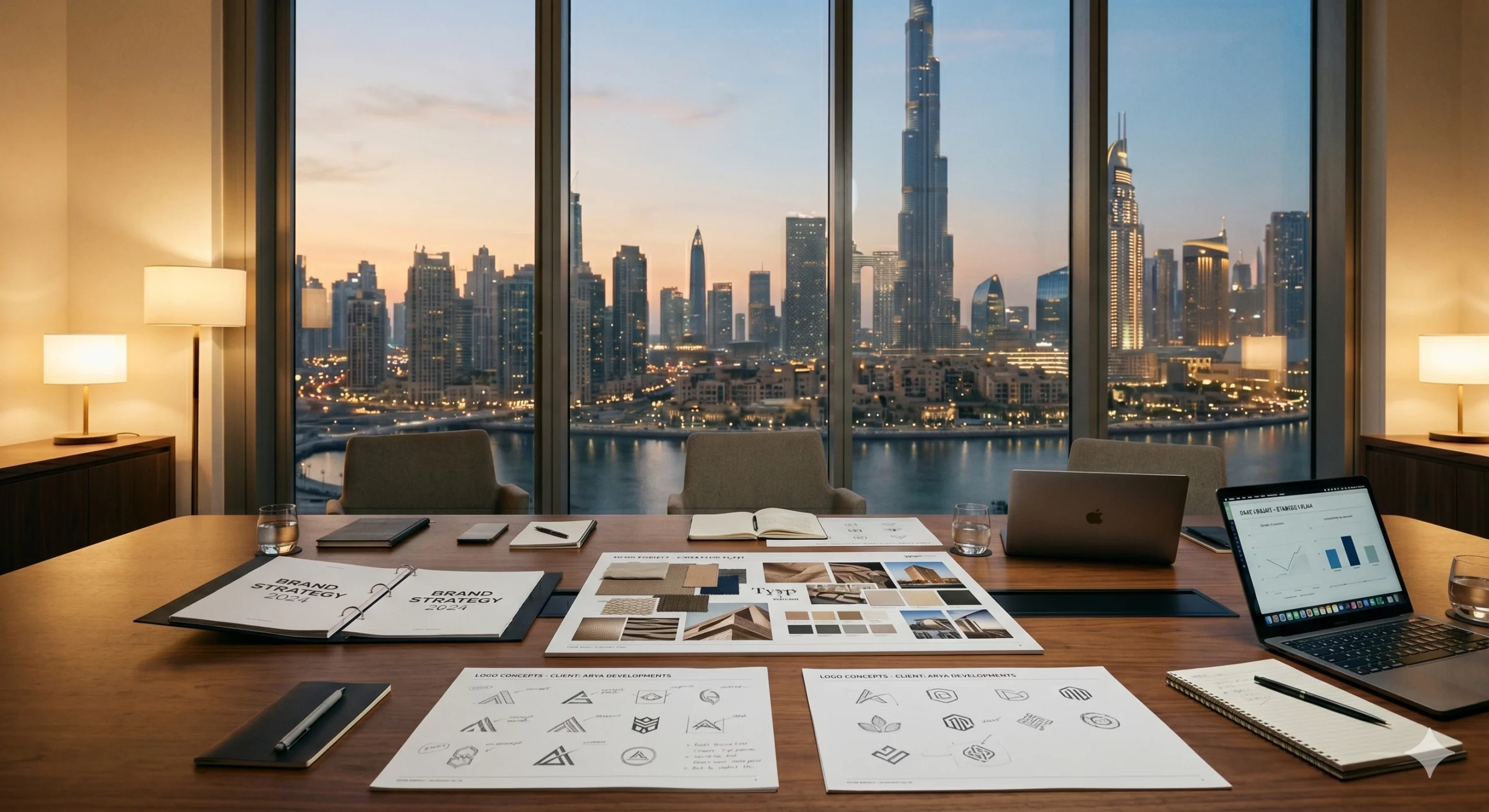
branding design agency in dubai

3. What a Branding Design Agency Does in Practice

The scope of a branding design engagement typically follows a structured sequence. Each phase informs the next. This is why the process matters as much as the output.

Discovery and research

The engagement starts with understanding the business, the audience, the competitive landscape and the problem the brand needs to solve. This is not a questionnaire. It is a substantive process that surfaces the most defensible and interesting version of the brand before any visual decisions are made. For a detailed look at what this involves, read our guide on what a brand strategy agency in Dubai actually does.

Positioning and strategy

Based on the discovery work, the agency develops a clear positioning framework covering what the brand stands for, who it is for and how it is different from the alternatives. This becomes the brief for everything that follows. Without it, visual decisions are made on preference rather than purpose.

Visual identity development

The logo, colour system, typography and graphic language are developed in response to the strategy. A branding design agency does not explore visual directions in isolation. Each direction represents a different creative interpretation of the same positioning, so the client is choosing between genuinely different strategic expressions, not just aesthetic preferences.

Brand guidelines

Once the identity is agreed, it is documented in a set of brand guidelines that govern how it is applied. This is what turns a design project into a brand system. Without guidelines, consistency degrades over time as different people apply the identity in different ways. You can read more about what guidelines should cover in our piece on what branding services actually include.

Application and rollout

The identity is applied across the touchpoints that matter most for the business, including a professionally designed business website, marketing materials, packaging, signage and digital templates. A strong brand becomes significantly more effective when it is supported by a website that reflects the same strategy and visual identity. A branding design agency continues to add value at this stage by ensuring the creative direction is applied consistently, not just technically correctly.


4. Is a Branding Design Agency Right for Your Business?

The integrated model of a branding design agency suits most businesses that need both strategic clarity and visual execution, which is the majority. But there are specific situations where it is particularly valuable.

You are building a brand from scratch. If you are launching a new business, the integrated approach ensures that the strategic thinking and the visual identity are developed together rather than sequentially. This produces more coherent work and avoids the common scenario where a strong strategy gets diluted in the design phase because the designer was not present for the strategic decisions.

Your existing brand no longer fits the business. This is one of the most common situations for established Dubai businesses. The company has grown or shifted, but the brand was built for an earlier version of the business and no longer reflects where it is or where it is headed. A branding design agency can diagnose whether this is a strategy problem, a design problem or both, and address it accordingly.

You need consistency across multiple touchpoints. If your brand needs to work across a website, physical collateral, packaging, a digital product and a retail environment, having one agency that understands the full visual system is significantly more efficient than coordinating multiple specialists.

You are entering a new market or scaling regionally. Expansion into the wider GCC or internationally often requires rethinking how the brand is positioned and presented for a different cultural context. A branding design agency can handle both the strategic adaptation and the visual application for the new market.

Worth knowing: If you already have strong brand strategy in place and just need design execution, a specialist design studio may be the more efficient choice. A branding design agency adds most value when both the strategic and creative questions are still open. It is less necessary when the strategy is settled and you are purely in production mode.

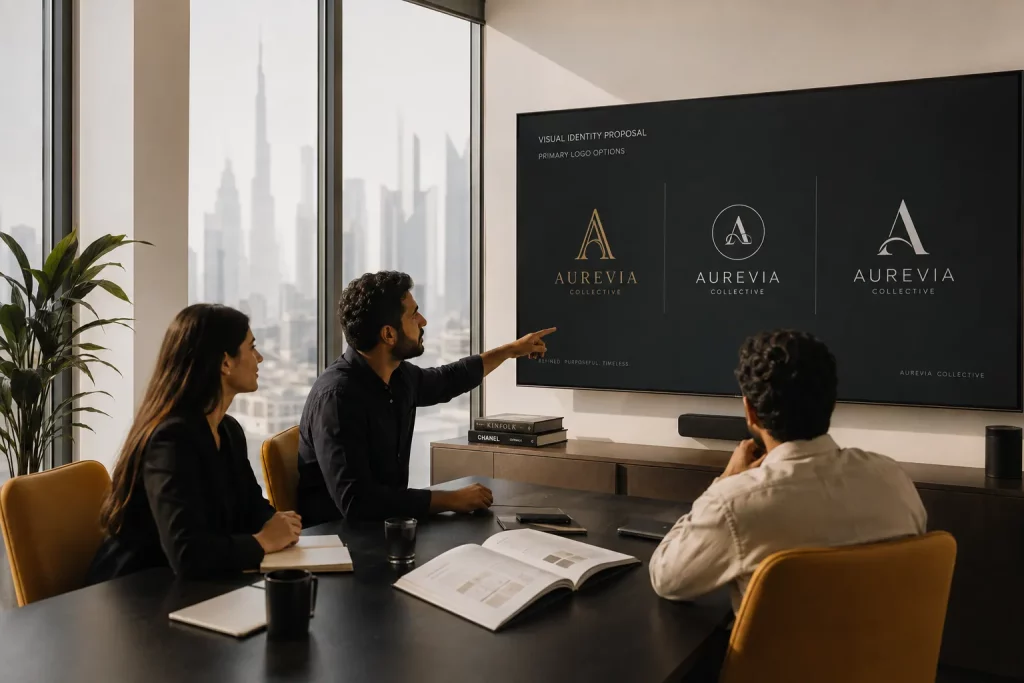
brand presentation- branding design agency

5. How to Choose a Branding Design Agency in Dubai

Dubai has a significant number of agencies using this label. The useful filter is not the description on the website. It is the evidence of integration in the work and the process.

Look for strategic evidence in the portfolio. Does the agency explain the positioning or strategic intent behind the identities it has designed? Or does the portfolio present only the visual output? Agencies that genuinely integrate strategy into their design process can articulate why they made the choices they did, not just describe what they produced.

Ask about the process before design starts. A branding design agency that takes strategy seriously will describe a structured discovery phase covering research, competitive analysis and positioning work, before any visual direction is explored. If the process description jumps straight to mood boards and creative concepts, the strategy is not really part of the offering.

Assess bilingual capability. For any brand operating in the UAE, the ability to design across Arabic and English is not optional. It is essential. Ask specifically about how the agency approaches bilingual brand systems, and ask to see examples. The best agencies design both language versions of an identity with equal care, not as an afterthought or translation exercise.

Check for consistency across applications. Strong branding design work holds up across every format it appears in. A logo that looks beautiful in isolation but is inconsistently applied across the portfolio reveals a studio that thinks in individual executions rather than systems. Look for evidence that the agency builds visual systems, not just visual moments.

Find out who actually works on your project. Some agencies pitch with senior creatives and deliver with junior staff. Ask directly who your day-to-day contact will be and who is leading the design work. The quality of the work and the quality of the relationship both depend on the answer.


Frequently Asked Questions

What does a branding design agency do that a regular design agency does not?

A branding design agency develops the strategic thinking behind the brand before designing how it looks. A regular design agency typically starts with the visual brief, executing a direction that has been defined elsewhere. The difference is whether the agency helps you work out what your brand should say, or whether they assume that question has already been answered. For businesses that need both, an integrated branding design agency is more efficient and tends to produce more coherent work.

Is a branding design agency more expensive than a design studio?

Usually yes, because the scope includes strategic work that a design studio does not provide. The relevant comparison is not the upfront cost but what each type of engagement produces. A design studio delivers visual assets. A branding design agency delivers a brand system built on a strategic foundation, giving the business a consistent, defensible identity it can apply and build on over time. The cost of having to redo design work that was not strategically grounded tends to exceed the additional investment in doing it properly the first time.

How long does a branding design project take?

A complete engagement covering strategy, visual identity and brand guidelines typically takes eight to fourteen weeks for a small-to-mid-size business. Larger or more complex projects, including those requiring bilingual identity systems, packaging design or digital experience design, take longer. The discovery and strategy phase is where the most important decisions are made and should not be compressed.

Can a branding design agency help with a rebrand rather than a new brand?

Yes, and a rebrand is often where the integrated approach adds most value. Rebranding without revisiting the strategy risks producing a new look for an outdated position. A branding design agency can assess whether the existing positioning still holds, identify what needs to change and what should be preserved, and build a new identity that is grounded in a refreshed strategic foundation rather than simply modernising the aesthetics.

Do branding design agencies in Dubai work with Arabic as well as English?

The best ones do. Arabic typography is a specialist discipline. The rules, proportions and visual logic are completely different from Latin type design. Agencies with genuine bilingual capability design brand systems where the Arabic and English versions feel equally considered and carry the same visual weight. Always ask for examples of bilingual work before briefing any agency in the UAE market.

What should a branding design agency deliver at the end of a project?

At minimum: a complete visual identity system (logo in all required formats and variations, colour palette with print and digital values, typography specifications and supporting graphic elements), a brand guidelines document covering usage rules and application examples, and all source files. A strong engagement will also deliver a positioning document or brand strategy framework that captures the thinking behind the identity, so the strategic decisions are documented alongside the design decisions.

How do I know if my business needs a branding design agency or just a graphic designer?

If your brand already has clear strategic direction, a defined position, a specific audience and a messaging framework, and you need someone to execute or extend the visual system, a skilled graphic designer may be sufficient. If the strategic questions are still open (who are we for, how are we different, what do we want people to feel), you need a branding design agency. The right entry point depends on which of those questions has already been answered. Read our guide on what branding services include to get a clearer picture of where you are in that process.


Looking for a Branding Design Agency in Dubai?

Pixtar is a branding and digital design agency in Dubai. We integrate brand strategy and visual identity design into a single, coherent process so that what gets built is grounded in thinking, not just aesthetics.

Looking for branding, web design or digital solutions? Explore all our design and development services.

→ Explore Our Branding Services

→ See Our Work

→ Start a Conversation

Related reading:
What Branding Services Actually Include
What Does a Brand Strategy Agency in Dubai Actually Do?
What to Look for in a Creative Branding Agency in Dubai
What Brand Development Actually Means
How to Choose a Graphic Design Company in Dubai

Further reading:
Design Council: The Value of Design
Harvard Business Review: Branding Insights
Shopify vs Magento vs Custom: Choosing the right eCommerce platform for your Dubai Business

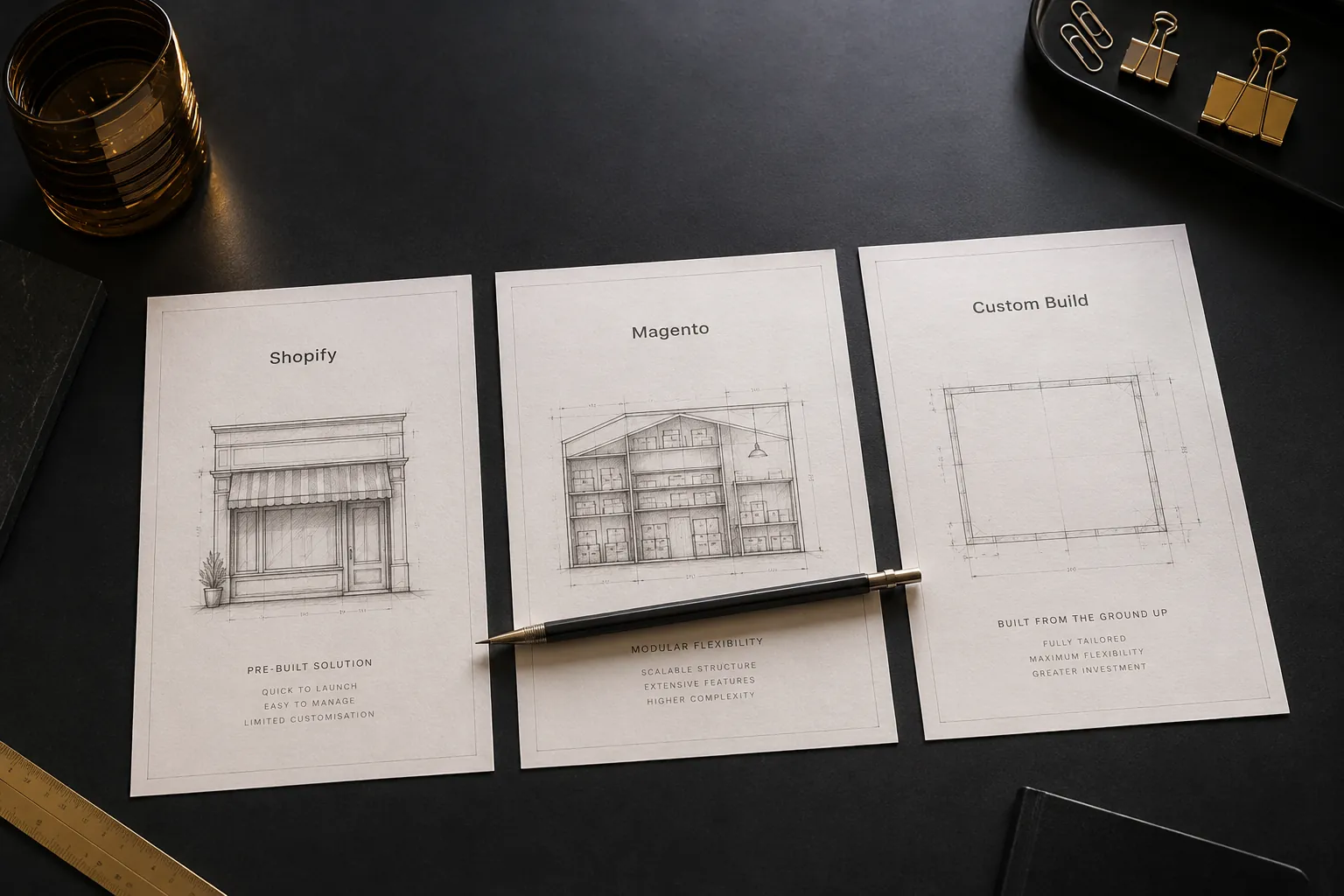
Most founders launching an ecommerce business in Dubai arrive at the same crossroads early: which platform do we build on? The answer shapes your launch timeline, your development costs, your ability to scale and the technical debt you carry into every future decision.

Shopify, Magento and custom Node.js development are not three versions of the same thing at different price points. They are fundamentally different architectural decisions, each with a distinct profile of strengths, limitations and ideal use cases. This guide cuts through the generic platform comparisons and answers the question as it actually applies to a startup founder in Dubai — where the market moves fast, the audience is discerning and getting the foundation right matters more than getting to market two weeks earlier.


1. The Real Question Behind the Platform Decision

Platform decisions are often framed as technical choices. They are not. They are business decisions with technical consequences. The right question is not “which platform is best?” — it is “which platform fits what this business actually needs to do in the next 18 to 36 months?”

That reframe matters because each platform optimises for a different set of priorities. Shopify optimises for speed to market and simplicity of operation. Magento optimises for deep customisation at scale. Custom Node.js optimises for complete architectural control and product uniqueness. None of these is inherently superior. Each is the right answer for a specific type of business at a specific stage.

Where founders go wrong is choosing a platform based on what they have heard, what a developer prefers to work in, or what looks impressive in a pitch deck — rather than on a clear-eyed view of their business model, their audience expectations and their realistic growth trajectory.

eCommerce platform

2. Shopify: What It Does Well and Where It Stops

Shopify is a hosted, all-in-one ecommerce platform. You pay a monthly subscription, get a managed infrastructure, a large ecosystem of apps and themes, and a build experience that lets a non-technical team launch a functional, well-designed store in days rather than months.

For a startup founder in Dubai launching a direct-to-consumer product — fashion, beauty, supplements, lifestyle goods — Shopify is often the most rational starting point. The development cost is lower, the time to market is faster and the operational overhead is minimal. You are not managing servers, worrying about security patches or paying a developer to maintain infrastructure. You are selling.

Where Shopify works well

Shopify suits businesses with a defined, manageable product catalogue selling through a standard purchase flow. It handles payment gateways including local UAE options, supports Arabic language and right-to-left layouts via apps, integrates cleanly with Meta and Google advertising and connects to fulfilment platforms used widely in the UAE and GCC.

Where Shopify reaches its limits

Shopify’s architecture is intentionally constrained. If your business model requires complex pricing logic, B2B account structures, multi-warehouse inventory across the GCC, deeply customised checkout flows or product configurators, you will hit those constraints sooner than you expect. The app ecosystem can solve many problems but layering too many third-party apps creates performance issues, cost accumulation and dependencies that become difficult to manage at scale.

Shopify Plus, the enterprise tier, addresses some of these limitations but at a price point that changes the economics considerably and with customisation constraints that still fall short of what Magento or a custom build offers.

Right for Shopify if: You are launching a DTC product brand, need to move fast, have a clean catalogue and want to focus operational energy on marketing and fulfilment rather than platform management.


3. Magento: Power, Complexity and Who It Is Actually For

Magento (now Adobe Commerce) is an open-source ecommerce platform built for complexity. It has a steeper learning curve, higher development cost and significantly more ongoing maintenance overhead than Shopify and in the right context, every one of those trade-offs is worth it.

Magento’s strength is its flexibility. The platform can handle thousands of SKUs, complex pricing rules, multiple storefronts in different currencies and languages from a single backend, sophisticated B2B functionality and integrations with enterprise ERP and CRM systems. If your ecommerce operation has genuine complexity baked into the business model, Magento can accommodate it in ways that Shopify simply cannot.

Where Magento works well

Magento suits businesses with large, complex catalogues- retailers with hundreds to thousands of products across multiple categories, B2B operations with tiered pricing and account management, businesses running separate storefronts for different markets (UAE and KSA, for instance) from a single platform and companies that need deep integration with existing enterprise systems.

Where Magento becomes a liability

Magento is resource-intensive. Development is slower and more expensive than Shopify. Hosting requires proper infrastructure management. Security updates require active attention. And because the platform does so much, it requires a developer or agency with genuine Magento expertise, not just general web development capability- to build and maintain it properly.

For a startup founder launching their first store, Magento is rarely the right answer. The complexity it solves is the complexity of established, high-volume ecommerce operations- not the challenges of getting a new business to its first hundred customers.

Right for Magento if: You have a genuinely complex catalogue, B2B requirements, multi-market ambitions from day one or existing enterprise systems that need deep integration. Not the right starting point for most first-time ecommerce founders.


4. Custom Node.js: What You Get When You Build From Scratch

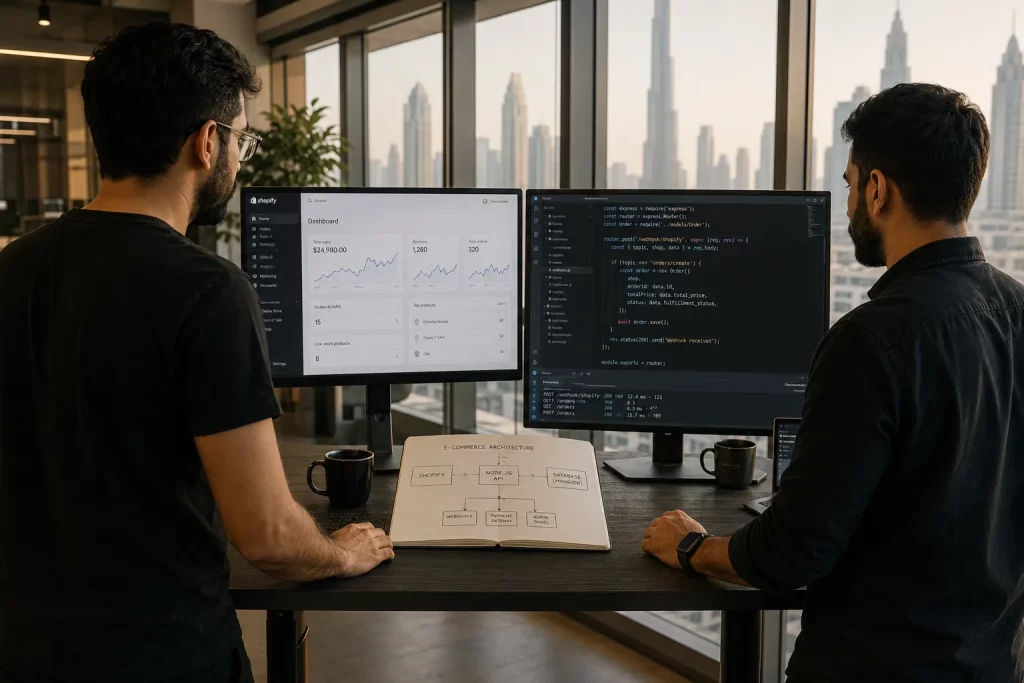
A custom Node.js ecommerce build means building the platform itself the architecture, the data models, the logic, the frontend to your exact specifications, rather than configuring or extending an existing platform.

This is not a shortcut to a better Shopify. It is a fundamentally different category of project, with a fundamentally different cost, timeline and capability profile.

What a custom build actually gives you

Complete control over every element of the user experience. No app dependencies, no platform constraints, no licensing costs that scale with revenue. A custom build can accommodate business models that no off-the-shelf platform supports well: subscription services with complex logic, marketplace models with multi-vendor payouts, highly interactive product configurators, rental or booking-integrated ecommerce and anything where the buying experience itself is a differentiator.

Node.js in particular offers a high-performance, scalable backend that handles real-time functionality well, live inventory, dynamic pricing, instant personalisation and integrates cleanly with modern frontend frameworks to produce the kind of fast, fluid experience that premium audiences in Dubai expect.

What a custom build costs you

Time and money, upfront and ongoing. A custom build takes longer to scope, longer to build and requires ongoing development resource to maintain, extend and optimise. There is no app marketplace to add functionality in an afternoon. Every new feature is a development project. If your business model is straightforward and your runway is not generous, a custom build is almost certainly the wrong starting point.

Right for custom Node.js if: Your business model cannot be accommodated by an existing platform, the buying experience is a core product differentiator or you are building at a scale and complexity where platform licensing costs and constraints make a custom build more economical over a three to five year horizon.

ecommerce platform shopify, magento and custom

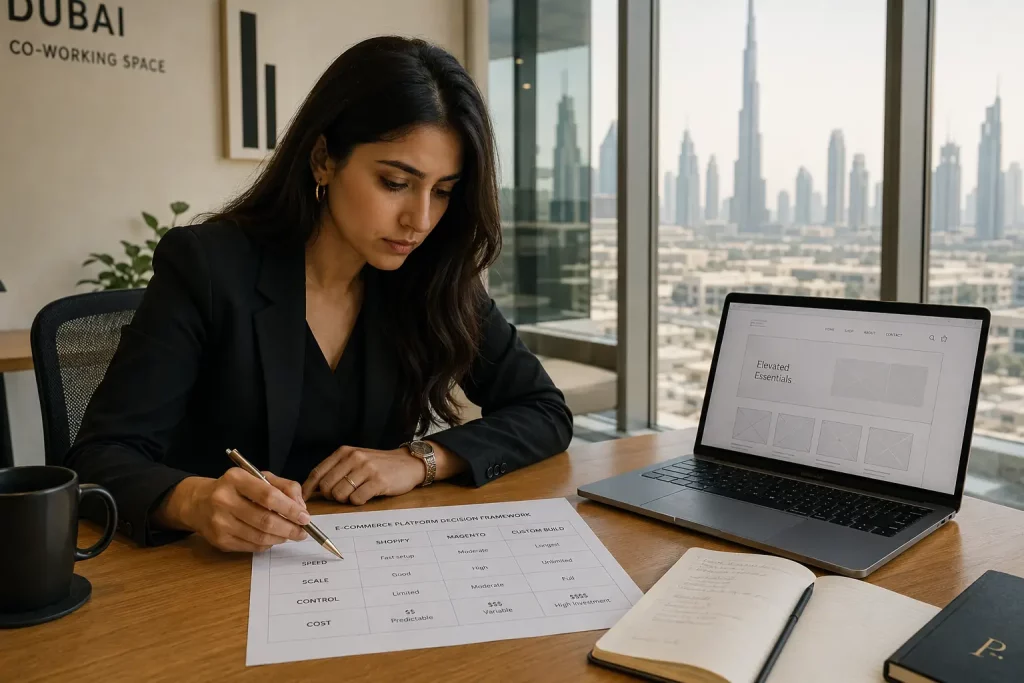
5. Side-by-Side: How the Three Platforms Compare

 ShopifyMagentoCustom Node.js
Time to launchWeeksMonthsMonths to longer
Upfront dev costLow to mediumMedium to highHigh
Ongoing costMonthly subscription + appsHosting + maintenance + devInfrastructure + dev resource
Customisation ceilingModerate (Shopify Plus: higher)Very highUnlimited
ScalabilityGood to Shopify Plus tierExcellentExcellent (you control it)
Technical team neededLow (manageable without devs)High (Magento-specialist devs)High (ongoing dev resource)
Arabic / RTL supportVia apps and themesNative supportBuilt to spec
Best forDTC startups, clean catalogues, fast launchLarge catalogues, B2B, multi-marketUnique business models, experience-led products

6. What the Dubai Market Changes About This Decision

Platform comparisons written for a Western market audience miss a few things that matter specifically in Dubai and the UAE.

Payment gateway compatibility

The UAE has a distinct payments landscape. Tabby, Tamara and Cashew are widely used buy-now-pay-later options that Dubai consumers expect. Network International, Telr and PayTabs are common regional processors. Shopify supports most of these through its app ecosystem. Magento and custom builds give you more control over how these are integrated and presented. It is worth confirming gateway compatibility before you commit to any platform.

Arabic and bilingual requirements

If your store needs to serve Arabic-speaking customers — and for most UAE businesses, it should — the implementation differs meaningfully across platforms. Shopify handles Arabic and right-to-left layouts adequately through apps and RTL-compatible themes, though it requires more configuration than platforms with native support. Magento has stronger native multilingual capability. A custom build is built to your exact requirements from the start.

The premium experience expectation

Dubai’s ecommerce audience has high expectations for the quality of the buying experience. Slow load times, generic templates and clunky mobile experiences are noticed and they cost conversions. Whatever platform you choose, the implementation quality matters as much as the platform itself. A well-built Shopify store will outperform a poorly implemented custom build every time.

GCC expansion from day one

Many UAE founders are not building only for the local market. If your plan includes Saudi Arabia, Kuwait or Bahrain within two years, the platform decision needs to account for multi-currency, multi-language and potentially multi-storefront requirements from the start. Building on Shopify and migrating to Magento two years later is a real cost that founders who did not plan for regional expansion often face.


7. How to Decide: A Framework for Startup Founders

The right platform is the one that fits your current reality and your realistic near-term trajectory not the one that handles every possible version of the business you might eventually become.

Start with Shopify if you are launching a DTC product brand, need to be live within weeks, have a manageable catalogue and want to validate the business before committing to significant platform investment. Shopify is not a compromise it is the right tool for a significant proportion of ecommerce businesses at the startup stage and beyond.

Start with Magento if your business model has genuine complexity from day one: large catalogues, B2B pricing structures, multi-market operations or deep integration requirements with existing systems. If the complexity is real and present now, not hypothetical and future, Magento’s upfront cost is justified by what you avoid rebuilding later.

Consider a custom Node.js build if your product or buying experience is itself a differentiator the way the store works is part of what you are selling- or if your business model cannot be cleanly accommodated by either of the above. Custom builds also make economic sense at significant scale, where platform licensing costs and constraints begin to outweigh the cost of building and maintaining your own infrastructure.

The conversation worth having first is with a development partner who has genuinely built on all three and has no financial incentive to push you toward any particular one. The right recommendation should come from understanding your business model, your audience and your growth plan not from what a team prefers to build in.


Frequently Asked Questions

Can I start on Shopify and migrate to a custom build later?

Yes and it is a common path. Many Dubai businesses launch on Shopify to validate the model and generate revenue, then invest in a custom build once the business case is proven and the specific limitations of the platform become real constraints. Migration involves cost and effort, but it is manageable if the decision to move is made at the right time for the right reasons rather than in reaction to a crisis.

How much does ecommerce development cost in Dubai?

Shopify builds in Dubai typically range from AED 8,000 to AED 35,000 depending on design complexity, custom functionality and integration requirements. Magento projects start higher usually AED 40,000 upwards and can reach significantly more for enterprise implementations. Custom Node.js builds vary widely depending on scope but rarely start below AED 60,000 to AED 80,000 for a well-scoped, production-ready project. Ongoing maintenance and hosting are separate considerations for all three.

Is Shopify suitable for an Arabic-language store?

Yes, with the right setup. Shopify supports Arabic through RTL-compatible themes and translation apps. It is not as seamless as a platform with native multilingual support, but for most startup-stage stores, the implementation is entirely workable. The key is choosing a theme built for RTL from the start and testing thoroughly on mobile, where layout issues are most common.

What is headless ecommerce and do I need it?

Headless ecommerce separates the frontend (what customers see) from the backend commerce logic, allowing the frontend to be built with any technology while the commerce functions run on a separate platform. It gives you complete design freedom and often better performance. Shopify and Magento both support headless configurations. For most startup-stage businesses, headless adds complexity without proportionate benefit it is worth considering when you have a specific reason, not as a default.

How important is mobile performance for ecommerce in the UAE?

Extremely important. Mobile commerce accounts for the majority of ecommerce traffic in the UAE, and Dubai’s premium audience is particularly unforgiving of slow or clunky mobile experiences. Platform choice matters here, Shopify’s hosted infrastructure generally delivers good performance out of the box but implementation quality matters more. Image optimisation, minimal app bloat and a well-structured mobile experience are non-negotiable regardless of platform.

Should I use a local Dubai agency or an international one?

A local agency brings genuine practical value for UAE ecommerce builds: familiarity with regional payment gateways, Arabic language implementation, UAE consumer behaviour and the logistics ecosystem. That said, the most important criterion is demonstrated ecommerce capability on the platform you have chosen. Look for an agency that has built production stores, not just demonstration projects, and that asks questions about your business before recommending a platform.

What about platforms like WooCommerce or BigCommerce?

WooCommerce is a viable option for founders already on WordPress who want to add ecommerce functionality, it has a large plugin ecosystem and lower initial cost. BigCommerce is a Shopify alternative with strong out-of-the-box B2B features. Neither is wrong, but for most Dubai startup founders choosing a platform from scratch, Shopify offers a stronger ecosystem, better regional support and a clearer upgrade path than either.


Related reading:
→ Startup Branding Dubai: Why Most UAE Founders Get It Wrong Before Launch
→ How to Build a Brand Identity

External references:
Shopify UAE
Adobe Commerce (Magento)


Not Sure Which Platform Is Right for Your Business?

Pixtar builds on Shopify, Magento and custom Node.js — which means the recommendation we make is based on your business, not on what we prefer to build. If you are about to make this decision, talk to us first.

→ Explore Ecommerce Development at Pixtar

→ See Our Work

→ Book a Free Platform Consultation

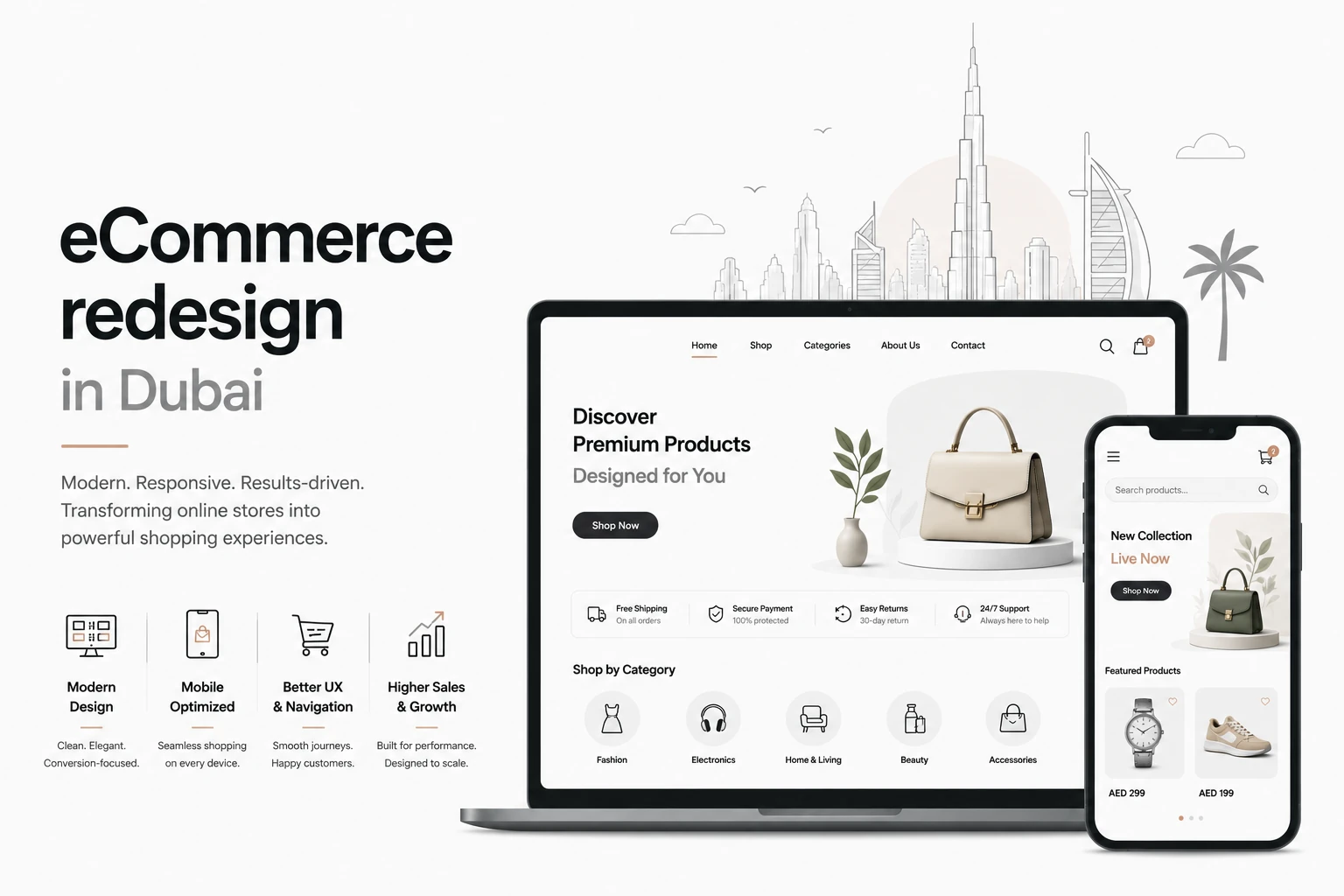
eCommerce redesign in Dubai: When a refresh isn’t enough and a rebuild is the Only Answer

eCommerce redesign in Dubai

Every eCommerce brand reaches a point where the website starts to feel like a constraint rather than an asset. Pages load slowly, the checkout feels dated, the design no longer matches the quality of the product, and yet the instinct is often to patch it. New banners. A colour tweak. A plugin to “fix” the speed issue. For a while, this works. Then it doesn’t.

The real question for premium and luxury eCommerce brands in Dubai isn’t “should we update the website?” – It’s “do we need a redesign, or do we need a rebuild?” These are fundamentally different projects, with different costs, timelines, and outcomes. Confusing the two is one of the most expensive mistakes a growing eCommerce business can make.


1. Redesign vs Rebuild: What’s the Real Difference?

A redesign works within the existing structure of your site. The platform stays the same, the back-end logic stays the same, and the changes are largely visual: new layouts, updated imagery, refreshed branding applied to existing templates. It’s faster, less disruptive, and often the right call when the foundation is sound but the experience feels tired.

A rebuild is a different undertaking entirely. It means re-architecting how the site works: the platform, the data structure, the checkout flow, the way products, collections and content are managed. A rebuild is what happens when the problems aren’t on the surface. They’re in the foundation, and no amount of visual polish will fix them.

The mistake most businesses make is hiring a designer to “refresh” a site that actually needs to be rebuilt. The result looks better for about three months and then the same performance issues, the same checkout drop-offs, and the same maintenance headaches return, because the underlying problem was never addressed.

eCommerce redesign agency in dubai

2. Five Signs a Refresh Won’t Fix Your Problem

Your site is slow no matter what you remove

If you’ve already compressed images, removed plugins, and optimised what you can — and the site is still slow — the issue is structural. Some platforms and themes simply cannot deliver the speed that modern shoppers, and search engines, expect.

Every new feature needs a workaround

If your team has become fluent in “workarounds” — manual processes to compensate for things the platform can’t do natively — you’re not running a website anymore. You’re maintaining a system that fights you.

Mobile and desktop feel like two different brands

For premium brands, this is particularly damaging. If the majority of your traffic is mobile but the experience feels like an afterthought compared to desktop, no template swap will fix that. It needs to be designed mobile-first, from the ground up.

Your checkout has a high abandonment rate you can’t explain

Cosmetic changes to a checkout rarely move abandonment numbers in any meaningful way. If people are adding to cart and leaving, the friction is usually structural — too many steps, unclear shipping costs, a process that doesn’t feel trustworthy.

You’re afraid to touch the back end

If updating a product, adding a collection, or changing a price feels risky or requires a developer every time, your platform has become a liability rather than a tool. This is one of the clearest signals that a rebuild — onto a platform your team can actually manage — is overdue.


3. The Hidden Cost of Delaying a Rebuild

The decision to delay a rebuild rarely feels like a decision. It feels like deferring — “we’ll deal with it after the next sale period,” “let’s get through this quarter first.” But every month a structurally limited site stays live, it’s costing the business in ways that don’t show up on an invoice.

Search engines reward fast, well-structured sites and quietly bury slow, poorly coded ones — meaning the organic traffic gap between you and a competitor with a modern platform widens every month. Conversion rates on outdated checkout flows tend to sit well below what a modern, optimised flow delivers — and for a premium brand, that gap compounds at higher price points. And every workaround your team builds to compensate for platform limitations becomes another thing that has to be migrated, retrained, or unwound later — at a higher cost than if the rebuild had simply happened sooner.

The honest framing: A rebuild is rarely “extra” cost. It’s cost that was always coming — the only question is whether you pay it now, on your terms, or later, under pressure, after the problems have compounded.


4. What a Proper eCommerce Rebuild Actually Involves

A rebuild done properly is not simply “the same site, but new.” It starts with a structural audit: understanding exactly what’s broken, what’s working, and what data needs to be preserved or migrated. From there, the right platform is chosen based on your catalogue size, growth plans, and operational needs, not based on what’s trending.

The information architecture is rebuilt around how customers actually shop, not how the old site happened to be organised. The checkout is designed as its own product because for eCommerce, it effectively is one. And critically, the entire experience is designed mobile-first, with desktop as the expanded view, the reverse of how most older sites were built.

eCommerce redesign in Dubai

5. Why This Decision Matters More for Premium Brands in Dubai

Dubai’s eCommerce buyers, particularly in luxury, fashion, and lifestyle categories- have been shaped by exposure to some of the best digital retail experiences in the world. They shop on platforms with seamless checkouts, fast load times, and visually considered design as standard. A slow or clunky site doesn’t just underperform quietly, it actively signals that the brand behind it may not be as premium as it claims.

There’s also the question of scale. Many Dubai-based eCommerce brands are building with regional and international expansion in mind — into Saudi Arabia, the wider GCC, and beyond. A platform that can’t support multi-currency, multi-language, or growing catalogue complexity will become the bottleneck on that growth, regardless of how good the marketing is.

The brands that get ahead of this, rebuilding before the platform becomes a visible problem- are the ones that scale smoothly. The ones that wait until customers start commenting on it are already behind.


Frequently Asked Questions

How do I know if I need a redesign or a full rebuild?

Start by separating visual problems from structural ones. If your site looks dated but loads quickly, works well on mobile, and your team can manage it easily, a redesign within the existing platform may be enough. If you’re dealing with speed issues, checkout friction, mobile inconsistency, or a platform your team struggles to use, those are structural signals and structural problems need a rebuild, not new graphics.

How long does an eCommerce rebuild take?

For a mid-sized premium eCommerce brand, a proper rebuild including discovery, design, development, content migration and testing typically takes between eight to sixteen weeks, depending on catalogue size and the complexity of integrations such as inventory systems, payment gateways, and CRM tools.

Will a rebuild affect my SEO rankings?

It can in both directions. A rebuild done without a proper migration plan (redirects, preserved URL structures where possible, retained metadata) can cause a temporary dip in rankings. A rebuild done correctly, with a documented SEO migration strategy, typically improves rankings over time because the new platform is faster, better structured, and more search-friendly than the one it replaces.

Can I rebuild without losing my existing data, products, customers, order history?

Yes. A proper rebuild process includes a full data migration plan covering products, customer accounts, order history, and reviews. This is one of the most technical parts of a rebuild and should be scoped and tested thoroughly before the new site goes live, not treated as an afterthought.

Is it worth rebuilding if my current site is “good enough”?

“Good enough” is relative to your competitors and your growth plans, not to how the site felt when it launched. If your current platform is limiting your ability to run promotions, manage inventory efficiently, or deliver a mobile experience your customers expect, “good enough” is quietly costing you conversions and growth, even if nothing feels urgently broken today.

What platform is best for a premium eCommerce brand in Dubai?

There’s no single answer; it depends on catalogue size, customisation needs, integrations, and growth plans. What matters more than the platform name is whether it’s been implemented properly: fast, mobile-first, with a checkout designed around your actual customer journey, and built by a team that understands both the technical and brand requirements of premium retail.


Not Sure Whether You Need a Redesign or a Rebuild?

Pixtar works with premium and luxury eCommerce brands across Dubai and the UAE — auditing existing platforms, identifying what’s structural versus cosmetic, and building eCommerce experiences that match the quality of what you sell.

→ Explore eCommerce Website Development at Pixtar

→ Book a Website Audit

Related reading:
eCommerce Website Redesign: What It Really Involves
Custom eCommerce Development — A Practical Guide
Why Every Premium Brand Needs a UX Audit
Why Website Loading Speed Shapes Brand Perception

External references:
Google web.dev — Core Web Vitals
Shopify — Checkout Optimisation Benchmarks

Startup Branding Dubai: Why Most UAE Founders Get It Wrong Before They Even Launch

startup branding dubai

The UAE has never been short of ambition. Every year, thousands of new businesses register across Dubai and Abu Dhabi- founders with real ideas, genuine conviction and genuine funding. And yet, a striking number of them make the same startup branding mistake, usually within the first few weeks of deciding to launch.

They design a logo before they know who they are building for.

It sounds like a small thing. It is not. And by the time most founders realise it, they have already spent money, printed materials, built a website and accumulated a brand that quietly works against them.


1. The Mistake That Looks Like Progress

There is something psychologically satisfying about seeing your brand name in a typeface you have chosen, with colours that feel right, on a mockup of a business card. It feels like the business is becoming real.

But a logo is not a brand. It is the output of a brand. When you design the output before building the foundation, you end up with an identity that has no strategic logic behind it, no positioning it was built to express, no audience it was built to speak to, no differentiation it was designed to communicate.

This matters in any market. In Dubai, it is particularly costly. Dubai is a city where premium positioning is the default expectation. If your startup branding does not immediately communicate quality, clarity, and credibility, the people you are trying to reach simply move on. There is always another option. The brands that win here are the ones that feel intentional from the very first interaction — and that feeling is not accidental. It is built deliberately, through strategy.

The core problem: A logo designed before strategy has no foundation. It may look good in isolation — but it cannot do the job of communicating who you are, who you are for, and why you are different. That work has to happen first.

startup branding dubai

2. The Five Things Dubai Startups Skip (and Regret)

1. Audience Definition That Goes Beyond Demographics

Knowing your target audience is “UAE-based HNIs aged 35–55” is the beginning of a brief, not a strategy. What are they already using? What do they find unsatisfying about it? What would make them switch, and what would make them stay? The sharper your audience understanding, the more precisely your brand can speak and the less work your marketing has to do later.

2. Positioning That Actually Holds Up

“Premium quality” is not positioning. Neither is “exceptional service” or “innovative approach.” These are claims that every brand makes and no brand proves. Real positioning is specific, ownable, and sometimes slightly uncomfortable because it means ruling something out. If your brand is for everyone, it will connect with no one.

3. A Name Built for the Market It Is Entering

The UAE operates across Arabic and English. Names that work beautifully in one language can be tonally wrong, difficult to pronounce, or unintentionally suggestive in another. This is a technical and cultural challenge that requires thought — not just a naming brainstorm conducted entirely in one language by a team based in one country.

4. A Visual Identity System, Not Just a Logo

A logo on its own cannot do the work of an identity. Fonts, colour palettes, graphic elements, photography direction, motion principles: these are the components that allow a brand to show up consistently across a website, a social feed, a pitch deck, a physical space, and a packaging design. Without a system, every new application becomes a creative decision from scratch — and the result is a brand that looks inconsistent and feels unfinished.

5. A Tone of Voice That Is Actually Written Down

How your brand speaks is as important as how it looks. But most UAE startups treat this as an afterthought — something handled in the moment when someone sits down to write a caption or a proposal. The result is a brand that sounds different depending on who is writing and what they had for breakfast. Voice should be documented, exemplified, and treated as a brand asset with the same rigour as the visual identity.

What Gets SkippedWhat It Costs You
Audience definitionMarketing spend that reaches the wrong people
PositioningA brand that blends in rather than stands out
Naming strategyA name that does not travel well across Arabic and English
Identity systemInconsistency across every new touchpoint
Tone of voiceA brand that sounds different every time someone writes for it

3. Why the UAE Market Makes This More Urgent

Startups in London or New York often have the luxury of iterating quietly in a market that is large enough to absorb early inconsistency. The UAE is different.

The networks here are smaller and more concentrated. A poorly positioned brand in Dubai does not disappear into the noise- it circulates in the same rooms as the people you need to impress. Reputation moves fast. First impressions stick.

There is also the question of internationalisation. Most UAE founders are not building only for the local market. The vision typically involves expanding into Saudi Arabia, establishing credibility with European investors, or positioning for a global category. A brand built hastily for the domestic market will struggle to make that transition cleanly. A brand built with that eventual expansion in mind is already ahead.

The Dubai reality: Premium positioning is the default expectation here, not the exception. In a market where your audience encounters world-class brands daily, inconsistency is not charming — it is disqualifying.

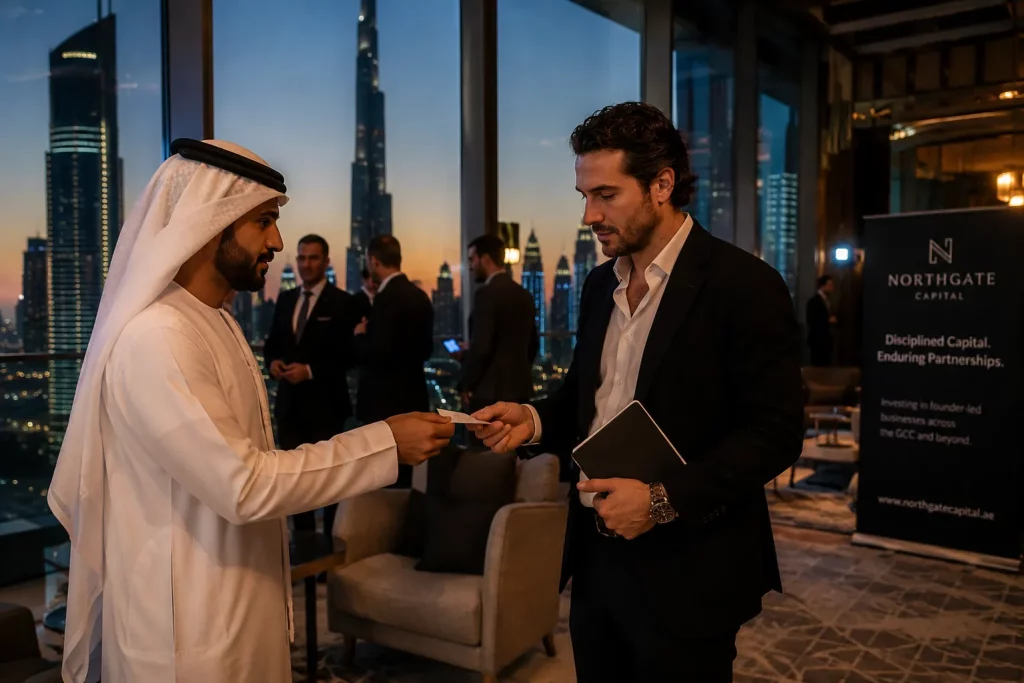
startup branding in dubai- in a networking event

4. What Smart Founders Do Instead

The founders who get this right share one characteristic: they treat brand strategy as an investment in sales efficiency, not as a cost on the way to launching.

They start with the questions that feel uncomfortable: Who exactly are we for? What do we believe that our competitors do not? What would our best client say about us to a friend? What does winning look like in three years- and does our brand today point in that direction?

They bring in strategic thinking early, before any design work begins and they use that thinking to create a brief that actually gives their creative team something to build against. The design that follows is not arbitrary. It is built to express something specific.

And when the logo, the identity, and the website are finished, everything points in the same direction. The visual and the verbal are consistent with each other and with the strategy. There is no gap between what the brand promises and what the business delivers.

That kind of coherence is not expensive to build. It is expensive not to build.


Frequently Asked Questions

When should a Dubai startup start thinking about branding?

Before launch, ideally before any design work begins. Startup branding decisions made before you understand your positioning, audience, and competitive landscape usually need to be redone within 12 to 18 months. The most efficient path is strategy first, identity second.

How much should a Dubai startup budget for branding?

This depends on the depth of the engagement and the complexity of the brand. Startup branding in Dubai typically starts from AED 12,000–15,000 for a solid foundational identity. Full brand development — including strategy, naming, identity, and guidelines- can range from AED 25,000 to AED 60,000 and above. Read our branding cost guide for Dubai to understand what is included at different investment levels.

Can I use a template or AI-generated logo to start?

You can — but understand what you are trading. A templated logo gives you a visual placeholder. It does not give you a brand. If your business is pre-revenue and you are genuinely testing an idea, a placeholder may be fine. But the moment you are presenting to investors, pitching premium clients, or entering a competitive market, a template will work against you. Read more on why custom logos matter.

Do I need brand guidelines as a startup?

Yes! and earlier than most startups think. Guidelines do not have to be a 100-page document. Even a concise brand guide covering your logo usage, colour palette, typography, and tone of voice rules will significantly improve the consistency of how your brand is applied across every touchpoint.

How do I know if my startup’s branding is working?

A few practical signals: Are people remembering your brand name after a first meeting? Does your team describe the company consistently when asked what you do? Are inbound enquiries coming from the type of client you actually want to work with? Branding is working when it quietly does the job of filtering and attracting the right people- without you having to explain yourself every time.

What is the biggest startup branding mistake Dubai founders make?

Building a visual identity before completing the strategy. The second biggest is creating a brand that is indistinguishable from competitors, which usually happens because no one asked the hard positioning question early enough. Both are fixable, but both are easier to avoid than to reverse.

Should a startup in Dubai hire a local branding agency?

A local agency brings market knowledge that is genuinely valuable for startup branding in Dubai, understanding of Arabic and English brand contexts, cultural nuances, and the specific aesthetic expectations of Dubai’s premium market. That said, the most important criterion is strategic capability first, local knowledge second. Look for an agency that asks questions about your business before it shows you mood boards.


Explore related thinking:
→ How to Build a Brand Identity
→ Brand Strategy — What It Is and Why It Matters
→ How Branding Services in Dubai Can Help Your Business
→ Custom Logo Design: Why Templates Fall Short


Startup Branding in Dubai- Done Right, From Day One

Strategy before design. Positioning before aesthetics. If you are launching in Dubai and want a brand that actually works in this market, let us help you build it properly- the first time.

→ View Our Branding Services

→ See Our Work

→ Start a Conversation with Pixtar

What Brand Development Actually Means and Why Dubai Businesses Confuse It With Branding

brand development

There is a conversation that happens in almost every client discovery call. A founder — often running a growing business in Dubai — says they want “branding”. When we dig deeper, what they actually mean is far bigger than a logo and a colour palette. They want people to understand what their company stands for. They want their team to feel proud of it. They want customers to choose them over a cheaper competitor without needing an explanation for why.

That is not branding. That is brand development. And the difference matters more than most people realise.


1. Branding Is an Output. Brand Development Is a Process.

Branding refers to the tangible, visible expression of your brand — the logo, the typography, the colour system, the visual language. It is what gets designed and delivered.

Brand development is everything that happens before and around that. It is the strategic thinking that determines who you are, who you are for, how you speak, what you believe, and where you are headed. Branding without brand development is decoration. It looks good in a presentation and falls apart the moment someone asks a hard question — like what makes you different? — and no one in the room can give a consistent answer.

For businesses operating in Dubai’s competitive market, this distinction is not academic. The UAE has one of the highest densities of premium brands per capita in the world. Your audience — whether they are HNI clients, luxury buyers, or corporate decision-makers — encounters well-branded companies every day. They are not easily impressed by aesthetics alone. What actually earns their trust is coherence: a brand that knows exactly what it is, says it clearly, and delivers on it consistently.

Key Distinction: Branding is the visible output — the logo, colours, typography. Brand development is the strategic foundation that makes those outputs mean something. One without the other produces decoration, not direction.

brand development

2. What Brand Development Actually Covers

A proper brand development process works through several interconnected layers. Each one builds on the last — which is why skipping steps always creates problems downstream.

Brand Discovery and Research

Before anything is built, there is listening. Understanding the market landscape, identifying where genuine whitespace exists, and mapping out how your audience thinks and decides. This is research-led — not assumption-led. The output is not a document; it is clarity.

Brand Positioning

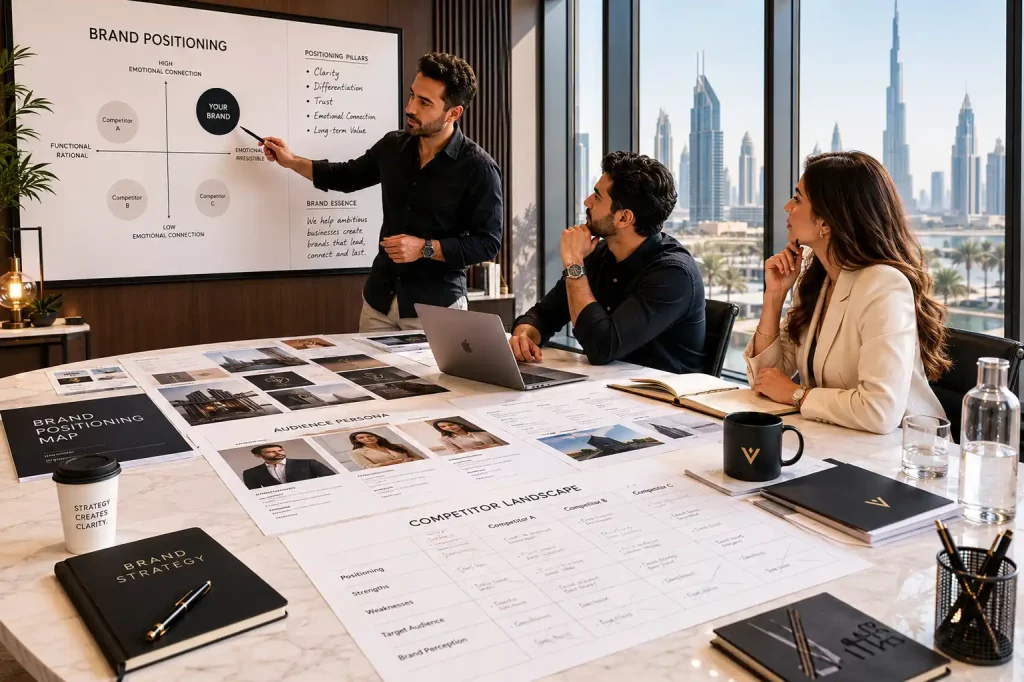
Where does your brand sit in the market? Not in the vague, aspirational sense, but specifically. What is the one thing you want to own in the mind of your ideal customer? Positioning shapes every decision that follows. Without it, you are making aesthetic choices in a vacuum.

Brand Architecture

For businesses with multiple products, services, or sub-brands, this is the work of deciding how everything relates to each other. A holding company in Dubai with four subsidiaries needs to know whether those entities should be connected, separate, or somewhere in between. The answer has significant consequences for design, marketing spend, and how customers perceive the group.

Naming and Messaging

What you are called and how you talk about yourself. Both need to feel intentional, both need to work across English and Arabic contexts in the UAE, and both need to hold up five years from now — not just next quarter. Messaging also gives your sales team, your content team, and your leadership a shared language. That consistency compounds over time.

Visual Identity

This is where branding — in the traditional sense — lives. The logo, the visual system, the design language. It arrives here, at this point in the process, because it is built on a foundation that actually means something. When visual identity emerges from positioning rather than aesthetic preference, it is more distinctive, more defensible, and more durable.

Brand Guidelines and Governance

A brand only works if it is applied consistently. Guidelines document the rules so that every touchpoint — whether it is a social post, a client proposal, or a shop fit-out — reinforces the same identity rather than diluting it. For growing businesses, this is how you scale without losing coherence.


3. Why This Matters More in Dubai Than Almost Anywhere Else

The UAE market has a few characteristics that make brand development — not just branding — genuinely essential.

The pace of business here is extraordinary. New competitors enter the market constantly. What looked like a clear positioning six months ago can feel crowded within a year. Brands that have only invested in aesthetics have nothing to fall back on when that happens. Brands that have done the deeper work have a foundation that holds.

The audience is also exceptionally discerning. Dubai attracts high-net-worth individuals, C-suite executives, and sophisticated buyers who have experienced the world’s best brands. They notice when something does not feel right — even if they cannot articulate exactly why. That unease costs you the sale.

And the ambition here is real. Most founders we speak to are not building for Dubai alone. They want to grow across the GCC, expand into Europe, attract international investment. A brand that was built only for today — without the strategic thinking to scale — becomes a liability the moment that growth happens.

On GCC Expansion: Brand development includes decisions about naming conventions, Arabic and English language considerations, and cultural resonance across different markets. Without this layer, a brand that works in Dubai can feel misaligned or generic in Saudi Arabia, Bahrain, or Kuwait.

Brand development- brand positioning

4. How to Know Which One You Actually Need

The answer depends on where you are and where you are heading.

If you are about to launch and need a visual identity, you need both — but brand development has to come first. Building a visual identity without positioning is like designing the façade of a building before deciding what it will be used for.

If you have an existing brand and something feels off — sales are inconsistent, clients are confused about what you offer, your team cannot agree on how to describe the company — you almost certainly have a brand development problem, not a design problem. A new logo will not solve it.

If you are expanding into a new market or launching a new product line, brand development is how you decide whether to extend your existing identity or build something distinct. That decision has real financial implications for how you market, how you staff, and how you price.

If you are preparing for investment or acquisition, brand development is what gives your business a coherent, defensible story — one that holds up to scrutiny. Investors are not buying your logo. They are buying your positioning, your audience relationship, and the strategic clarity behind both.

SituationWhat You Need
Launching a new businessBrand development first, then visual identity
Existing brand feeling inconsistent or unclearBrand development — the problem is strategic, not visual
Expanding into GCC or international marketsBrand development — positioning and naming review for each market
Preparing for investment or acquisitionBrand development — to build a coherent, defensible story
Launching a new product or sub-brandBrand architecture review + brand development for the new entity

5. The Real Cost of Skipping It

A rebrand costs more than an initial brand build. A repositioning exercise costs more than getting the positioning right the first time. And the damage done by years of inconsistent, misaligned brand communication — lost clients, confused prospects, missed premium pricing — is difficult to quantify but very real.

The businesses that resist brand development investment typically do so because they cannot see an immediate return. The problem is that a weak brand compounds its costs quietly. Every marketing campaign built on unclear positioning underperforms. Every sales conversation that starts with “so, what exactly do you do?” is a symptom. Every competitor who charges more for an objectively similar service — and wins — is capturing value that a stronger brand would have held.

Brand development is not a luxury. It is the foundation on which everything else is built. Invest in it properly once, and you build something that works. Shortcut it, and you will be revisiting it sooner than you planned — at considerably greater cost.


Frequently Asked Questions

What is the difference between brand development and branding?

Branding refers to the visual and verbal outputs of a brand — the logo, colours, typography, and tone of voice. Brand development is the strategic process that creates the foundation for those outputs: the positioning, the audience definition, the messaging, the architecture. You cannot build a strong brand without first doing the development work.

How long does brand development take?

A thorough brand development process for a small-to-mid-size business typically takes between four and twelve weeks, depending on the scope. For larger organisations or those with complex brand architecture needs, it can take longer. Rushed brand development tends to produce positioning that sounds good in a presentation but does not hold up in the real world.

Do I need brand development if I already have a logo?

Having a logo is not the same as having a developed brand. If your business is growing but your communications feel inconsistent, your team struggles to explain what makes you different, or your visual identity no longer reflects where you are headed — these are signs that brand development work is overdue. Design cannot solve a strategic problem.

How much does brand development cost in Dubai?

The investment varies significantly depending on the depth of the engagement, the size of the business, and the scope of deliverables. A foundational brand development process in Dubai typically ranges from AED 15,000 to AED 80,000 and above for enterprise-level work. The more relevant question is what it costs not to invest in it — in lost positioning, inconsistent client experiences, and eventual rebranding. For a transparent view of what branding and brand development cost in Dubai, read our branding cost guide.

Can brand development help with expansion across the GCC?

Yes — and it is particularly important for UAE businesses planning to scale regionally. Brand development includes decisions about naming conventions, visual adaptability, Arabic and English language considerations, and cultural resonance across different markets. Without this strategic layer, a brand that works in Dubai can feel misaligned or generic in Saudi Arabia, Bahrain, or Kuwait.

What is brand architecture and do I need one?

Brand architecture defines how the different parts of your business — parent company, subsidiaries, product lines, services — relate to each other visually and verbally. Not every business needs a complex architecture, but any organisation with more than one offering or entity benefits from having clear rules about how those pieces connect. Without it, you risk building brand equity in five different directions rather than one.

How does brand development affect SEO and digital performance?

A well-developed brand produces clearer messaging, more consistent content, and stronger topical authority — all of which support organic search performance. When your brand has a defined voice and positioning, your content naturally clusters around the same themes, signals expertise to search engines, and builds the kind of trust that turns organic visitors into enquiries.


Explore related thinking:
→ Why Every Business Needs a Website — and how your digital presence reflects your brand clarity
→ Brand Strategy: What It Is and Why It Matters
→ How to Build a Brand Identity
→ How Branding Services in Dubai Can Help Your Business


Ready to Build a Brand That Actually Works?

Brand development is not the expensive option — it is the one that pays for itself. If your brand is not clearly positioned, consistently communicated, and built to scale, let us fix that.

→ View Our Branding Services

→ See Our Work

→ Start a Conversation with Pixtar

What Does a Brand Strategy Agency in Dubai Actually Do – and Do You Need One?

Brand strategy dubai

“Brand strategy” is one of the most frequently searched, least understood terms in branding. Business owners know they need it or at least, they’ve been told they do, but ask most people to define it, and the answer tends to be vague: “it’s about positioning,” or “it’s the thinking behind the brand.”

That’s not wrong. But it’s not specific enough to be useful when you’re deciding whether to invest in it, what you should expect to receive, and how to tell a brand strategy agency that does this well from one that’s repackaging a design process with a strategic-sounding name.


1. Brand Strategy, Defined Properly

Brand strategy is the set of decisions that determine how your brand competes- decisions that, once made, shape everything else: your visual identity, your messaging, your tone, the experiences you create, and ultimately, how people choose you over an alternative.

At its core, brand strategy answers four questions. Who are you for, specifically, not generally? What do you offer that the alternatives don’t, in a way that’s credible and provable? How do you want to be perceived, and is that perception realistic given where you are today? And where are you headed — does this brand still make sense for the business you’re building toward, not just the one you have now?

A brand strategy agency’s job is to answer these questions through research and structured thinking, not assumption and to translate the answers into a framework that guides every creative and commercial decision that follows.

brand strategy in dubai

2. What a Brand Strategy Agency Actually Delivers

The output of a brand strategy engagement isn’t a mood board; it’s a set of decisions, usually documented and presented as a strategic framework. While the exact deliverables vary by agency, a genuine brand strategy process typically covers the following.

Market and competitor analysis

Not a generic SWOT exercise- a clear-eyed look at how competitors position themselves, where the gaps are, and where genuine differentiation is possible versus where every brand is making the same claim.

Audience definition

Moving beyond demographics into how your audience actually thinks and decides — what they currently use, what frustrates them about it, and what would make them choose differently.

Positioning statement

A single, clear articulation of where your brand sits in the market and why that position is both credible and ownable. This becomes the filter through which every future decision- visual, verbal, experiential- is tested.

Messaging framework

The core ideas your brand communicates, structured in a way that different teams that are marketing, sales, customer service- can draw from consistently, without sounding like they’re reading from a script.

Brand personality and tone of voice principles

How the brand should “feel” in communication, not as abstract adjectives, but as practical guidance: what this brand would say and what it would never say.

Crucially, none of this involves a logo. Strategy comes first precisely because it determines what the visual identity needs to express — not the other way around.


3. Signs Your Business Needs Brand Strategy Work

Brand strategy isn’t only for businesses starting from scratch. Some of the clearest signals come from established businesses that have outgrown the thinking their brand was originally built on.

If your team gives different answers when asked what makes the business different, that’s a strategy gap, not a communication training issue. If your marketing feels like it’s chasing trends rather than building on something consistent, the brand likely lacks a stable foundation to build from. If you’re entering a new market, launching a new product line, or have noticed competitors who started after you are now perceived as more premium, these are all moments where the existing strategy (or lack of one) is showing its limits.

And if you’re simply unsure whether your brand’s current positioning still reflects the business you’ve become, that uncertainty is usually the most reliable signal of all.


4. How to Tell Strategy Apart From Repackaged Design

Not every agency offering “brand strategy” is delivering strategic work. A useful test: ask what the process looks like before any design work begins. If the answer involves questionnaires about colour preferences and mood board reviews, that’s a design process with a strategic label attached.

A genuine strategy process involves research- conversations with your team, sometimes with your customers, analysis of competitors; and time spent understanding your business model and goals before any visual direction is discussed. It produces a document or framework you could hand to a new hire, a new agency, or an investor, and they would understand who your brand is for and why it matters- independent of any specific logo or website.

brand strategy agency in dubai

5. Why Brand Strategy Matters Differently in Dubai

Dubai’s market has a particular characteristic that makes brand strategy especially important: density. In almost every premium category that is hospitality, real estate, fashion, wellness, professional services- there are multiple well-funded, well-designed competitors operating in close proximity, often targeting the same audience.

In a market like this, good design is table stakes. Every serious competitor has a polished website and a clean visual identity. What separates the brands that build lasting recognition from those that blend into the category is strategy — a clear, defensible answer to why a customer should choose them specifically, communicated consistently across every interaction.

There’s also the matter of audience sophistication. Dubai’s premium buyers- HNIs, executives, discerning consumers, have been marketed to by some of the best brands in the world. Generic positioning doesn’t just fail to stand out here; it’s actively recognised as generic. Strategy is what allows a brand to say something that sounds considered, specific and true- rather than something that could belong to any competitor in the category.


Frequently Asked Questions

What’s the difference between brand strategy and brand identity?

Brand strategy is the thinking: who you’re for, what you stand for, how you’re positioned. Brand identity is the expression of that thinking- the logo, colours, typography and visual system. Identity built without strategy tends to look good but lack direction; strategy without identity has no way to be experienced. They work together, but strategy comes first.

How long does a brand strategy engagement take?

For most businesses, a focused brand strategy process takes between three and six weeks — covering research, stakeholder interviews, competitive analysis, and the development and refinement of the strategic framework. Larger organisations with more complex stakeholder groups or multiple business units may need longer.

Can I do brand strategy myself, internally?

You can start the conversation internally, and in fact, internal input is essential to any good strategy process. What’s harder to do internally is the outside perspective: an experienced strategist can see blind spots, untested assumptions, and category patterns that are difficult to spot from inside the business. Many businesses use internal workshops as a starting point and bring in external expertise to challenge, refine, and validate the thinking.

Do I need brand strategy if I’m rebranding rather than starting fresh?

Often even more so. A rebrand without revisiting strategy risks simply giving an outdated position a new look, solving the surface problem while leaving the underlying issue (the positioning no longer fits the business) untouched. Strategy work during a rebrand ensures the new identity is actually solving the right problem.

How do I measure whether brand strategy work has been effective?

The most reliable signals are qualitative before they’re quantitative: your team can explain what makes the business different, in similar terms, without prompting. Your marketing and content start to feel more focused and less reactive. Over time, this tends to translate into measurable outcomes- stronger conversion from brand-aware traffic, improved client quality, and greater pricing confidence, but these lag the strategic clarity itself.

What’s the cost of brand strategy in Dubai, and is it worth it as a standalone investment?

Standalone brand strategy engagements in Dubai typically range based on business complexity and depth of research required. It’s worth viewing as a standalone investment because it de-risks everything that follows a clear strategy makes design, messaging, and marketing decisions faster and more confident, which often reduces the total cost of those downstream projects.


Considering a Brand Strategy Engagement?

Pixtar works with premium brands, luxury businesses, and ambitious founders across Dubai and the UAE — building brand strategy frameworks that hold up under scrutiny and guide everything that follows.

→ Explore Branding & Brand Strategy at Pixtar

→ Book a Strategy Consultation

Related reading:
Brand Strategy: What It Is and Why It Matters
How to Build a Brand Identity

External references:
Interbrand — Brand Strategy Thinking
Harvard Business Review — Branding Insights

Best Branding Agency in Dubai: How to Find One That Actually Delivers

best branding agency in dubai

Searching for the best branding agency in Dubai will give you dozens of options. Every agency has a polished website, impressive case studies, and a confident pitch. The problem is not finding agencies, it is knowing which one will actually deliver what your business needs.

This guide gives you a clear, practical framework for evaluating branding agencies in Dubai. Not based on aesthetics or website impressiveness, but on the factors that determine whether a branding engagement produces a brand that works commercially or one that looks good in a PDF and gets shelved three months later.


What “Best” Actually Means for Your Business

The best branding agency in Dubai is not the most famous one, the largest one, or the one with the most Instagram followers. It is the one that is the right fit for your specific stage, sector, and goals.

A multinational FMCG brand and a Dubai tech startup need fundamentally different things from a branding engagement. The multinational needs brand governance systems, multi-market consistency frameworks, and enterprise-level asset management. The startup needs clear positioning, a distinctive identity, and materials that will survive the next three years of business evolution without needing a rebrand.

Before you evaluate any branding agency in Dubai, be clear on three things: what stage your business is at, what the primary output you need is (logo only, full identity, rebrand, or brand strategy), and what your timeline and budget actually are. These three factors will narrow your shortlist from dozens to three or four genuinely appropriate options.


6 Things That Separate Good Branding Agencies from Great Ones

1. They lead with strategy, not design

The clearest signal of a quality branding agency is whether they start with questions or with sketches. A branding company in Dubai that opens the conversation by showing you previous logos and colour palettes before understanding your business has inverted the process. Brand strategy : your positioning, your audience, your differentiators, what you stand for and what you do not, must precede visual design. Design without strategy produces decoration. Strategy before design produces a brand that works.

Ask any agency you are considering: what does your discovery process look like, and what does it produce? If they cannot articulate a structured discovery phase with a clear output (a strategy document, a positioning statement, a brand brief), the design work that follows will not have a foundation.

2. Their portfolio includes your sector or adjacent ones

You do not need an agency that has worked exclusively in your industry. But you should see evidence that they understand the visual language of premium businesses, know how to balance brand distinctiveness with market legibility, and can execute at the quality level your market demands.

In Dubai specifically, the visual benchmark is high. Clients, investors, and partners in the UAE have been exposed to world-class brand design from international businesses since the city’s inception. An identity that would read as premium in a smaller market may not carry the same weight here.

3. You will work with the people who actually do the work

This is one of the most overlooked differences between agencies. Large agencies often use senior creative directors in the pitch and junior teams in the delivery. The person who impressed you in the briefing may not touch your project after the contract is signed.

Ask directly: who will be working on our project day-to-day? Will the creative director who pitched be involved in the actual design? What does the team structure look like?

The best branding agencies in Dubai, particularly boutique and mid-size studios : keep senior talent involved throughout. This is often why smaller agencies outperform larger ones on quality: the people with the most experience are doing the work.

4. They have a clear and documented process

Professional branding is a structured process, not an intuitive creative exercise. Discovery, strategy, concept development, design, refinement, delivery, and guidelines — each stage should have a clear output and a defined client review point.

An agency that cannot walk you through their process step by step, or that treats process as an obstacle to creativity, is an agency that will struggle to manage your project reliably. Process is what makes quality consistent. It is what ensures that the excellent concept direction you approved in week two translates cleanly into the final deliverables in week six.

Ask for a project timeline with clear milestones and review points before you sign anything. Fixed-price proposals with defined deliverables protect both sides, you know what you are getting, and the agency knows what they are committing to.

5. They can show you outcomes, not just aesthetics

A portfolio of beautiful work is necessary but not sufficient. The best branding companies in Dubai can tell you what happened after the rebrand was delivered. Did the client attract better clients? Enter new markets? Raise investment at a better valuation? Increase prices because the brand could support it?

This level of outcome tracking is not always available, some clients are private about commercial results — but agencies that have been doing this work seriously will have at least some evidence of commercial impact. If an agency talks exclusively about how good something looks and not about what it achieved, approach with caution.

6. Their pricing is transparent and their proposal is fixed

Vague proposals with “starting from” pricing and scope creep built into the fine print are a warning sign. A professional branding agency should be able to give you a clear breakdown of what is included, what is not, how many concept directions are presented, how many revision rounds are included, and what happens if the project scope changes.

Fixed-price proposals protect you from invoice surprises mid-project. They also signal that the agency has done this enough times to scope accurately, which is itself a sign of experience.

See how Pixtar structures branding projects →


What to Ask During an Agency Briefing

When you sit down with a shortlisted branding agency in Dubai, these five questions will tell you more than any portfolio presentation.

“Walk me through a recent project from brief to delivery.” This reveals how they actually work — not just what they say their process is, but how they describe it in practice.

“Where did the concept direction come from?” The answer should trace back to the brand strategy and client brief, not to design trends or what the creative director finds interesting.

“Who will be working on our project?” Ask to meet the people, not just the partner or director.

“What do you not do?” An agency that claims to do everything: branding, digital marketing, social media, PR, media buying, content — is almost certainly not doing all of it at the same quality level. Knowing their constraints tells you where their genuine expertise lives.

“Can we speak to a recent client?” A confident agency will have no hesitation offering a reference. Hesitation or deflection is a signal.


Why Dubai Specifically Raises the Bar

Dubai is not a forgiving market for mediocre branding. The concentration of international businesses, the sophistication of local consumers, and the density of competition across every sector means that visual credibility is a commercial prerequisite, not a nice-to-have.

A brand that would be considered professional in a smaller regional market may read as underdeveloped against the competition you face in Dubai. The luxury retail environment, the density of premium hospitality brands, and the standard set by the international brands that operate here have calibrated the expectation of anyone doing business in the city.

This is also why the cheapest branding option is rarely the most economical one. A brand identity built on a tight budget that needs to be redone in eighteen months because it cannot support the business’s growth costs significantly more than investing correctly the first time.

The best branding agency in Dubai for your business is the one that challenges your thinking, asks hard questions about your positioning, and produces work that is genuinely differentiating rather than generically competent. That combination is what moves the commercial needle.

Explore Pixtar’s branding services →


Frequently Asked Questions — Branding Agencies in Dubai

How do I know if a branding agency in Dubai is right for my business? Start by looking at their portfolio for quality consistency across different clients and sectors. Then look at their process — is there structured discovery before design? And then look at their team: will the people who pitched actually do the work? Fit is about quality, process, and team transparency, not just visual aesthetics.

What is the difference between a branding agency and a graphic design agency? A branding agency builds the full system : strategy, positioning, identity, and guidelines. A graphic design agency executes visual deliverables within an existing brand framework. The best branding companies in Dubai offer both: they can define the brand and then produce everything it requires. Pixtar handles the complete scope, from brand strategy through to ongoing graphic design output.

How much should I budget for a branding agency in Dubai? A professional brand identity engagement with a mid-tier Dubai agency starts from AED 10,000 to AED 15,000 for a focused scope (strategy, logo, visual identity, and guidelines). Full-service engagements including applied collateral, digital templates, and brand activation materials range from AED 25,000 to AED 80,000+. Enterprise rebrands are scoped individually. The right budget depends on the scope of your deliverables, your timeline, and the commercial weight your brand needs to carry.

Is it worth hiring a local Dubai branding agency versus an international one? For most UAE businesses, a local agency offers meaningful advantages: understanding of the UAE market, Arabic language capability, knowledge of the local production environment, and easier communication across time zones. An international agency may bring a stronger global reputation but will typically charge more and may lack the UAE market context that determines whether your brand actually resonates locally.

How long does branding take with a top agency in Dubai? A focused brand identity engagement (strategy, logo, visual identity, brand guidelines) takes four to eight weeks with a structured agency. Logo-only projects can be completed in two to three weeks. Larger rebrands with extensive collateral application take eight to twelve weeks. Timelines are driven by client feedback responsiveness as much as by production speed — the fastest projects are the ones where the client is engaged and decisive at each review point.

Contact Pixtar — branding agency in Dubai →

Ecommerce Web Design Dubai: What to Know Before You Build (2026)

ecommerce web design in dubai

Building an ecommerce website in Dubai is not the same as building one anywhere else. The UAE market has specific requirements, including payment infrastructure, language expectations, mobile behaviour, and consumer trust signals, that a generic ecommerce build simply does not account for. This guide about ecommerce web design Dubai, covers everything you need to know before you brief an ecommerce web design agency in Dubai: which platform to choose, what features matter for UAE consumers, how much it costs, and the mistakes that cause most UAE ecommerce projects to underperform.


Why UAE Ecommerce Is Different From Everywhere Else

The UAE has one of the highest smartphone penetration rates in the world and one of the most digitally active populations in any market. Consumers here shop on mobile, pay with methods that do not exist in Western markets, and increasingly expect to interact with brands in Arabic as well as English.
The ecommerce sites winning in the UAE are not the prettiest ones. They are the fastest, the most trusted, and the most frictionless to buy from. Here is what that means in practice.

Mobile traffic dominates. Over 70% of UAE ecommerce transactions happen on mobile devices. An ecommerce website that looks good on desktop but is slow or awkward on a phone will lose the majority of its potential customers before they reach checkout. Mobile-first design is not a nice-to-have, it is the primary design constraint.

UAE payment expectations are specific. Consumers in the UAE expect to pay via credit card, but also via local gateway solutions. The rapid adoption of buy-now-pay-later options, Tabby and Tamara specifically, has been significant. Studies consistently show that stores offering BNPL in the UAE see meaningful increases in average order value and conversion rate, particularly for products in the AED 200 to AED 2,000 range.

Bilingual is increasingly the standard. The UAE has a large, affluent Arabic-speaking population who prefer to browse and buy in their native language. An Arabic-English ecommerce store, properly designed for right-to-left layout and not simply a translated English store, captures a significantly larger addressable market.


Choosing the Right Ecommerce Platform for UAE

This is the decision most UAE businesses get wrong. The right platform depends on your catalogue size, your technical resources, your timeline, and your specific functionality requirements.

Shopify for most UAE businesses. Shopify is the right starting point for the majority of UAE ecommerce businesses. It is fast to launch, easy to manage without technical expertise, has excellent app ecosystem support for UAE payment gateways, and handles the operational complexity of inventory, orders, and shipping integrations cleanly. Shopify’s mobile storefront performance is industry-leading. For most consumer product businesses in the UAE, Shopify is the answer.

The caveat: Shopify’s customisation ceiling is real. If you have complex pricing rules, tiered B2B pricing, very large catalogues (10,000+ SKUs), or custom checkout logic, you will hit Shopify’s limits and need to work around them expensively.

Magento for enterprise and complex requirements. Magento is the appropriate choice when you need genuine flexibility at scale, including multi-store setups, custom pricing engines, complex inventory hierarchies, or deep ERP integration. It requires more technical investment to build and maintain, but it provides capabilities that Shopify cannot match. If you are a retailer with a large physical operation moving online, or a B2B business with complex ordering requirements, Magento is worth the additional build cost.

WooCommerce when you are already on WordPress. If your business already runs on WordPress and your team knows how to manage it, WooCommerce is a natural extension. The caveat here is performance, WooCommerce requires careful configuration to achieve the page speed scores that UAE mobile users expect. A WooCommerce store built without performance optimisation will be slower than a Shopify equivalent.

Custom platforms when nothing else fits. For businesses with genuinely unique requirements, such as subscription models, marketplace functionality, or complex auction or bidding systems, a custom-built ecommerce platform using Node.js and React gives complete control over performance and logic. This is the highest-cost option and requires an ongoing technical relationship with your development team, but it is the right answer when the requirements genuinely cannot be met by an existing platform.


UAE Payment Gateways: What You Must Integrate

Payment gateway integration is where most UAE ecommerce stores lose customers they have already convinced. A consumer who reaches your checkout and cannot find a payment method they trust will abandon. This is not a hypothetical, UAE cart abandonment rates are high, and payment friction is one of the leading causes.

Network International is the largest payment processor in the UAE and the one most UAE consumers implicitly trust. It is the backbone of most UAE bank card processing.

PayTabs is widely used across the GCC and provides clean integration options for Shopify and Magento. Competitive pricing and good support for UAE business accounts.

Telr and Checkout.com are both solid alternatives used by many UAE ecommerce businesses, particularly those with international ambitions.

Tabby and Tamara, the buy-now-pay-later platforms, are in a category of their own. Tabby in particular has reached significant penetration among UAE consumers. If your products sit in the AED 200 to AED 2,000 range, integrating Tabby will measurably increase your conversion rate. The integration is straightforward on Shopify and Magento.


Arabic RTL: The Detail Most Agencies Get Wrong

Building a bilingual Arabic-English ecommerce store is not a translation project. It is a design project with specific technical requirements that many agencies underestimate.

Arabic reads right-to-left. A proper RTL implementation means the entire page layout mirrors, including navigation on the right, content flowing right to left, and buttons and form fields repositioned. Text alignment changes. Icon direction changes. Number and price formats follow Arabic conventions.

An English store with translated copy bolted on, where the layout remains left-to-right, is immediately obvious to Arabic-speaking users and signals that the brand does not genuinely serve them. In a competitive market where local and regional brands are building genuinely bilingual experiences, this matters commercially.

A properly implemented Arabic RTL design requires the development team to build two distinct layout systems, not one. The best implementations use CSS logical properties and a direction-aware design system that allows both language versions to be maintained from a single codebase. This is the approach Pixtar takes on bilingual ecommerce projects.


How Much Does Ecommerce Web Design in Dubai Cost?

Ecommerce web design in Dubai varies significantly by scope. Here is an honest breakdown.

AED 8,000 to AED 15,000: A Shopify store using a premium theme, configured and customised rather than fully custom-built. Includes payment gateway integration, basic product catalogue setup, and standard mobile optimisation. Appropriate for businesses launching a first ecommerce store quickly with a manageable catalogue.

AED 15,000 to AED 40,000: A custom-built Shopify store or entry-level Magento build. Custom theme development, full UAE payment gateway integration including BNPL, Arabic RTL support, and third-party integrations such as logistics, ERP, and email. This is the appropriate range for serious consumer ecommerce in the UAE.

AED 40,000 to AED 100,000+: Complex Magento builds, multi-store setups, B2B ecommerce portals, or fully custom platforms. Enterprise-level requirements with custom pricing logic, deep integrations, and high-volume traffic architecture.

The most common mistake UAE businesses make is choosing a build at the lowest cost tier and then spending a similar amount again six months later to rebuild for performance or additional functionality. Scoping the project correctly from the start, including the payment gateways, the language requirements, and the third-party integrations you will need, is what prevents this.


What to Look for in an Ecommerce Web Design Agency in Dubai

Before you brief an agency, ask these five questions.

Have they built specifically for the UAE market? UAE-specific requirements, including payment gateway integrations, Arabic RTL, and mobile performance for UAE networks, are not generic web development skills. Ask for UAE ecommerce projects in their portfolio.

Do they handle both design and development in-house? Agencies that separate design and development across different teams or outsource one to a third party introduce communication failures that show up as alignment errors, delayed launches, and post-launch performance issues.

What is their process after launch? An ecommerce store does not end at launch. Ask about post-launch support, conversion rate optimisation, and how they handle technical issues once the site is live.

Do they understand ecommerce performance metrics? A good ecommerce agency should talk to you about conversion rate, average order value, cart abandonment rate, and page speed, not just design aesthetics.

Can they show you results, not just portfolios? Ask for specific outcomes from ecommerce projects, not just screenshots of stores, but what happened to the client’s revenue or conversion rate after launch.


Frequently Asked Questions — Ecommerce Web Design Dubai

How long does ecommerce website development in Dubai take?
A standard custom Shopify build takes four to eight weeks. A complex Magento or custom platform takes ten to sixteen weeks. Timeline depends on catalogue size, integration requirements, and content readiness from the client side.

Is Shopify available in the UAE?
Yes. Shopify operates fully in the UAE and supports all major UAE payment gateways including PayTabs, Network International, Tabby, and Tamara. Shopify stores can be set up with a UAE business account and configured for AED pricing.

Do I need an Arabic version of my ecommerce store?
Not necessarily from day one, but it is worth planning for it. The UAE has a large Arabic-speaking population, and Arabic-language ecommerce is growing. If your target customers include UAE nationals and residents who prefer Arabic, a bilingual store will meaningfully expand your addressable market.

What is the difference between ecommerce web design and ecommerce web development?
Ecommerce web design covers the visual layer, including layout, product page experience, checkout UX, and brand presentation. Ecommerce web development is the technical build, including the code, integrations, performance, and platform configuration. The best outcomes come from agencies that handle both under one roof.

Can Pixtar rebuild an underperforming ecommerce store?
Yes. We handle full ecommerce rebuilds, improving design, performance, and conversion rate while migrating existing products, customer data, and order history. We preserve your URL structure to protect existing search rankings.


Get an ecommerce web design quote from Pixtar →

How Much Does Branding Cost in Dubai? (2026 Complete Pricing Guide)

branding cost in dubai

Every business owner in Dubai eventually asks this question. You know you need professional branding. You have seen what a polished identity does for a competitor or a brand you admire. But before you pick up the phone or fill in a contact form, you want to know what you are getting into financially. This guide gives you the honest numbers, what actually branding costs in Dubai in 2026, what drives the price up or down, what you should expect at each budget level, and where the most common mistakes happen.


What Affects the Cost of Branding in Dubai?

Before quoting a range, it helps to understand why prices vary so much. A logo quoted at AED 500 and one quoted at AED 15,000 are not the same product. Here is what drives the difference.

Scope of work. A logo-only project is a fraction of the cost of a full brand identity system that includes strategy, logo, colour palette, typography, brand guidelines, and applied collateral. The scope is the single biggest cost driver.

Experience and seniority. A senior branding agency that has worked with regional and international clients charges more than a freelancer who graduated six months ago. In branding, you are paying for judgment as much as execution.

Research and strategy. Some agencies skip strategy entirely and go straight to design. This produces cheaper work that usually needs to be redone within two years. Strategy- competitor research, positioning workshops, and messaging frameworks take time and add cost, but they are what make the design work long-term.

Revisions and turnaround. Rush projects and unlimited revision rounds add cost. A structured process with clear feedback rounds keeps costs predictable.

Deliverable count. A brand that needs to be applied to twenty different materials (stationery, packaging, signage, digital templates) costs more to deliver than one applied to five.


Branding Cost Breakdown by Scope

Here is a realistic breakdown of what different levels of branding cost in Dubai in 2026.

Logo Design Only: AED 2,000 – AED 8,000

A professional logo designed from scratch (not from a template generator) typically costs between AED 2,000 and AED 8,000 in Dubai depending on the agency or designer. This includes a few concept directions, revision rounds, and final files in all standard formats.

What you get: a logo file. What you do not get: a colour system, typography, usage rules, or anything that tells you how to apply it consistently.

Logo-only projects are appropriate for very early-stage businesses that need to move quickly and plan to do a proper brand identity later.

Brand Identity Package: AED 10,000 – AED 35,000

A full brand identity package is what most established businesses need. This includes brand strategy work, logo design, a defined colour palette, typography system, brand guidelines document, and basic collateral (business cards, email signature, social media templates).

At the lower end of this range (AED 10,000 to AED 18,000) you will find solid execution with a focused scope. At the higher end (AED 20,000 to AED 35,000) you get deeper strategic work, more concept exploration, and more applied deliverables.

This is the most common branding engagement for UAE businesses: startups that are past the first year, SMEs ready to professionalise, and companies entering a new market.

Full Brand System + Collateral: AED 35,000 – AED 80,000

A comprehensive brand engagement that includes everything in the identity package plus extensive application across physical and digital materials — packaging, signage guidelines, advertising templates, presentation systems, website visual design guidelines, and brand activation materials.

This level is appropriate for businesses launching a consumer product at scale, regional brands expanding into new Emirates, or companies preparing for significant investment or acquisition.

Enterprise Rebrand: AED 80,000+

Large organisations with complex stakeholder structures, multi-language requirements, extensive touchpoint libraries, and internal brand rollout needs. These projects are scoped individually and often run over three to six months.


What Does Branding Actually Cost from a Dubai Agency?

To give you a real-world frame of reference, here is how Pixtar structures branding engagements:

A logo-only project with us starts from AED 3,500. A full brand identity system including discovery workshop, brand strategy document, logo design, visual identity, and brand guidelines document starts from AED 12,000. More complex projects with full collateral application, packaging, or Arabic-English bilingual identity systems are scoped individually.

Every project comes with a fixed-price proposal before work begins — no surprises.

Get a branding proposal from Pixtar →


The Hidden Cost of Cheap Branding

The real cost of cheap branding is not the fee you pay; it is what happens afterwards. Businesses that invest AED 500 in a logo generator or AED 1,000 in a freelancer with no strategic process almost universally face one of two outcomes: they rebrand within two years at full cost, or they live with a brand that actively undermines the quality of the product or service they are selling.

In Dubai specifically, the perception gap between a premium brand and an amateur one is brutal. Investors, partners, and high-value clients make rapid judgments based on visual quality. A weak brand signals operational immaturity, regardless of how strong the actual business is.

Professional branding is not an expense. It is the foundation that every other marketing investment builds on. Your advertising, your website, your social media- all of it performs better when the brand underneath it is strong.


Is Branding Worth It for a Dubai Startup?

Yes, with the right scope. You do not need an AED 50,000 brand identity on day one. But you do need more than a Canva logo. A focused AED 10,000 to AED 15,000 brand identity gives a startup the professional foundation to compete credibly in the Dubai market, attract the right customers, and avoid a costly rebrand in two years.

The most common regret we hear from founders is not that they spent too much on branding early, it is that they spent too little and had to redo it.

Explore Pixtar’s graphic design services →


Frequently Asked Questions- Branding Costs Dubai

Can I get branding done for under AED 5,000 in Dubai? Yes, but the scope will be limited to a logo only, with limited concept rounds. For a basic logo from a professional designer, not a template, AED 3,000 to AED 5,000 is realistic. Anything below that threshold is likely template-based or offshore work.

How do I compare branding quotes in Dubai? Compare what is included, not just the price. Ask for a scope breakdown: what deliverables, how many concepts, how many revision rounds, what file formats, and whether strategy work is included. A quote that looks cheaper often excludes half the deliverables.

Does a rebrand cost more than a new brand? Not necessarily. A rebrand starts with more context- existing brand elements, established audience, and clear problems to solve. This can make strategy more efficient. However, if there are many existing touchpoints to update (signage, packaging, website), the application cost will be higher.

How long does branding take in Dubai? A logo-only project takes two to three weeks. A full brand identity system takes four to eight weeks. Rush projects can be accommodated at a premium.

Does Pixtar do payment plans? Contact us to discuss payment structure for larger projects.

Contact Pixtar to discuss your branding budget →