What Is a Monthly Graphic Design Retainer and Is It Right for Your Business?

monthly graphic design

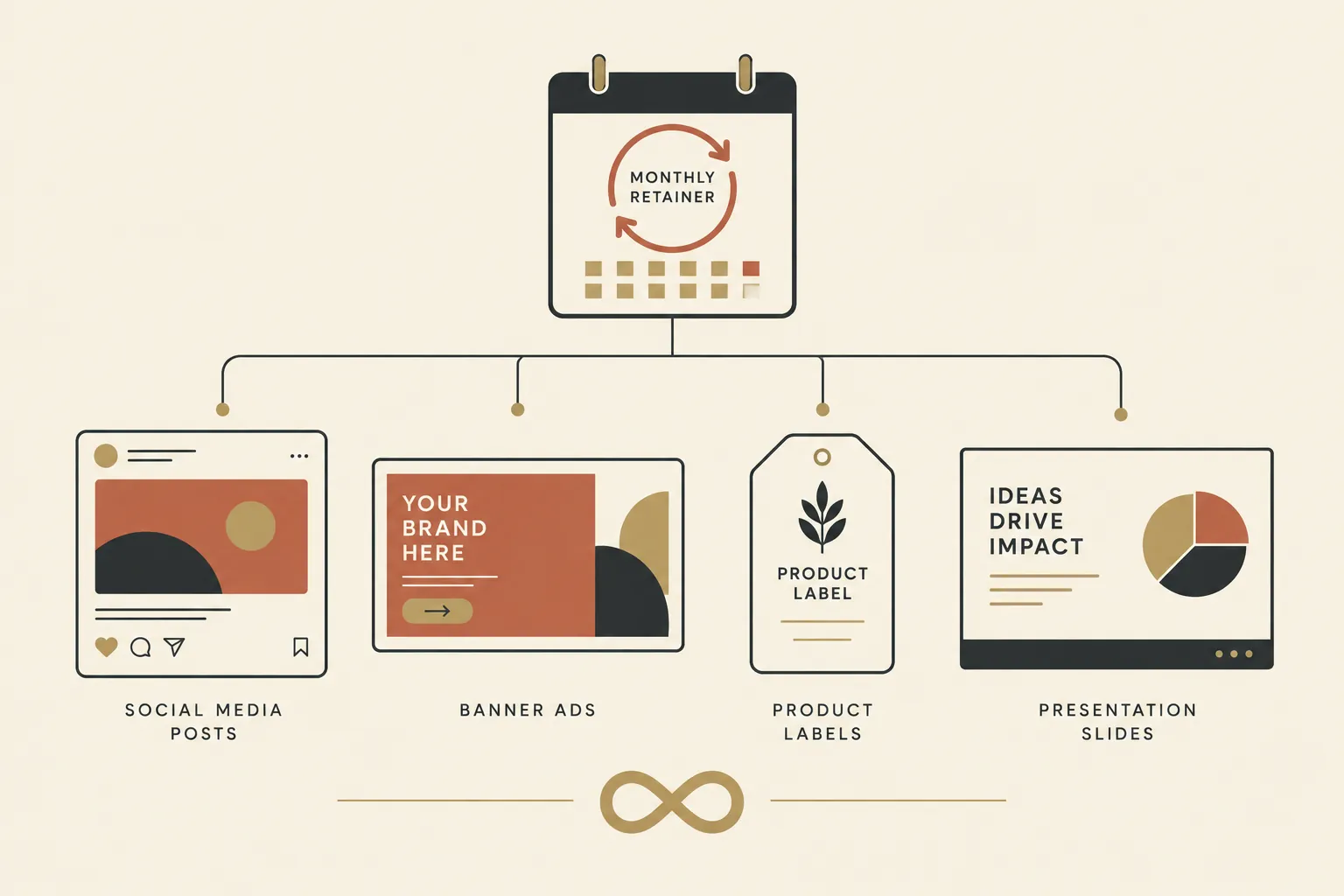
Most businesses need design work more often than they realise, and less often than it would justify hiring someone full time. A social media post here, a promotional banner there, a new product label, a presentation for a client pitch. Each request is straightforward on its own. Together, they create a steady, unpredictable demand that neither a full-time hire nor a project-by-project freelancer arrangement handles particularly well.

A monthly graphic design retainer is a model built specifically for this situation. It gives a business access to professional design output on an ongoing basis, at a predictable monthly cost, without the overhead of employment or the friction of re-briefing a new designer every time a task comes in. This guide explains what a retainer actually covers, how to evaluate whether it is the right model for your business and what to look for when choosing a retainer partner in Dubai.


1. What a Monthly Graphic Design Retainer Actually Is

A graphic design retainer is an ongoing agreement between a business and a design agency or designer, where the business pays a fixed monthly fee in exchange for a defined volume of design work. The exact structure varies between providers, but the core idea is consistent: predictable access to design capacity, without the commitment of employment or the administrative overhead of quoting and invoicing every individual task.

Unlike a project engagement with a defined start, end and deliverable set, a retainer runs month to month. Tasks are submitted as they arise, completed within agreed turnaround times and rolled through as the business’s needs evolve. The relationship builds over time: the design partner learns the brand, the tone and the recurring output requirements, which means less briefing friction and more consistent output quality as the arrangement continues.

Some providers offer a fixed number of tasks or design hours per month. Others, including unlimited design models, operate on a queue-based system where tasks are completed one at a time with no cap on the number submitted. Both models have merits depending on how predictable and how varied the design demand is.


2. What a Retainer Typically Covers

The scope of a monthly graphic design retainer depends on the provider and the plan. For a marketing-active business in Dubai, a well-structured retainer typically covers the following.

Social media graphics

Feed posts, stories, carousels, promotional announcements and campaign visuals across Instagram, LinkedIn, Facebook and other relevant platforms. This is usually the highest-volume output category for most businesses and the one that creates the most consistent demand month to month.

Marketing and promotional materials

Email headers, newsletter designs, digital banners for paid campaigns, promotional flyers and event materials. Tasks that arise around sales periods, product launches or campaigns are handled as part of the retainer rather than as separate quoted jobs.

Brand collateral

Business cards, letterheads, presentation templates, proposal decks and any supporting materials that keep the brand consistent across business development and client-facing activity.

Product and eCommerce assets

For product brands and online retailers, a retainer covers the ongoing production of product page graphics, category banners, packaging label updates, size charts and promotional creative that keeps the store visually current without requiring a separate project every time.

Digital advertising creative

Static and animated ad creative for Meta, Google Display, LinkedIn and other paid channels, sized and formatted for each placement and updated as campaigns change.


3. Retainer vs Project-by-Project: How to Choose

Both models are legitimate. The right choice depends on the volume and predictability of the design demand.

A project-based engagement works well when the design need is specific, occasional and well-defined: a brand identity project, a website redesign, a packaging system for a product launch. These are bounded pieces of work with a clear start and end. A project model gives both sides a clear scope and a clear deliverable to work toward.

A retainer works better when the design need is ongoing, varied and difficult to predict in advance. If your business regularly produces social content, runs promotional campaigns, attends events or launches new products, the design demand is essentially continuous. Managing that demand through individual project quotes creates administrative friction, delays output and often results in a backlog of tasks waiting to be scoped before they can be started.

The most common scenario for a retainer is a business that has completed a brand identity project and now needs ongoing support to apply it consistently across every channel, every campaign and every new piece of collateral. The brand system exists. The retainer keeps it active.

A useful signal: If your team is regularly waiting on design work before a post can go out, a campaign can launch or a presentation can be sent, the friction is costing more than a retainer would. The cost of delayed output is usually invisible in day-to-day operations but material when measured across a quarter.


4. Retainer vs In-House Designer: The Real Comparison

For businesses considering whether to hire a designer rather than work with a retainer, the comparison is worth making clearly.

An in-house junior designer in Dubai typically costs between AED 6,000 and AED 12,000 per month in salary, plus recruitment costs, employment overhead, equipment, software licences and management time. That cost is fixed regardless of how much or how little work there is in any given month. And a single junior designer brings a single skill set: strong in some areas, limited in others.

A retainer with a professional agency gives access to a broader team: senior designers with experience across brand, digital and print; account management that handles briefing and quality control; and a range of production capability that a single hire rarely matches. The cost is variable relative to the scope and the arrangement can be scaled up or down without the complexity of an employment relationship.

In-house makes sense when the volume of work is consistently high enough to occupy a full-time person, when the business needs someone embedded in the team for day-to-day collaboration, or when the design work is highly specialised in a way that benefits from a dedicated specialist. A retainer makes sense when the volume fluctuates, when the business needs access to a broader range of capability than one person can offer, or when the overhead of employment is not justified by the volume of work.


5. Is a Retainer Right for Your Business Right Now?

A monthly graphic design retainer is well suited to a business that meets most of the following conditions.

You already have a brand identity in place. A retainer is most effective when there is an established visual system to apply. If the brand identity itself is unclear or inconsistent, a brand project should come first. Read our guide on what branding services include for more on what that involves.

You produce content or marketing materials regularly. If your business posts on social media more than twice a week, runs regular email campaigns or produces new materials for promotions and events, the volume of design demand is likely high enough to justify a retainer over individual project quotes.

You have experienced delays or inconsistency in design output. If posts go out late because design is a bottleneck, if different team members are producing materials that do not look consistent or if your brand looks different across channels, a retainer with a single accountable design partner solves all three problems at once.

You sell products online or operate an eCommerce store. Product brands and eCommerce businesses have a particular need for ongoing design production: new product photography, seasonal campaign creative, promotional banners and email headers that need updating frequently. A retainer keeps this output moving without interruption. For more on how design serves eCommerce brands specifically, read our guide on choosing a graphic design agency in the UAE for your product brand.


6. What to Look for in a Retainer Partner in Dubai

Clarity on what is included. Before signing any retainer agreement, confirm exactly what types of tasks are included, what turnaround times apply, how feedback rounds work, whether the work is done by a dedicated designer or a shared pool and what happens in months where demand is unusually high or low.

Familiarity with the UAE market. A retainer partner in Dubai should understand bilingual design requirements, local platform conventions and the visual expectations of a UAE audience. Social media content that performs in a European market does not always translate directly: file formats, Arabic caption integration and platform-specific sizing all require local knowledge.

A process for brand consistency. Ask how the retainer partner maintains brand consistency across all output. A strong retainer relationship is built on the design partner having internalised the brand guidelines and applying them without constant correction. Ask to see examples of ongoing retainer work across a three-month period to assess output consistency over time.

A structured onboarding process. The first month of any retainer is a calibration period. A partner with a clear onboarding process, where brand guidelines are reviewed, templates are built and a brief format is agreed upfront, will produce better output faster than one that starts from scratch on day one.

Transparent pricing without hidden limits. Some retainer models appear cost-effective but include restrictive limits on revisions, file formats or output types that generate additional charges in practice. Confirm the full cost structure before committing and ask specifically whether revisions, source files and rush turnarounds are included or charged separately.

For a broader view of how to evaluate graphic design services in Dubai, read our guide on how to choose a graphic design company in Dubai.


Frequently Asked Questions

What is a monthly graphic design retainer?

A monthly graphic design retainer is an ongoing arrangement where a business pays a fixed monthly fee for access to professional design services on a recurring basis. Rather than quoting and commissioning individual projects separately, the business submits tasks as they arise and the design partner completes them within agreed turnaround times. The arrangement gives businesses predictable design capacity without the overhead of a full-time hire.

How much does a monthly graphic design retainer cost in Dubai?

Monthly graphic design retainer pricing in Dubai varies based on the volume of output, the complexity of tasks and the agency’s positioning. Entry-level retainers for a defined set of social and marketing assets typically start from AED 2,500 to AED 4,000 per month. More comprehensive retainers covering social content, campaign creative, print collateral and eCommerce assets typically range from AED 5,000 to AED 15,000 per month depending on scope. Retainers that include senior design resource, brand strategy input or animation capabilities sit higher.

What is the difference between a graphic design retainer and unlimited graphic design?

A retainer typically defines a specific volume of work per month, either as a task count or an hours allocation, within a fixed fee. Unlimited graphic design is a model where tasks are completed on a queue basis with no cap on the number submitted, usually at a flat monthly rate. The unlimited model suits businesses with high and unpredictable volumes. The defined retainer suits businesses with a more consistent and foreseeable monthly workload. Both are forms of ongoing design subscription rather than per-project billing.

What types of tasks can I submit on a monthly graphic design retainer?

Most retainers cover social media graphics, digital banners, email headers, presentation templates, product labels and marketing collateral. Some cover print design, packaging and motion graphics. The specific task types covered should be confirmed in the retainer agreement before signing. Tasks outside the agreed scope are typically either declined or quoted separately.

How quickly will design tasks be completed on a retainer?

Standard turnaround times for a retainer in Dubai are typically one to three business days for standard social and marketing assets. More complex tasks such as multi-page documents, packaging designs or animated ads take longer and should be scoped individually within the retainer relationship. Whether rush turnarounds are included or charged additionally should be confirmed upfront.

Do I need to have brand guidelines before starting a retainer?

Having brand guidelines in place significantly improves the quality and consistency of retainer output. A design partner working from a clear brand system produces consistent work with less briefing friction from the first task. If brand guidelines do not yet exist, a brand identity project should precede the retainer, or the retainer agreement should include an onboarding phase where templates and brand rules are established before production begins. You can explore our branding services if a foundation needs to be built first.

Can a graphic design retainer cover both Arabic and English content?

Yes, and for businesses in the UAE this is an important capability to confirm with any retainer partner. Arabic graphic design requires specific typographic knowledge and right-to-left layout understanding. A retainer partner with genuine bilingual capability can produce Arabic and English versions of every asset as part of the standard workflow. Confirm this specifically before starting any retainer in the UAE market.


Need Consistent Graphic Design Output Every Month?

Pixtar offers monthly graphic design services for brands and businesses across Dubai and the UAE. From social content and campaign creative to product assets and collateral, we keep your brand looking consistent without the overhead of a full-time hire.

→ Explore Our Graphic Design Services

→ See All Pixtar Services

→ Start a Conversation

Related reading:
How to Choose a Graphic Design Company in Dubai
How to Choose a Graphic Design Agency in the UAE for Your Product Brand
What Branding Services Actually Include
How to Build a Brand Identity
What Brand Guidelines Should Cover

Further reading:
AIGA: What Graphic Design Covers
Design Council: The Value of Design
Freelance Graphic Designer vs Branding Agency in Dubai: Which is Right for your Brand?

freelance graphic designer vs branding agency in Dubai

If you run an online store, a multi-brand retail line or a D2C beauty or fashion label in Dubai, chances are you’ve typed “best freelance graphic designer in Dubai” into Google at some point, usually right after getting a quote from an agency that felt too expensive or a freelancer’s work that felt too inconsistent.

Both paths can work. But they solve different problems, and picking the wrong one for your stage of business is one of the most common and expensive branding mistakes product brands make in their first two years.


1. What a Freelance Graphic Designer Actually Offers

A freelance graphic designer in Dubai is typically one person handling a single discipline well, often logo design, social media graphics or basic packaging layouts. The appeal is obvious: lower day rates, direct communication with the person doing the work and fast turnaround on small, well-defined tasks like a single product label or an Instagram template pack.

Where freelancers struggle is scope and continuity. A logo without a documented brand strategy behind it, meaning your positioning, your tone of voice and your visual system rules, tends to drift the moment you need a new SKU, a new packaging line or a website that has to carry the same identity consistently. Most freelancers also don’t carry insurance-grade reliability. If they get busy with another client or move on, your brand assets, source files and institutional knowledge often go with them.


2. What a Branding Agency Delivers Differently

A branding agency like Pixtar approaches the same problem from the opposite direction: strategy first, execution second. Before a single logo concept is drawn, a proper agency engagement maps your target customer, your competitive set in the UAE market and the brand attributes that need to survive across every touchpoint, including packaging, ecommerce storefront, social and in some cases physical retail signage.

For a product brand specifically, whether you’re launching a cosmetics line, a jewellery collection or a multi-SKU fashion label, that consistency matters more than it does for a single-founder service business. Your packaging design, your Shopify or custom ecommerce storefront and your social content all need to read as the same brand at a glance, in a market where shelf space and scroll-speed competition are both brutal. An agency team of a strategist, a designer and sometimes a copywriter is built to hold that consistency across dozens of deliverables over months, not just a single asset.


3. Cost: What You’re Actually Paying For

Freelance rates in Dubai for graphic design typically run lower per hour or per deliverable than agency rates. That’s real and worth acknowledging. But the comparison isn’t apples to apples. A freelancer’s quote usually covers execution only. An agency’s quote covers strategy, a full identity system rather than just a logo mark, typically two to three rounds of structured revisions, and source files delivered with usage guidelines so your internal team or future designers can extend the brand correctly.

The real cost driver on either path is scope. A single logo costs far less than a full identity system with packaging templates for 15 SKUs plus a bilingual English and Arabic brand guideline document, regardless of who you hire. Get a detailed scope breakdown before comparing any two quotes.


4. Timeline and Process

Freelancers can often turn around a single asset faster simply because there’s no internal review layer. Agencies build in a structured process of discovery, concept, refinement and delivery, which takes longer per phase but reduces the risk of a costly do-over three months in when the identity doesn’t hold up at scale.


5. Revisions, Ownership and What Happens After Delivery

Ask this before hiring either: who owns the final source files, and what’s the revisions policy if the first concept doesn’t land? Reputable agencies specify this in the contract, typically full ownership of final files on completion with a defined number of revision rounds included. With freelancers, get this in writing too. Verbal agreements on file ownership are a common source of disputes when a brand later wants to switch designers.


6. Dubai-Specific Considerations for Product Brands

Two factors matter more in the UAE than in most markets.

Bilingual brand assets

If you’re selling in local marketplaces or physical retail, your packaging and signage often need Arabic and English typography that work as a single cohesive system, not an English design with Arabic bolted on afterward. This is a skill most single-discipline freelancers haven’t developed.

Ecommerce integration

Your visual identity needs to translate directly into a working online store, a product photography style guide and a checkout experience. This is where a team that handles both branding and ecommerce web development, rather than design alone, saves you a costly handoff between two separate vendors.


7. Red Flags on Either Path

  • No discovery or strategy phase before design work starts. You’re paying for guesses, not research.
  • A portfolio with no product or packaging work if that’s what you need. Social media graphics skill doesn’t transfer directly to packaging production requirements.
  • No clear file ownership or revisions policy in writing.
  • Pricing that seems too good for the scope. This usually means fewer revision rounds or lower-resolution, non-production-ready file delivery.

8. So Which Should You Choose?

If you need one specific, well-defined asset and you already have a documented brand strategy, a skilled freelancer can be the faster, cheaper option.

If you’re building or relaunching a product brand that needs to hold together across packaging, a growing SKU count and an ecommerce storefront, which is the scenario most Dubai online store and D2C founders are actually in, a branding agency’s strategy-first process and multi-discipline team reduce the risk of paying twice: once for the first version and again to fix it once it doesn’t scale.


Frequently Asked Questions

Is a freelancer or a branding agency cheaper in Dubai?

Per deliverable, a freelancer is usually cheaper up front. But an agency quote covers strategy, a full identity system and structured revisions, not just execution. The fair comparison isn’t the day rate. It’s the total cost of getting the brand right the first time versus paying to fix it later.

Can a freelancer handle a full product brand launch?

Sometimes, if the founder already has a documented strategy and the freelancer has genuine packaging and multi-SKU experience. Without both of those, a single-discipline freelancer tends to struggle once the brand needs to scale across more touchpoints than the original brief covered.

Why does bilingual design matter so much for a Dubai product brand?

Arabic and English typography follow different proportions and visual rules. A brand system built for both from the start reads as considered. A Latin identity with Arabic added afterward reads as an afterthought, and shoppers notice the difference on shelf and online.

Who should own the source files after a project ends?

You should, once the project is paid for and complete. Get this in writing before work starts, whether you’re hiring a freelancer or an agency. Ownership disputes over source files are one of the most common reasons brands get stuck when they later want to switch designers.

Does Pixtar work with product brands and D2C founders in Dubai?

Yes. Pixtar works across branding, packaging design and ecommerce web development under one team, so the identity, the packaging and the storefront are built to the same brief from day one.


Weighing a Freelancer Against an Agency for Your Next Project?

Pixtar works with Dubai-based online stores and product brands across branding, packaging design and ecommerce web development, under one team, so your identity, your packaging and your storefront are built to the same brief from day one. We’re happy to give you an honest scope and cost breakdown you can compare directly against any freelance quote you’ve received.

→ Explore Branding Services at Pixtar

→ View Our Work

→ Get a Scope and Cost Breakdown

Related reading:
What a Graphic Design Agency in Dubai Actually Does
How to Build a Brand Identity
What Does a Brand Strategy Agency in Dubai Actually Do?
What Brand Development Actually Means
How Branding Services in Dubai Can Help Your Business

External references:
AIGA — Design Defined
Design Council — The Value of Design

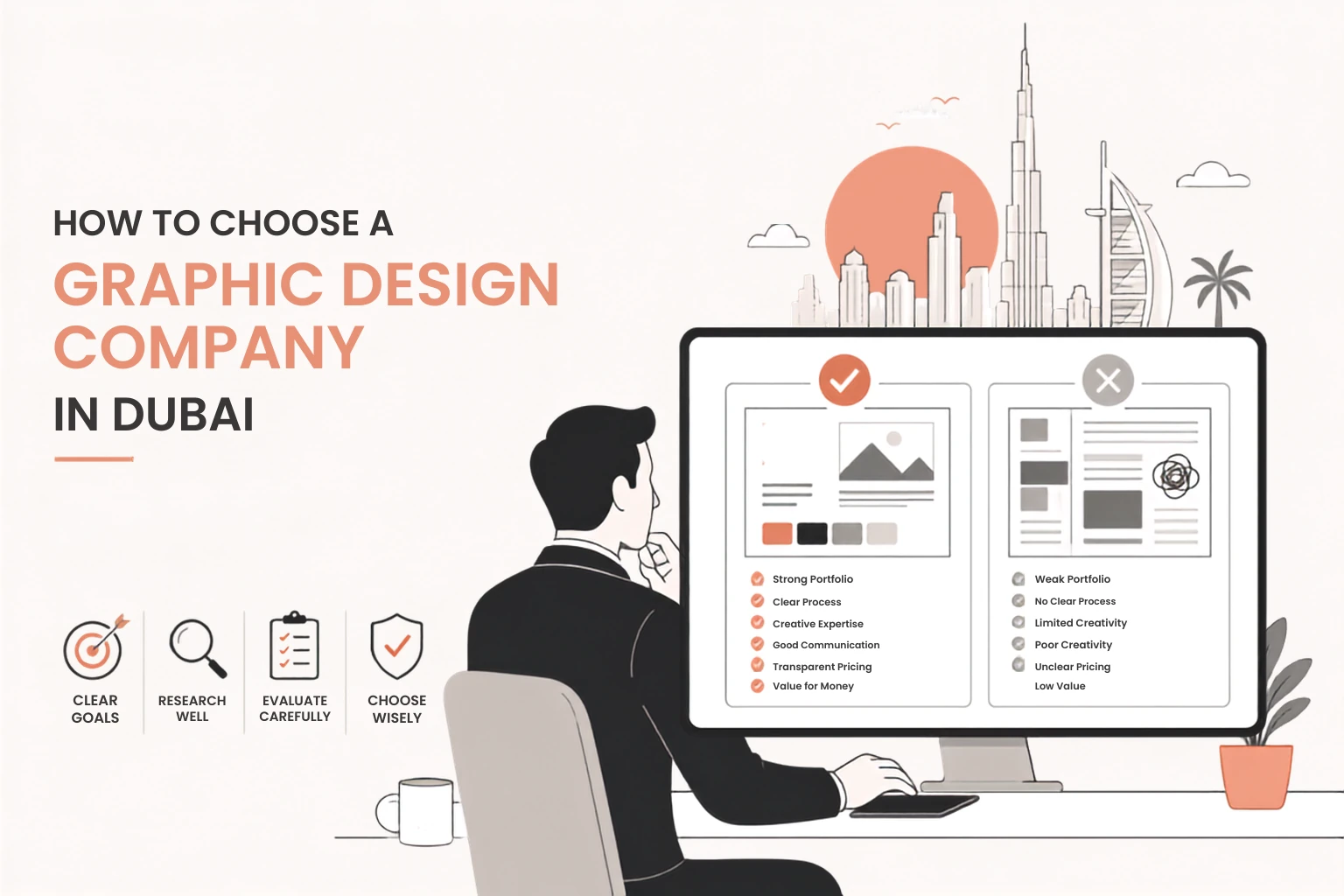
How to Choose a Graphic Design Company in Dubai (Without Wasting Your Budget)

graphic design company in dubai

Dubai has no shortage of graphic design companies. Search for one and you will find hundreds of graphic design company in Dubai, all using similar language, similar portfolio layouts and similar promises about creativity and quality.

So how do you actually tell them apart? And more importantly, how do you find one that is right for your business specifically, not just impressive in a general sense?

This guide walks you through what to look at, what to ask and what to watch out for before you sign anything.


1. What Graphic Design Actually Covers

Before you start evaluating companies, it helps to be clear on what you actually need. Graphic design covers a wider range of work than most people realise, and different companies specialise in different areas.

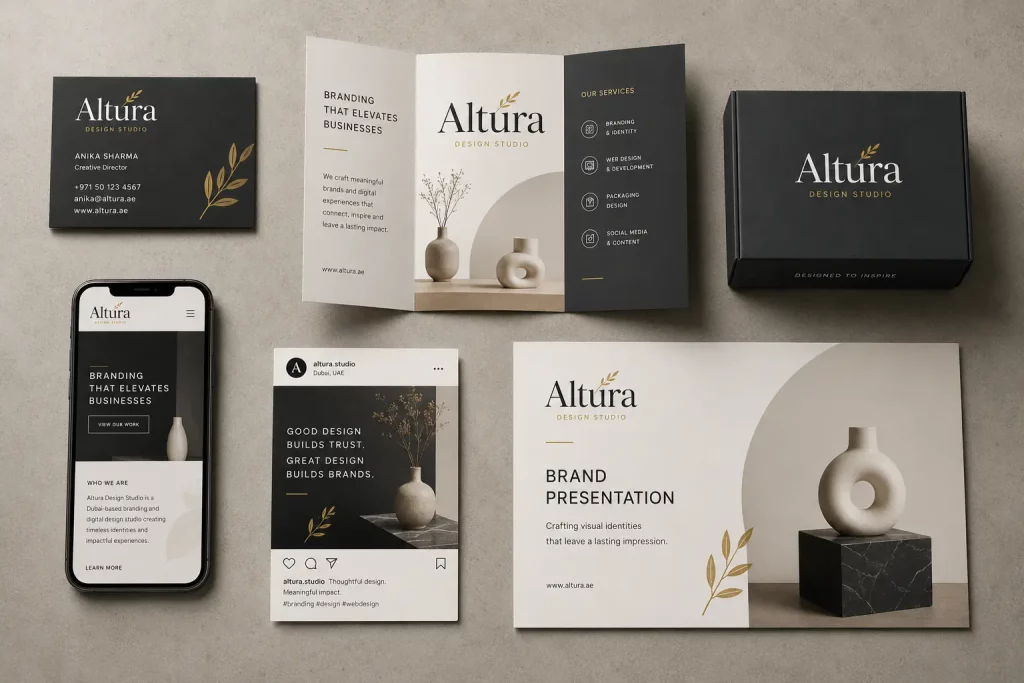
At its most foundational, graphic design includes your visual identity: the logo, the colour palette, the typography and the supporting graphic elements that make your brand recognisable. This is the starting point for everything else.

Beyond that, graphic design shapes how your brand shows up across every channel. Website layouts. Marketing materials and brochures. Social media visuals. Packaging. Presentation decks. Exhibition stands. Each of these is a graphic design decision, and each one either reinforces or undermines the perception you are trying to build.

Knowing which of these you need tells you what kind of company to look for. A studio that specialises in packaging might not be the best choice if you primarily need digital and social assets. A company focused on digital work might not have the print production knowledge your collateral requires.

brand touchpoints- graphic design company in dubai

2. How to Read a Portfolio Properly

Most people look at a portfolio and ask: does this look good? That is the wrong question. The better question is: does this work look like it was built for each client, or does it all look like the agency’s own style?

A strong graphic design company produces work that feels distinct from project to project. The visual language changes because the brand it serves has a different audience, a different position and a different set of things to communicate. If you scroll through a portfolio and everything shares the same aesthetic, the company has a signature style it applies to every client. That style might be beautiful. But it may not be right for your brand.

Also look at whether the portfolio shows the thinking behind the work, not just the finished output. Does the company explain what problem the design was solving? Does it describe the client’s context and how the creative direction responded to it? Companies that talk about outcomes and decisions tend to think more carefully about them than companies that present only visual showcases.

Finally, look for work in categories that are adjacent to yours. You do not need a company that has done exactly what you need, but you want evidence they can handle the level of complexity and the audience type your project involves.


3. Questions to Ask Before You Hire

A conversation before the brief is one of the most useful things you can do. Here is what is worth asking.

What does your process look like before design starts?

A company that takes strategy seriously will describe a process that involves understanding your business, your audience and your competition before opening any design software. If the answer jumps straight to mood boards or style references, that is a design-first company. That is fine for some projects, but not ideal if you need work that is strategically grounded.

How do you handle feedback and revisions?

Find out how many revision rounds are included, how feedback should be given and what happens if the first direction misses the mark. A clear process here protects both sides and produces better work.

Who will actually work on our project?

At some agencies, the senior designers you see in pitches hand projects off to junior staff. Ask directly who your day-to-day contact will be and who is doing the design work.

Can you show work that did not go smoothly at first?

This is a revealing question. Companies that can talk honestly about a challenging project and how they navigated it tend to be more dependable than companies that present only polished success stories.

Do you design for both Arabic and English?

For any brand operating in the UAE, bilingual design capability matters. Arabic typography has its own rules, proportions and visual logic that are completely separate from Latin design. A good company builds brand systems that feel equally considered in both scripts, not just translating one into the other.


4. Red Flags to Watch Out For

A few things worth being cautious about when evaluating graphic design companies in Dubai.

Very low pricing with no explanation. Good design takes time. If a company is quoting significantly below the market rate, either the quality reflects that or the scope is narrower than you think. Always confirm exactly what is included before comparing prices.

No discovery or briefing process. If a company is willing to start work based on a short call and a vague brief, that is a warning sign. The briefing stage is where a company demonstrates that it understands your business. Skipping it means the work is based on assumptions.

A portfolio that is all renders and mockups. Mockup generators can make average work look polished. Ask to see the actual files, the guidelines document or real-world applications of their work if you want an honest picture of quality.

Reluctance to explain their thinking. If a company cannot clearly explain why they made the visual choices they did, the decisions were probably made on instinct rather than reasoning. That is fine sometimes, but not reliable for brand-level work.

brand guidelines- graphic design company in dubai

5. How to Write a Brief That Gets Good Work

The quality of your brief has a direct effect on the quality of the work you receive. Most clients underinvest in this stage and then wonder why the first round of concepts misses the mark.

A useful brief covers six things. What your business does and who it is for. Who your competitors are and how you want to be different from them. What the design needs to achieve — not just aesthetically but in terms of what it communicates and to whom. The formats and channels the work needs to appear in. Any existing brand elements that must be kept or avoided. And a realistic timeline and budget range.

On visual references: share them with notes on what specifically appeals to you. Saying “I like this” gives a designer a vague direction. Saying “I like the restraint in the typography here and the way the colour palette feels considered without being loud” gives them something useful to work with.

Also be honest about constraints. If there is a budget limit, a hard deadline or a stakeholder whose opinion matters in the approval process, say so upfront. Surprises at the end of a project are always more expensive than information shared at the start.


Frequently Asked Questions

How much does graphic design cost in Dubai?

It varies significantly based on scope and the company’s positioning. A foundational brand identity from a professional agency in Dubai typically ranges from AED 8,000 to AED 35,000 and above, depending on what is included. Ongoing design work for marketing materials and digital assets is usually structured as a monthly retainer. The more useful question is what an inconsistent or weak visual identity is costing you in perception and conversions.

Should I hire a graphic design company or a freelancer?

Both can produce strong work. A freelancer works well for defined, single-deliverable projects where the brief is clear and the scope is fixed. A company is usually better suited when the project involves multiple disciplines, requires a consistent creative direction across many touchpoints, or needs ongoing governance. For brands building a visual identity for the long term, a company tends to offer more accountability and strategic depth.

How long does a graphic design project take?

A brand identity project typically takes four to eight weeks from briefing to final delivery, depending on the number of revision rounds and the complexity of the system. Marketing collateral and digital assets move faster once the identity exists, since the visual direction is already established.

What should a graphic design company deliver at the end of a project?

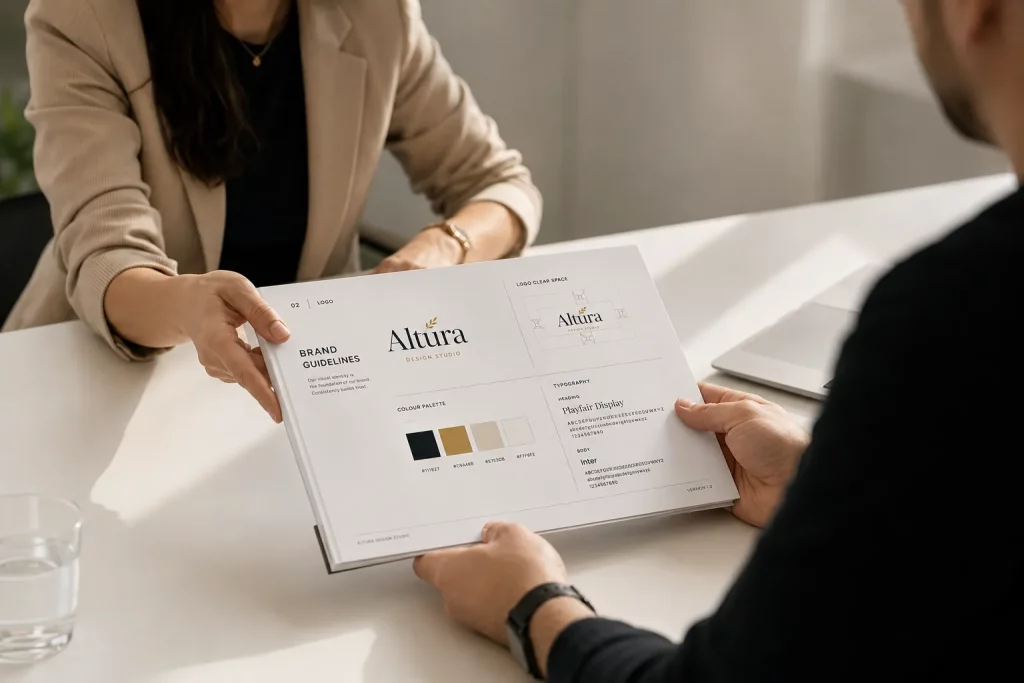
At minimum: all files in the formats you need for print and digital use, a brand guidelines document covering logo usage rules, colour values, typography specifications and application examples. Without guidelines, every new designer who touches your brand has to make visual decisions from scratch and the result is inconsistency over time.

Can one company handle both graphic design and web design?

Yes, and for many businesses this is the more efficient approach. When the same team builds your visual identity and your website, there is no gap in interpretation between the two. The digital experience reflects the brand system rather than approximating it. It also removes the coordination overhead of briefing and managing two separate suppliers.

What is the difference between a graphic design company and a branding agency?

A branding agency typically works at a strategic level first: defining who the brand is, how it is positioned and what it should communicate, before any design begins. A graphic design company focuses primarily on the visual execution of that communication. Some companies do both well. If you are not sure which you need, the answer often depends on whether you already have a clear strategy or whether you need help figuring that out first. You can read more about this in our guide on what a brand strategy agency in Dubai actually does.


Looking for a Graphic Design Company in Dubai?

Pixtar works with premium brands and growing businesses across the UAE. Our graphic design work is grounded in brand strategy, built for consistency and made to perform across every format.

→ See Our Graphic Design Services

→ View Our Work

→ Start a Project

Related reading:
The Graphic Design Process Explained
Graphic Design Trends Worth Knowing
What Does a Brand Strategy Agency in Dubai Actually Do?
How to Build a Brand Identity
How Font Choice Shapes Brand Perception

Further reading:
AIGA — What Graphic Design Is
Design Council — The Value of Design