Many online businesses treat the payment gateway as the last item on the launch list. A provider is picked quickly, a plugin is installed and the team moves on. Then the problems start: an application that takes weeks, fees that were not clear, payouts that arrive later than expected or a checkout that fails quietly on certain cards.
A payment gateway is the link between your store and the banking system. Getting the integration right affects revenue, cash flow and customer trust. This guide covers what to consider before you commit, so the decision is made with the full picture and not only a logo on a pricing page.
In This Guide
1. What a Payment Gateway Actually Does
When a customer pays, the gateway securely collects the card or wallet details, sends them for authorisation and returns a result to your store in seconds. It does not hold your money. The funds move through an acquiring bank or payment processor and are then settled to your business account.
This distinction matters in the UAE because some providers bundle the gateway and the merchant account, while others connect to a separate acquirer. Ask which model you are signing up for, because it changes who you contact when a payment fails and how long onboarding takes.
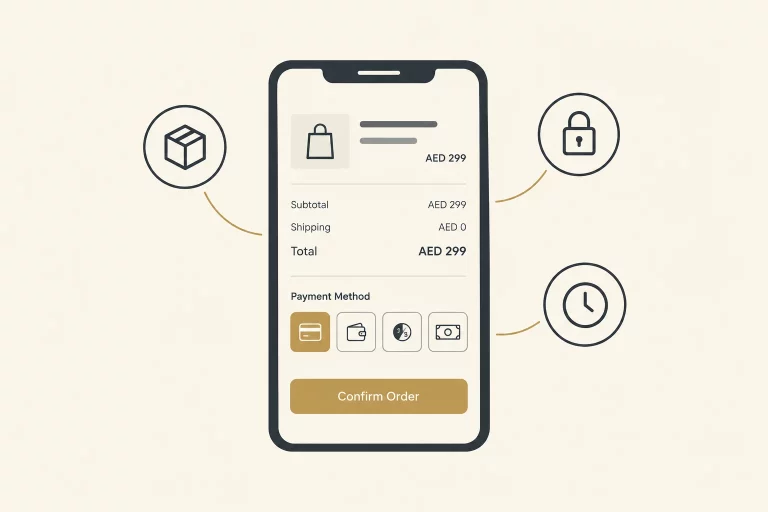
For the customer-facing side, such as which payment methods to offer and how to design the checkout page, see our guide to UAE ecommerce checkout. This article stays on the integration itself.
2. Merchant Onboarding: Plan for the Paperwork
Onboarding is where most launch timelines slip. Providers usually need a valid trade licence, identification for the owners, a UAE business bank account and a live or near-live website to review. Expect them to check that your site shows clear terms, a privacy policy, a refund policy, contact details and accurate product information.
Start the application while the website is still in development, not after it. A store that is otherwise ready can wait weeks for approval, and some providers ask for changes to the site before they approve it. Higher-risk categories can face extra review, so be upfront about what you sell.
Worth noting: Timelines and document requirements vary by provider and business type. Confirm the current list directly with the provider before you plan your launch date.
3. Fees, Settlement and Cash Flow
Most providers charge a percentage per transaction, often with a small fixed amount added. Some also charge setup, monthly or refund fees. A low headline rate can hide costs elsewhere, so ask for the full fee schedule in writing.
Questions worth asking:
- What is the rate for local cards, international cards and wallets?
- Are there setup, monthly or minimum fees?
- Is a refund returned in full, or is the original fee kept?
- How long does settlement take, and how are weekends and public holidays handled?
- What is the chargeback fee and the dispute process?
- Is VAT charged on the fees? Your accountant should confirm how to treat this.
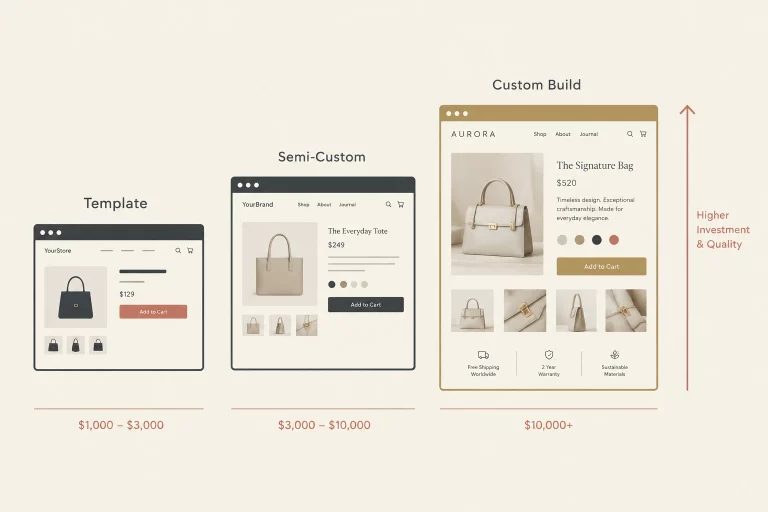
Settlement speed deserves as much attention as the rate. A slightly higher fee with faster payouts can be better for a business that buys stock on tight cycles. Our breakdown of ecommerce website cost in Dubai explains where payment costs sit within the wider budget.
4. Hosted, Embedded or Custom Integration
There are three common ways to connect a gateway to your store.
Hosted payment page
The customer is sent to the provider’s secure page to pay, then returned to your store. It is the quickest to launch and keeps most of the security burden with the provider. The trade-off is less control over the look and feel.
Embedded or plugin-based
The payment form sits inside your own checkout, usually through a ready-made plugin for platforms such as Shopify or WooCommerce. It gives a smoother experience while still limiting your exposure to card data.
Custom API integration
Your developers build the payment flow directly against the provider’s API. This offers the most control and suits stores with complex needs such as subscriptions, marketplaces or multiple currencies. It also needs the most careful testing and maintenance.
The right choice depends largely on your platform. Our guide to choosing an ecommerce platform in Dubai covers how that decision shapes your options, and our piece on custom ecommerce development explains when a bespoke build is worth it.
5. Security, Compliance and Fraud Controls
Any business that handles card payments must follow the PCI DSS standard. Using a hosted or embedded gateway reduces the scope of what you must manage yourself, which is one of the strongest reasons to avoid handling raw card data on your own server.
Also check for:
- 3D Secure support: an extra authentication step that reduces fraud and shifts liability in many cases.
- Fraud screening: rules or scoring that flag suspicious orders before they ship.
- Tokenisation: allows returning customers to pay without your store storing their card details.
- Secure site basics: a valid SSL certificate, up-to-date software and restricted admin access.
Security is not a one-time setup. Plugins, platforms and payment modules need regular updates, which is where a website maintenance contract earns its place.
6. Testing and Going Live
Test in the provider’s sandbox before any real money moves. Do not stop at a single successful payment. Test the situations that cause trouble later:
- Declined cards and insufficient funds
- 3D Secure passed, failed and abandoned
- Full and partial refunds
- A customer closing the browser mid-payment
- Mobile devices and Arabic pages
- Order status updating correctly after payment, including through webhooks
After launch, run a small live transaction, confirm it settles correctly and reconcile it against your accounting records. Monitor failed payment rates in the first weeks. A sudden rise usually points to a fixable configuration issue.
Frequently Asked Questions
What is a payment gateway and how does it work in the UAE?
A payment gateway securely captures a customer’s payment details on your online store, sends them to the bank for approval and returns the result within seconds. In the UAE it connects your store to an acquiring bank or payment processor, which then settles the funds to your business bank account.
How long does it take to get approved for a payment gateway in the UAE?
It varies by provider, business type and how complete your documents and website are. Plan for days to several weeks, and begin the application while your website is still being built so approval does not delay your launch.
What documents do I need to apply?
Providers typically ask for a valid trade licence, owner identification, a UAE business bank account and a website that shows clear policies and contact details. Requirements differ, so confirm the current list with your chosen provider.
Do I need a UAE trade licence to accept online payments?
For most local providers, yes. A licensed UAE business is the usual requirement for a merchant account. Some international providers have their own eligibility rules, so check what applies to your structure before applying.
How much do payment gateways charge in the UAE?
Most charge a percentage of each transaction, often plus a small fixed fee, and some add setup or monthly fees. Rates differ by card type and provider, so request a written fee schedule and compare the total cost, including refund and chargeback fees.
Is my online store responsible for PCI compliance?
Yes, any business that accepts card payments shares responsibility for PCI DSS. Using a hosted or embedded gateway greatly reduces the amount you must manage yourself, because card data never touches your own server.
Can I switch payment gateways later?
Yes, but it takes planning. You will need a new onboarding process, updated integration and fresh testing. Building your store with a clean payment layer from the start makes a future switch far easier.
Planning an Online Store or Reworking Your Checkout?
Pixtar designs and builds eCommerce websites for brands across Dubai and the UAE, with payment integration planned into the build from the start so your store launches ready to trade.
→ Explore Our eCommerce Web Development
📷 IMAGE 1 – Place after Section 2
Realistic editorial photograph of a business owner at a tidy desk in a bright Dubai office, reviewing printed documents beside an open laptop showing an online store dashboard. Soft natural window light, shallow depth of field, neutral tones with warm wood accents. Candid, professional, no visible brand logos or readable text on screen. 3:2 landscape.
📷 IMAGE 2 – Place after Section 5
Realistic editorial close-up photograph of a customer’s hand holding a smartphone completing a contactless mobile payment at a clean white table, with a small boutique parcel and a coffee cup softly blurred in the background. Natural light, shallow depth of field, calm premium mood, no readable brand names. 3:2 landscape.
Related reading:
UAE Ecommerce Checkout: Payment Methods That Convert
Ecommerce Website Cost in Dubai
Choosing an Ecommerce Platform in Dubai
Custom Ecommerce Web Development
What Is a Website AMC in Dubai
Further reading:
PCI Security Standards Council
Central Bank of the UAE
UAE Federal Tax Authority