One of the most common and costly mistakes businesses make when their brand is not performing is choosing the wrong type of intervention. A full rebrand when a refresh was all that was needed wastes budget and disrupts brand equity that took years to build. A refresh when a rebrand was actually required produces a better-looking version of the same underlying problem.
The distinction between a rebrand and a refresh is not just semantic. They are fundamentally different projects with different scopes, different costs and different outcomes. This guide explains what each one involves, how to tell which one your Dubai business needs and what happens when you get it wrong.
In This Guide
1. What a Rebrand and a Refresh Actually Mean
A brand refresh
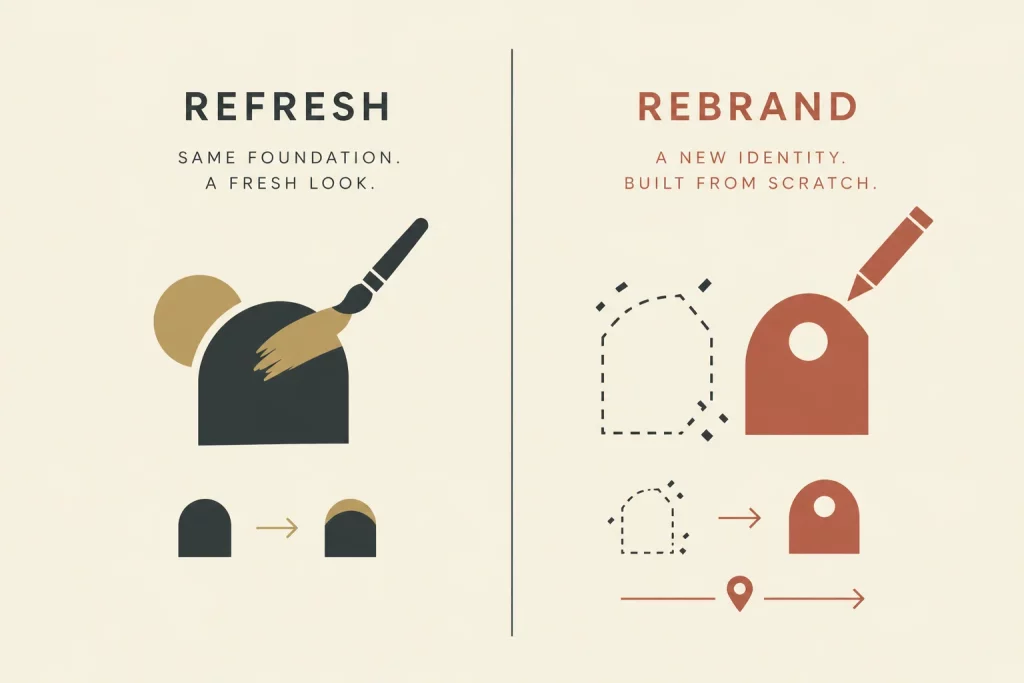
A refresh works within the existing strategic foundation of a brand. The core positioning, who the brand is for, what it stands for, how it is different, remains unchanged. What changes is how that position is expressed: the logo is modernised, the colour palette is evolved, the typography is updated, the visual system is made more consistent and contemporary. The brand’s DNA stays intact. The presentation is improved.
A refresh is appropriate when the strategy is still sound but the identity has aged or the execution has become inconsistent. It is a relatively contained project, faster and less expensive than a full rebrand because the thinking is already done. The design work starts from an existing foundation rather than from zero.
A full rebrand
A rebrand addresses the strategic layer, not just the visual one. It starts by questioning and often rewriting the foundational decisions about the brand: the positioning, the audience definition, the messaging, the brand architecture. The visual identity follows from that strategic work, and because the foundation changes, the identity changes significantly with it.
A rebrand is appropriate when the brand is no longer strategically aligned with the business it represents: the business has grown or shifted direction, the competitive landscape has changed, the target audience has evolved or the original positioning was simply wrong from the start. It is a more significant investment in time and cost because it solves a deeper problem.
To understand more about what full brand development involves, read our guide on what brand development actually means. For a breakdown of what the branding process typically costs in Dubai, our branding cost guide covers this in detail.
2. Signs You Need a Refresh
A refresh is usually the right answer when the following signals are present.
The brand looks dated but the business is performing. If clients are happy, the positioning is clear and the business is growing, but the visual identity feels like it belongs to a previous era, a refresh is the appropriate response. The strategy is working. The presentation needs updating.
Inconsistency has crept in over time. As businesses grow, design decisions get made by different people across different channels. The website uses a slightly different shade of the brand colour. Social media templates have evolved away from the original identity. The logo appears in three slightly different versions across different materials. A refresh brings everything back into alignment under a coherent, documented system.
A new channel or product requires the identity to stretch. A brand identity built for a print-first business in 2018 may not translate cleanly to a mobile-first eCommerce experience in 2026. The core brand is sound, but the visual system needs to be extended and adapted to work consistently across new contexts. This is a refresh, not a rebrand, the brand itself has not changed, but its application needs to.
A premium repositioning requires the identity to step up. Sometimes a business moves upmarket without changing its core offer or audience. A professional services firm that was mid-market a few years ago may now be targeting premium clients. The strategy is the same. The visual expression needs to reflect the new price point and audience expectation. A considered refresh, modernising the logo, refining the colour palette, elevating the typography, can achieve this without disrupting brand recognition.
3. Signs You Need a Rebrand
A full rebrand is indicated when the signals go beyond visual presentation and into strategic misalignment.
The business has fundamentally changed. A company that launched as a single-product brand and now operates across three distinct service lines may have outgrown its original identity in ways that visual updates cannot fix. The brand architecture, the positioning and the narrative all need to be rebuilt to reflect the business as it actually is.
The original positioning was wrong or is no longer defensible. If the business has been operating with a positioning that was too generic, too similar to competitors or simply inaccurate from the start, no visual refresh will fix it. The strategic foundation has to be rebuilt before any design work begins. Refreshing the visual identity of an unclear brand produces a clearer-looking unclear brand.
The target audience has changed significantly. A brand built for one type of client does not automatically serve a different type well. If the business has pivoted to a new audience segment, entered a new market or changed its price positioning substantially, the brand needs to be rebuilt around the new audience rather than adapted awkwardly from the old one.
A merger, acquisition or major structural change. When two businesses merge or a business is acquired, the brand question has to be resolved strategically before it is resolved visually. Which entity’s name survives? How do the two identities relate? What does the combined brand stand for and for whom? These are rebrand-level questions, not refresh-level ones.
The brand has negative associations that need to be left behind. In rare cases, a business may need to distance itself from a previous identity for reputation reasons. A refresh makes the existing brand look better. Only a rebrand creates genuine distance from what the brand previously represented.
If you are seeing warning signs that suggest the brand is no longer working, read our guide on signs your brand needs a rebrand for a fuller picture of the diagnostic signals.
4. What Happens When You Choose the Wrong One
Refreshing when you needed a rebrand is the more common mistake. The visual identity improves. The business looks better. But six months later, the same underlying problems persist: inconsistent messaging, difficulty explaining the difference from competitors, marketing that does not compound into recognition. The refresh addressed the symptom. The strategy problem remains.
Rebranding when a refresh was sufficient is the less common but more expensive mistake. It disrupts brand equity that took time to build, the visual recognition clients had developed for the existing identity, the brand associations that had positive value. A full rebrand also takes significantly more time and investment than a refresh. When the strategic foundation was never the problem, that additional investment does not produce a proportional return.
The diagnostic question: Can your leadership team write a single clear sentence that describes who the brand is for and what it does differently from the alternatives? If yes, the strategy is intact and a refresh is probably sufficient. If the sentence changes depending on who writes it, the strategy is the problem and a rebrand is what is needed.
5. What This Looks Like in the Dubai Market
Dubai’s market has a specific set of conditions that make this decision more consequential than in many other cities.
The pace of competition here is unusually fast. New entrants arrive constantly across almost every premium category. A brand that held a clear position two years ago may find that position crowded or commoditised today. In this context, the difference between a refresh and a rebrand matters: a refresh assumes the strategic position is still defensible. If the competitive landscape has shifted significantly, that assumption needs to be tested before any design work begins.
Dubai is also a market where first impressions carry exceptional weight. The client base in premium categories is highly visual and globally literate in brand quality. A brand that looks dated or inconsistent loses credibility with this audience faster than in markets where buyers are less attuned to brand signals. This raises the urgency of both a refresh and a rebrand, but it does not change which one is appropriate. That is still determined by the strategic question, not the visual one.
The bilingual context adds another layer. For businesses in Dubai, a refresh or rebrand that does not account for Arabic language brand expression is incomplete. Whether the project is a contained visual update or a full strategic rebuild, how the brand reads and feels in Arabic is part of the outcome that needs to be planned for from the start.
6. A Simple Decision Framework
Before briefing any agency, work through these questions in order.
Can your team agree on a single clear positioning statement? If yes, the strategy is likely intact. If no, start with strategy before any design work.
Has the target audience, the price point or the competitive set changed substantially? If yes, the strategic foundation needs revisiting. If no, you are probably dealing with a presentation problem rather than a positioning problem.
Does the visual identity look dated or inconsistent, but the business is performing well? If yes, this is a classic refresh scenario. The strategy is working. The presentation needs to catch up.
Are there meaningful positive associations with the current brand that would be lost in a full rebuild? If yes, those associations have value and should be preserved if possible. A refresh can evolve the identity while protecting recognition. A rebrand replaces it.
Is the business at a structural inflection point, new markets, new audience, merger, significant pivot? If yes, this is a rebrand moment. The visual identity is a symptom of a deeper strategic question that needs to be answered first.
Once the right type of project is identified, the next step is finding the right partner. Read our guide on what branding services actually include and our piece on what to look for in a creative branding agency in Dubai before briefing anyone.
Frequently Asked Questions
What is the difference between a rebrand and a brand refresh?
A brand refresh updates how an existing brand looks and is applied, modernising the logo, evolving the colour palette and improving consistency, without changing the strategic foundation. A rebrand addresses the foundation itself: the positioning, the audience definition, the messaging and the visual identity are all rebuilt, usually because the business has fundamentally changed or the original positioning was no longer working. A refresh is a design project. A rebrand is a strategy-led project that includes design.
How much does a brand refresh cost in Dubai?
A focused brand refresh in Dubai, covering logo evolution, updated colour and typography, revised guidelines and key collateral, typically ranges from AED 8,000 to AED 25,000 depending on scope. A refresh that also includes a website redesign or significant digital touchpoint updates will cost more. A full rebrand, which starts with strategy work before any design begins, typically starts from AED 25,000 and goes significantly higher for complex businesses. For a full breakdown, read our branding cost guide for Dubai.
How long does a rebrand take?
A full rebrand for a small-to-mid-size business in Dubai typically takes ten to sixteen weeks, covering strategy, visual identity development and guidelines. A brand refresh, working from an existing foundation, typically takes four to eight weeks. Timeline varies significantly based on the number of stakeholders involved in approvals, how quickly feedback is provided and whether a website rebuild or other major digital work is part of the scope.
Can I refresh my brand without changing my logo?
Yes. A brand refresh does not have to include a logo redesign. In some cases, the right answer is to keep the logo entirely and focus the refresh on the colour system, typography, photography direction and brand guidelines, bringing consistency to how the existing identity is applied rather than changing the mark itself. Whether the logo needs to change depends on how well it represents the brand and how dated or inconsistent it has become.
Will a rebrand hurt my existing brand recognition?
It depends on how the rebrand is managed. A well-planned rebrand preserves the elements that carry positive recognition, a distinctive colour, a recognisable name, a brand association that has commercial value, while replacing the elements that are no longer working. A poorly planned rebrand discards everything and starts from scratch, losing the equity that existed without replacing it with something equally strong. This is one reason the strategic phase of a rebrand matters: it identifies what is worth preserving before anything is changed.
How do I know if my branding problem is strategic or just visual?
The clearest test is whether your leadership team can articulate a consistent positioning in their own words. If different people in the business describe it differently, or if the description has become vague over time, that is a strategic problem. If the positioning is clear and consistent but the visual identity looks dated, inconsistent or misaligned with the quality of what the business delivers, that is a visual problem. Strategy-level problems need a rebrand. Visual problems need a refresh.
Does Pixtar handle both rebrands and brand refreshes?
Yes. Pixtar works with businesses across Dubai and the UAE on both full brand strategy and identity projects and more focused visual refresh engagements. Every project starts with a diagnostic conversation to identify what type of work is actually needed, rather than recommending a full rebrand when a refresh is what the situation calls for, or vice versa. You can explore our branding services in Dubai or start a conversation directly to discuss your specific situation.
Not Sure Whether You Need a Rebrand or a Refresh?
Pixtar works with businesses across Dubai and the UAE to diagnose brand problems accurately before recommending the right type of project. The right answer depends on what the brand actually needs, not on what is the most expensive or the quickest option.
Related reading:
Signs Your Brand Needs a Rebrand
What Brand Development Actually Means
What Branding Services Actually Include
What Does a Brand Strategy Agency in Dubai Actually Do?
What Does Branding Cost in Dubai?
What to Look for in a Creative Branding Agency in Dubai
Further reading:
Harvard Business Review: Branding Strategy
Interbrand: Brand Thinking