Every eCommerce brand reaches a point where the website starts to feel like a constraint rather than an asset. Pages load slowly, the checkout feels dated, the design no longer matches the quality of the product, and yet the instinct is often to patch it. New banners. A colour tweak. A plugin to “fix” the speed issue. For a while, this works. Then it doesn’t.
The real question for premium and luxury eCommerce brands in Dubai isn’t “should we update the website?” – It’s “do we need a redesign, or do we need a rebuild?” These are fundamentally different projects, with different costs, timelines, and outcomes. Confusing the two is one of the most expensive mistakes a growing eCommerce business can make.
Table of Contents
1. Redesign vs Rebuild: What’s the Real Difference?
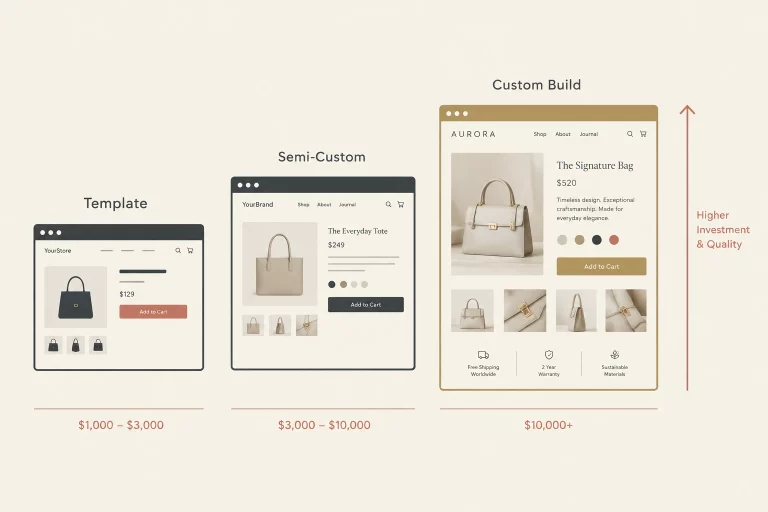
A redesign works within the existing structure of your site. The platform stays the same, the back-end logic stays the same, and the changes are largely visual: new layouts, updated imagery, refreshed branding applied to existing templates. It’s faster, less disruptive, and often the right call when the foundation is sound but the experience feels tired.
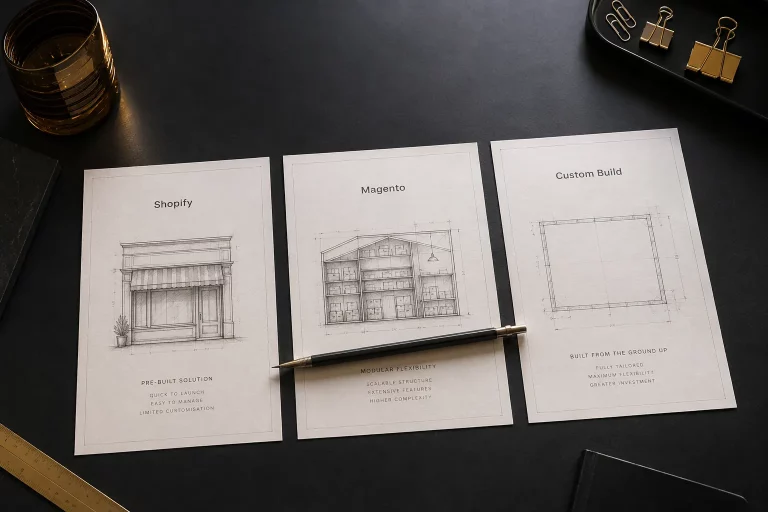
A rebuild is a different undertaking entirely. It means re-architecting how the site works: the platform, the data structure, the checkout flow, the way products, collections and content are managed. A rebuild is what happens when the problems aren’t on the surface. They’re in the foundation, and no amount of visual polish will fix them.
The mistake most businesses make is hiring a designer to “refresh” a site that actually needs to be rebuilt. The result looks better for about three months and then the same performance issues, the same checkout drop-offs, and the same maintenance headaches return, because the underlying problem was never addressed.

2. Five Signs a Refresh Won’t Fix Your Problem
Your site is slow no matter what you remove
If you’ve already compressed images, removed plugins, and optimised what you can — and the site is still slow — the issue is structural. Some platforms and themes simply cannot deliver the speed that modern shoppers, and search engines, expect.
Every new feature needs a workaround
If your team has become fluent in “workarounds” — manual processes to compensate for things the platform can’t do natively — you’re not running a website anymore. You’re maintaining a system that fights you.
Mobile and desktop feel like two different brands
For premium brands, this is particularly damaging. If the majority of your traffic is mobile but the experience feels like an afterthought compared to desktop, no template swap will fix that. It needs to be designed mobile-first, from the ground up.
Your checkout has a high abandonment rate you can’t explain
Cosmetic changes to a checkout rarely move abandonment numbers in any meaningful way. If people are adding to cart and leaving, the friction is usually structural — too many steps, unclear shipping costs, a process that doesn’t feel trustworthy.
You’re afraid to touch the back end
If updating a product, adding a collection, or changing a price feels risky or requires a developer every time, your platform has become a liability rather than a tool. This is one of the clearest signals that a rebuild — onto a platform your team can actually manage — is overdue.
3. The Hidden Cost of Delaying a Rebuild
The decision to delay a rebuild rarely feels like a decision. It feels like deferring — “we’ll deal with it after the next sale period,” “let’s get through this quarter first.” But every month a structurally limited site stays live, it’s costing the business in ways that don’t show up on an invoice.
Search engines reward fast, well-structured sites and quietly bury slow, poorly coded ones — meaning the organic traffic gap between you and a competitor with a modern platform widens every month. Conversion rates on outdated checkout flows tend to sit well below what a modern, optimised flow delivers — and for a premium brand, that gap compounds at higher price points. And every workaround your team builds to compensate for platform limitations becomes another thing that has to be migrated, retrained, or unwound later — at a higher cost than if the rebuild had simply happened sooner.
The honest framing: A rebuild is rarely “extra” cost. It’s cost that was always coming — the only question is whether you pay it now, on your terms, or later, under pressure, after the problems have compounded.
4. What a Proper eCommerce Rebuild Actually Involves
A rebuild done properly is not simply “the same site, but new.” It starts with a structural audit: understanding exactly what’s broken, what’s working, and what data needs to be preserved or migrated. From there, the right platform is chosen based on your catalogue size, growth plans, and operational needs, not based on what’s trending.
The information architecture is rebuilt around how customers actually shop, not how the old site happened to be organised. The checkout is designed as its own product because for eCommerce, it effectively is one. And critically, the entire experience is designed mobile-first, with desktop as the expanded view, the reverse of how most older sites were built.

5. Why This Decision Matters More for Premium Brands in Dubai
Dubai’s eCommerce buyers, particularly in luxury, fashion, and lifestyle categories- have been shaped by exposure to some of the best digital retail experiences in the world. They shop on platforms with seamless checkouts, fast load times, and visually considered design as standard. A slow or clunky site doesn’t just underperform quietly, it actively signals that the brand behind it may not be as premium as it claims.
There’s also the question of scale. Many Dubai-based eCommerce brands are building with regional and international expansion in mind — into Saudi Arabia, the wider GCC, and beyond. A platform that can’t support multi-currency, multi-language, or growing catalogue complexity will become the bottleneck on that growth, regardless of how good the marketing is.
The brands that get ahead of this, rebuilding before the platform becomes a visible problem- are the ones that scale smoothly. The ones that wait until customers start commenting on it are already behind.
Frequently Asked Questions
How do I know if I need a redesign or a full rebuild?
Start by separating visual problems from structural ones. If your site looks dated but loads quickly, works well on mobile, and your team can manage it easily, a redesign within the existing platform may be enough. If you’re dealing with speed issues, checkout friction, mobile inconsistency, or a platform your team struggles to use, those are structural signals and structural problems need a rebuild, not new graphics.
How long does an eCommerce rebuild take?
For a mid-sized premium eCommerce brand, a proper rebuild including discovery, design, development, content migration and testing typically takes between eight to sixteen weeks, depending on catalogue size and the complexity of integrations such as inventory systems, payment gateways, and CRM tools.
Will a rebuild affect my SEO rankings?
It can in both directions. A rebuild done without a proper migration plan (redirects, preserved URL structures where possible, retained metadata) can cause a temporary dip in rankings. A rebuild done correctly, with a documented SEO migration strategy, typically improves rankings over time because the new platform is faster, better structured, and more search-friendly than the one it replaces.
Can I rebuild without losing my existing data, products, customers, order history?
Yes. A proper rebuild process includes a full data migration plan covering products, customer accounts, order history, and reviews. This is one of the most technical parts of a rebuild and should be scoped and tested thoroughly before the new site goes live, not treated as an afterthought.
Is it worth rebuilding if my current site is “good enough”?
“Good enough” is relative to your competitors and your growth plans, not to how the site felt when it launched. If your current platform is limiting your ability to run promotions, manage inventory efficiently, or deliver a mobile experience your customers expect, “good enough” is quietly costing you conversions and growth, even if nothing feels urgently broken today.
What platform is best for a premium eCommerce brand in Dubai?
There’s no single answer; it depends on catalogue size, customisation needs, integrations, and growth plans. What matters more than the platform name is whether it’s been implemented properly: fast, mobile-first, with a checkout designed around your actual customer journey, and built by a team that understands both the technical and brand requirements of premium retail.
Not Sure Whether You Need a Redesign or a Rebuild?
Pixtar works with premium and luxury eCommerce brands across Dubai and the UAE — auditing existing platforms, identifying what’s structural versus cosmetic, and building eCommerce experiences that match the quality of what you sell.
Related reading:
eCommerce Website Redesign: What It Really Involves
Custom eCommerce Development — A Practical Guide
Why Every Premium Brand Needs a UX Audit
Why Website Loading Speed Shapes Brand Perception
External references:
Google web.dev — Core Web Vitals
Shopify — Checkout Optimisation Benchmarks